Fractional Marketing Leadership & The Tension Between Marketing and Finance
Fractional marketing leadership often commands one of the biggest budgets in a company, and for good reason.
Growth doesn’t happen by accident.
It requires smart bets across multiple channels, investment in creative, and the right tools to measure results.
Hence, if you’re spending big, it brings scrutiny, especially from finance.
Running a marketing department is almost the same as steering a ship in choppy waters.
Every campaign, tool, or creative idea is a moving part, and each one carries risk.
Finance watches all of it closely.
They’re responsible for the bottom line.
They need to know: is marketing bringing in enough value to justify its costs?
The challenge?
Finance speaks in numbers.
The Marketing department often speaks in stories.
And when those two languages don’t align, tension brews. Big budget requests get questioned.
Digital marketing strategy stalls and both sides lose.
But it doesn’t have to be this way.
Marketing and finance can work in sync.
They can speak each other’s language. They can build a bridge.
Let’s explore how to do just that.
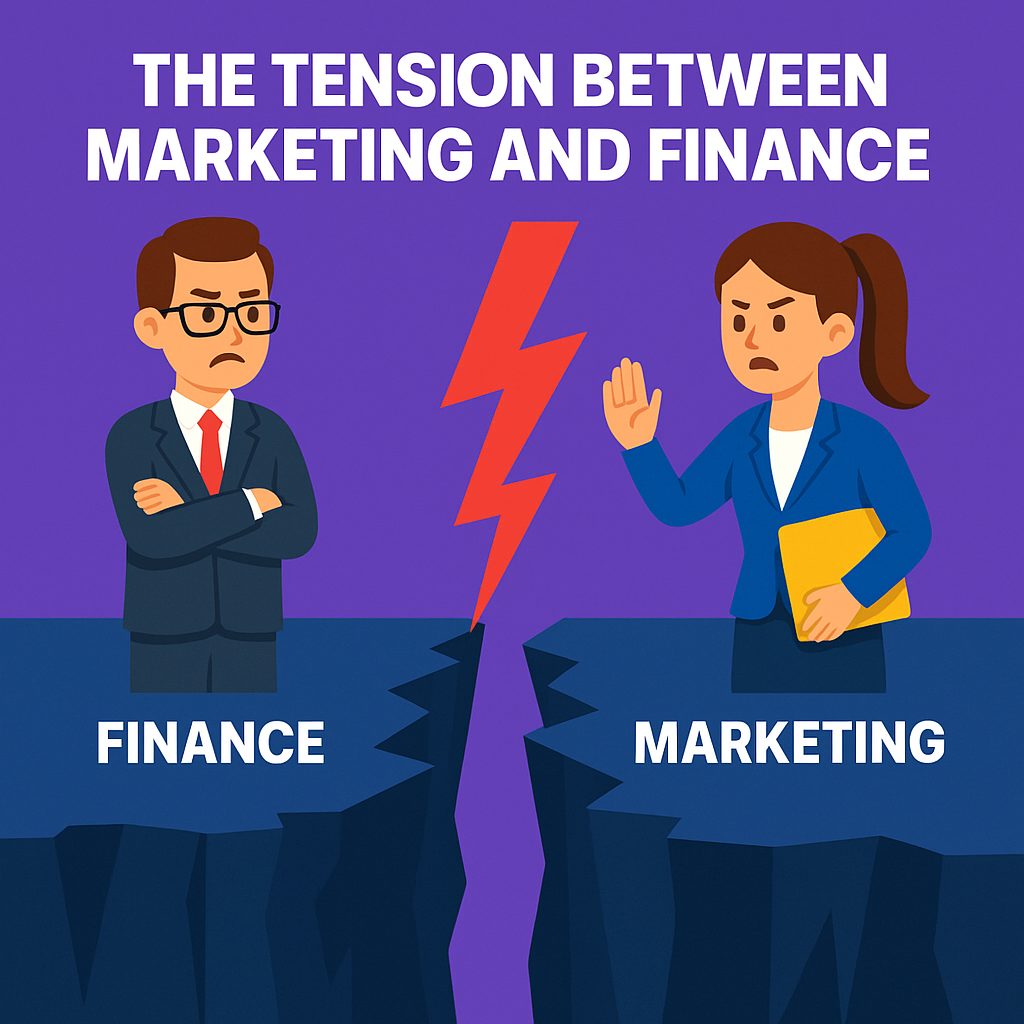
Why Marketing and Finance Clash
At the heart of it, marketing strategy drives both revenue and cost. That puts it directly under finance’s microscope. Every dollar spent can affect the company’s financial health. And because finance is tasked with updating fractional executives and investors, they want clarity—especially before green-lighting big investments.
Marketing, on the other hand, needs finance’s approval to execute its marketing plans. No marketing budgets means lack of effective marketing campaigns in-market. Lack of digital marketing campaigns means no business growth. So both sides are dependent on each other.
The real issue? They measure success differently. Finance wants predictable returns. Marketing often plays the long game.
Let’s break down where this disconnect shows up most.
1. Upper Funnel Investments
Brand awareness campaigns—TV ads, radio spots, billboards—are expensive. And they’re hard to measure. Unlike digital ads, there’s no direct click or conversion to track.
An experienced marketing leader may sense that these campaigns build long-term value. But phrases like “long-term” or “we feel this will work” don’t land well with finance.
Finance directors want clear forecasts from marketing.
- What’s the ROI?
- When will we see results?
That’s tough to answer when you’re running top-of-funnel digital marketing efforts. They usually don’t pay off immediately. Marketers must justify the marketing investment. Otherwise they risk losing both budget and trust.
2. When do you begin upgrading MarTech?
Investing in better email tools or a new CMS may make perfect sense to a marketing leader. It means faster work, cleaner data, and smoother operations. But to finance, it’s just another recurring cost—unless you tie it directly to saved hours or increased revenue.
Without showing cost efficiency or business impact, getting budget approval becomes a steep uphill climb.
3. Should you start running promotions only?
Discounts and giveaways often make sense for marketing. They boost short-term sales. But finance views these through a different lens. A short-term spike in revenue might not look great when fixed and variable costs are factored in.
Worse, if a promo spans two financial quarters, accounting rules may show a loss in one month and a gain in the next—even if it nets positive in the end.
When marketers don’t account for this in their pitch, they risk designing promotions that please customers but upset the P&L.
How to Bridge the Gap
It starts with understanding how finance thinks. Then communicating in a way that makes sense to them.
Best Practices for Justifying Upper Funnel Investments
Upper funnel digital marketing efforts matter. But they must be framed properly. Here’s how smart marketers win finance over:
Estimate a Realistic Impact
Don’t guess. Use data. If you don’t have direct results from a previous campaign, find a close benchmark. For example:
- Want to invest in CTV (Connected TV)? Use data from past linear TV, YouTube, or TikTok campaigns.
- Launching radio ads? Pull from podcast or Spotify performance.
- No direct benchmarks? Look at upper funnel Facebook ad campaign performance for clues.
Then apply a “haircut”—a reduction based on how confident you are. If your comparison is solid, trim the estimate by 25%. If it’s a stretch, cut it by 75%.
Sequence the Investment
Start small. Test in a few markets. Compare them to control regions. This matched market approach helps prove value early without spending millions upfront.
You can also limit the number of channels, times, or placements. Track spikes in traffic or customer engagement. Even if results are directional, they help finance see marketing momentum.
Flag the Time to Impact
Unlike digital ads, top-of-funnel campaigns take time to pay off. Be honest about that. Tell finance:
- When the spend will hit the books
- When you expect to see revenue
- How long the ramp-up period will be
Use examples: Digital video might show results in a few weeks. Traditional TV may take months. And the longer your sales cycle, the longer the wait.
If you set these expectations upfront, finance won’t panic when early numbers look flat.
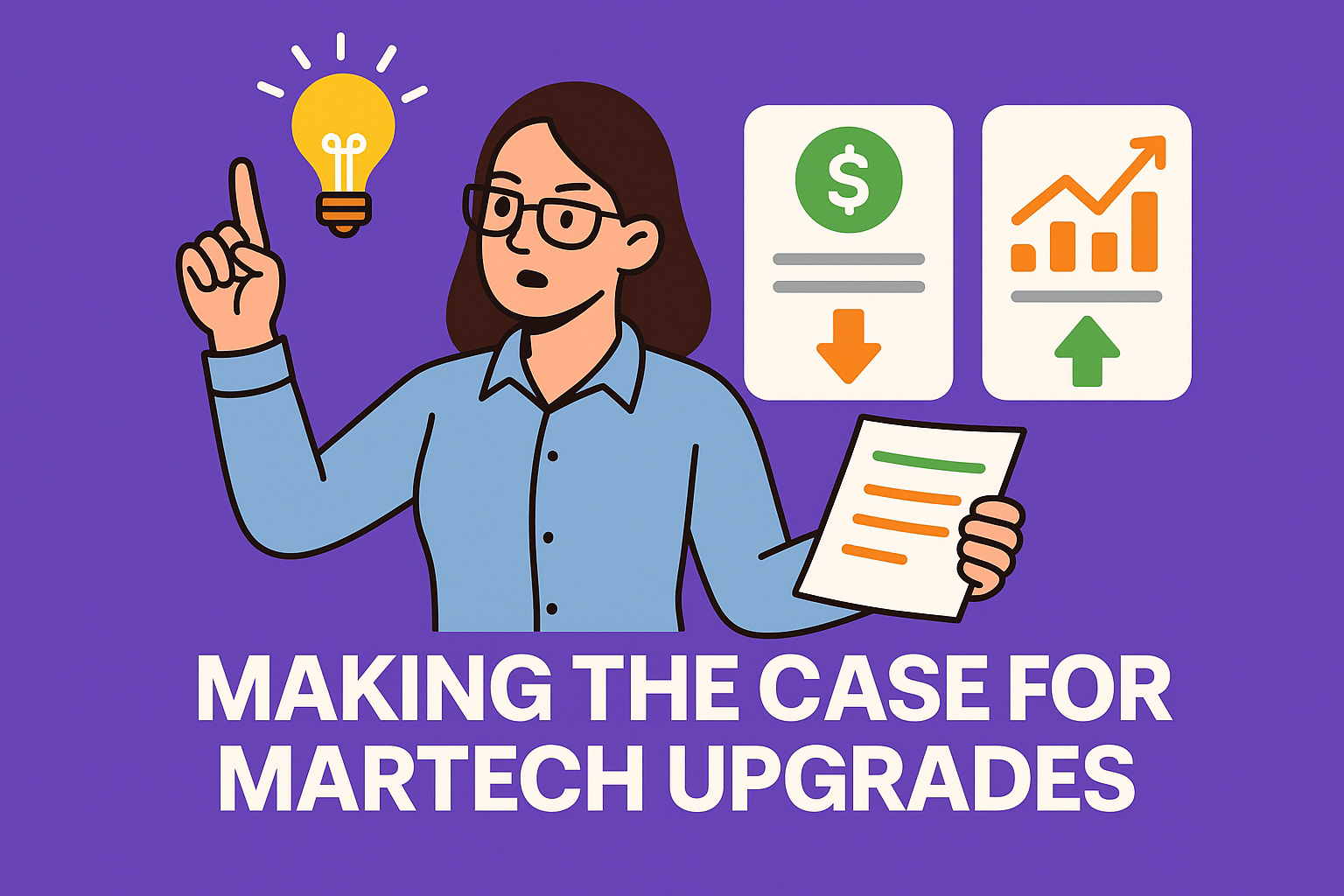
Making the Case for MarTech Upgrades
If you want to upgrade your tech stack, your pitch must include two things:
- Time and Cost Efficiencies
- Marketing Potential Revenue Impact
Let’s break it down.
Estimate Cost Savings
Start by documenting your internal team’s current workflows. How many hours are spent weekly on:
- Campaign setup?
- Segmenting audiences?
- Analyzing results?
Translate those hours into FTEs (Full-Time Equivalents). Then assign a cost based on salary data.
Next, estimate how the new tool will reduce those hours. Will you need fewer marketing hires? Will your team work faster? Turn those gains into dollars.
If you can show that your team will save $600,000 a year in labor time, that’s a compelling case.
Estimate Revenue Gains
Some tools directly boost conversion rates. For example:
- A CMS that supports dynamic content improves ad-to-landing-page alignment
- An email tool with better segmentation boosts open and click-through rates
Even if you can’t promise exact results, create a directional forecast. Use assumptions like:
- 1–2% increase in monthly active users
- Improved ARPU from better personalization
Be clear: this is a bonus, not a guarantee. But it helps close the deal.
Present Everything on a Timeline
Use a simple spreadsheet to show:
- Setup costs
- Monthly recurring costs
- Estimated savings
- Potential revenue upside
Finance will appreciate the clarity—and it shows that marketing knows how to think like a business unit.
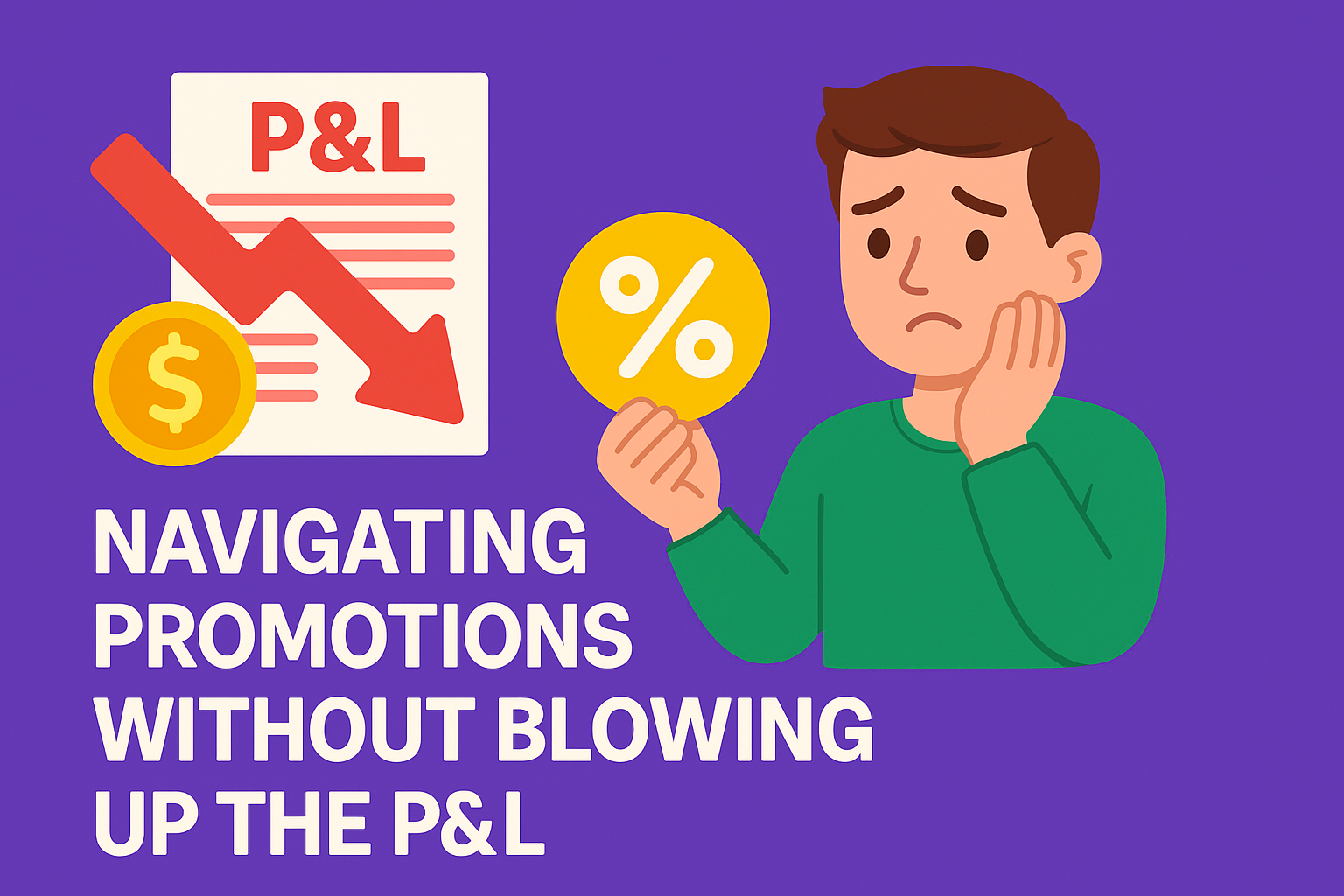
Navigating Promotions Without Blowing Up the P&L
Promotions are a marketing staple. But they can look like a mess to finance if not structured correctly.
Here’s how to stay aligned:
Respect Accounting Periods
If a discount runs across two months, revenue might be counted in one month while costs show up in another. Know the rules and plan accordingly.
Understand Net Returns
Finance looks beyond revenue. They subtract all costs—ad spend, product costs, fixed overhead—to determine real ROI.
When pitching a promo, show:
- Gross revenue
- Net revenue
- Total costs
- Expected net return
Speak Their Language
Marketing talks about click-throughs and impressions. Finance talks about contribution margin and accruals.
Make sure your proposal answers:
- How much will we spend?
- When will it hit the books?
- What’s the break-even point?
- What are the risks?
The more you can tie your strategy to their metrics, the more support you’ll get.
Imagine Marketing Leadership Without the Overhead
What if you could tap into world-class marketing leadership—without the full-time hire? That’s the promise of fractional marketing leadership. It’s not a trend. It’s how modern SaaS companies scale smart.
In today’s fast-moving market, B2B SaaS teams need seasoned marketers who can step in fast, make things clear, and get results—without needing six months of onboarding or a $250K salary.
Fractional leaders are filling that gap. They move fast. They think strategically. And they’re helping companies go from stuck to scaling.
If you’re unsure whether it’s the right move, here are key reasons why hiring a fractional CMO could transform your marketing operations.
What Is Fractional Marketing Leadership?
A fractional marketing leader is a part-time executive who brings deep marketing expertise—without the full-time commitment. They usually work 10–20 hours a week, embedding directly into your team.
Unlike consultants who stay high-level, fractional CMOs and fractional marketing directors get hands-on. They lead strategy, roll up their sleeves, and drive execution.
That means they’re ideal for:
- Startups that need senior executive guidance
- SaaS firms prepping for scale
- Companies in transition or without a full-time CMO
Learn more about what defines effective fractional marketing leadership and how it’s transforming modern marketing teams.
Why B2B Marketing SaaS Teams Love It
In B2B SaaS, speed, adaptability, and ROI are everything. That’s why fractional marketing leadership makes so much sense.
You get:
- Quick wins: They’ve seen what works—and what doesn’t.
- Strategic clarity: They align marketing with finance and sales teams.
- Cost control: You only pay for what you need.
Whether you’re chasing pipeline, optimizing CAC, or launching a new product—fractional leaders help you get there faster.
For a deeper dive into the benefits of hiring a fractional CMO, see how companies gain flexibility, speed, and results.
What They Actually Do
Let’s break down the roles.
Fractional CMO Leadership
The strategic lead.
They:
- Set your go-to-market game plan
- Align marketing with sales growth targets and day operations
- Track metrics like CAC, LTV, and pipeline velocity
- Lead messaging and positioning
Perfect for:
- SaaS companies without a marketing head
- Teams trying to enter new markets
- Founders looking to delegate leadership
Fractional Marketing Director
The executional lead.
They:
- Manage day marketing operations like your marketing campaigns ( across paid search, social ppc, email marketing automation)
- Coordinate freelancers or the marketing agency
- Translate strategy into actionable marketing goals
- Coach junior marketing team members
Best for:
- Companies with junior marketing talent but no lead
- Teams that need more structure
- Brands looking to scale without bloating headcount
Why This Works
Here’s why more founders and SaaS execs are leaning in.
Flexibility Without Overhead
No long-term contracts. No equity. Just expertise on your terms.
Smarter Budget Use
You avoid bloated salaries and get more value from your spend.
Faster Execution
Fractional leaders come in ready to go. No hand-holding needed.
Outsider’s Fresh Perspective
They bring insights from other industries and verticals—so your innovative ideas don’t go stale.
Strategic Alignment
They speak the language of your CFO. Marketing stops being a cost center and becomes a growth engine.
What to Watch For with a Fractional Marketing Team
It’s not always plug-and-play. You’ll need the right setup.
Make Room for Them
Set expectations. Give them access. Treat them like a real marketing team member.
Define the Scope
Set clear KPIs (key performance indicators) and deliverables. Weekly check-ins help keep things on track.
Avoid Role Confusion
They guide the team—but don’t expect them to write every email or launch every ad. They’re leaders, not executors.
Prioritize Communication
Build a rhythm. Use shared docs, Slack, and dashboards to stay aligned.
Not sure what to look for? Here’s how to choose the right fractional CMO based on your goals, culture, and growth stage.
The Results Are Real
For Startups:
- Launch quicker with better positioning
- Close the leadership gap without a huge hire
- Get investor-ready with leaner ops
For Growing Teams:
- Add horsepower during growth spikes
- Align strategy across departments
- Modernize outdated marketing tactics without a full overhaul
Fractional Executives Impact on B2B SaaS Companies
B2B SaaS companies are built for speed—but that doesn’t mean they can always afford to move fast. That’s where fractional marketing leadership makes a real difference.
Instead of waiting months to hire a full-time CMO, SaaS founders are bringing in seasoned fractional marketing executives on a part-time basis. These fractional marketing leaders jump in quickly, bringing in industry knowledge, clarity to messy strategies, expert advice and help teams focus on what actually drives growth.
The result? You get senior-level thinking without the senior-level price tag. And more importantly, you get movement.
Driving Digital Transformation
In SaaS, standing still means falling behind. Markets shift. Tools change. Customers evolve. Companies that win are the ones that adapt—and fast.
A fractional CMO helps make that shift. They plug into your existing structure and start guiding change from day one. Whether it’s tightening up your messaging, modernizing your tech stack, or rebuilding your funnel, they know how to get you from where you are to where you need to be.
And because they’re not tied to old systems or office politics, they bring fresh energy—and real results.
Bridging the Skills Gap With House Marketing Teams
Many SaaS teams are built fast. You hire scrappy marketers, specialists, or generalists—but sometimes what’s missing is leadership.
A fractional marketing leader fills that gap. They don’t just manage projects—they coach, mentor, and elevate the team. They pass on systems, playbooks, and frameworks that stick around long after they leave.
It’s not just about fixing campaigns. It’s about building a smarter, stronger marketing team that’s ready for what’s next.
These frameworks also help avoid the marketing death spiral that slows down scaling teams
Bringing a Fresh Set of Eyes
When you’ve been heads-down in the product for months, it’s easy to lose perspective. That’s why outside insight matters.
Fractional CMOs and Fractional marketing directors bring hard-won extensive experience from other SaaS companies. They’ve seen what works—and what doesn’t. They know how to breathe life into stale strategies and call out gaps others miss.
Their superpower? Spotting the quick wins, the long-term plays, and the hidden friction points you’ve learned to ignore
Many SaaS companies succeed by turning to outsourced CMO services to accelerate results while scaling lean.
Strategic Advantages of Fractional Leaders
Hiring a full-time CMO can be expensive—and slow. But fractional marketing leaders offer a smarter path. They bring the same strategic firepower without the full-time costs or long-term commitments.
These leaders know the playbook. They’ve helped SaaS companies grow, pivot, and scale across industries. And when they plug into your team, they do it fast—with no fluff.
They’re ideal for:
- Startups chasing growth
- Mid-market brands in transition
- Companies who need strategy now—not six months from now
With deep knowledge in strategy, execution, and market trends analysis, fractional leaders offer an edge: they help you move quicker, spend wiser, and stay one step ahead.
Here’s how CMO-as-a-Service delivers up to 10x ROI by aligning marketing execution with key SaaS growth outcomes.
Agile Marketing Approaches
Fractional CMOs thrive in chaos. That’s a good thing.
They work inside agile frameworks, helping you launch fast, iterate smarter, and focus on what works. Need a quick GTM plan? Need to pivot a more successful marketing campaign mid-quarter? These leaders make it happen—without the drag of full-time executive overhead.
And because they’re used to working across SEO, paid media, content, and brand—they bring a 360° view to every sprint.
Agility is the difference between marketing that adapts and marketing that stalls. Fractional leaders, as a senior marketing executive know how to keep things moving.
Data-Driven Decision Making
Great marketing doesn’t run on gut feel. It runs on data.
Fractional leaders know this. They use metrics to make decisions—not guesswork. From CAC and LTV to conversion rates and pipeline velocity, they measure what matters.
They’ll help you set up the right dashboards, track real KPIs, and ditch vanity metrics. And when something isn’t working, they adjust quickly.
It’s about proof over opinion—and they bring that mindset to every campaign.
Customer-Centric Strategy Development
Fractional leaders don’t just think like marketers—they think like customers.
They dig deep into customer behavior, feedback, and intent. Then they turn that insight into sharp messaging, better offers, and campaigns that hit home.
They make sure your strategy stays rooted in real human needs—not internal assumptions.
From content marketing to creative to channel mix, everything is shaped around what your buyer actually wants. And that’s how SaaS brands build trust, loyalty, and lasting business growth using smarter marketing initiatives.
Strategic Advantages of Fractional Executives
When speed matters and budgets are tight, fractional marketing leaders offer an unfair advantage. You get full-time executive strategy without the baggage of a full-time hire.
They bring clarity. They move fast. They’ve seen what works—and what fails.
Whether you’re scaling a startup or modernizing a mid-sized brand, these leaders help you:
- Spot hidden growth levers
- Cut through the noise
- Align marketing goals with revenue, not just clicks
It’s not about outsourcing. It’s about unlocking smarter strategy, faster execution, and better results—on your terms.
Agile by Design
Fractional CMOs thrive in fast-moving environments. They plug into existing teams, lead agile sprints, and help you pivot when needed. Whether it’s building a GTM playbook, fixing broken funnels, or relaunching a product—they know how to ship fast and smart.
No bloated decks. No endless planning cycles. Just movement.
Data-driven decision making
Great Chief Marketing Officers don’t guess—they measure. Fractional leaders bring a data-driven decision making mindset to every decision in order to achieve growth goals.
They:
- Set up the right KPIs and campaign goals
- Build actionable dashboards as a part of their data-driven approach
- Use real insights to scale what works and kill what doesn’t
This keeps your team focused and your budget moving toward outcomes that matter—like CAC, LTV, and MRR growth.
Customer-Led Strategy
SaaS lives and dies by how well it understands the customer. Fractional marketing leaders keep the customer front and center.
They dive deep into:
- Buyer pain points & marketing trends
- Designing messaging that converts in your target market
- Markteting activities and effective marketing strategies that actually resonate
Then they tailor a cross-channel approach—SEO, paid, content, and brand—to meet your buyers where they are.
Case Studies: Where Fractional Marketing Leadership Wins
Startups Level Up With Innovative Solutions
For early-stage startups, time is everything—and fractional CMOs buy you time and traction.
They help you:
- Launch faster with clear positioning
- Build credibility with VCs and customers
- Execute smarter without hiring a full marketing team
When growth is the main business goal but headcount is capped, these leaders are your GTM co-pilots. They’ve done it before, and they know where the common pitfalls are.
Whether it’s pre-seed or Series A, fractional leadership bridges the gap between hustle and structure.
Mid-Market + Enterprise: Fresh Eyes, Fast Wins
Bigger companies need new thinking—especially when old strategies stop delivering.
Fractional marketing directors vs full-time marketing director step in to:
- Audit what’s working (and what’s not)
- Reboot tired campaigns
- Guide digital transformation
They’re ideal for:
- Product relaunches
- Internal re-orgs
- Leadership transitions
And unlike big agencies or a bloated in-house leadership team, they don’t just advise—they act. Fast.
You get sharp strategy, proven frameworks, and the execution chops to move the needle. If you’re ready for T2D3 and want to start driving meaningful marketing activities for sustainable growth, check out our Fractional CMO services Or explore the top 10 fractional CMO companies for 2025 to see how others are leading B2B growth


Sergiy Solonenko is the founder of Algocentric Digital Consultancy, a seasoned digital strategist, and a fractional CMO for B2B SaaS brands undergoing digital transformation. With over a decade of experience, he specializes in scaling demand-generation programs, optimizing account-based marketing, and aligning sales and marketing teams. Sergiy helps B2B SaaS companies enhance lead qualification, improve user experience through personalization, and leverage Martech to accelerate MRR growth.