🎯 Quick Answer
A fractional cmo for security brand provides executive-level marketing leadership focused on building trust and engineering a go-to-market strategy that aligns with scalable MRR goals, all without the cost of a full-time hire.
• Strategic Execution: Implements a 30-60-90 day plan covering security audits, GTM engineering, and AI-driven optimization. • Financial Alignment: Focuses on revenue metrics like LTV:CAC and the Rule of 40, rather than just lead volume. • Compliance & Trust: Builds a secure, SOC 2-aligned MarTech stack and engages technical buyers in high-trust, “dark social” channels.
Continue reading for a complete implementation guide to hiring a fractional marketing leader for your US-based cybersecurity SaaS.
As a security SaaS founder, you likely face a unique challenge: the “Security Founder’s Dilemma.” Often engineered by technical experts who value rigorous authority, these platforms are frequently marketed using generic SaaS growth hacks. Founders are told they need “creative” marketing, volume-based lead generation, and flashy campaigns. However, in a sector built entirely on trust and compliance, these tactics often feel inauthentic and can actively alienate skeptical Chief Information Security Officer (CISO) buyers. Treating cybersecurity marketing like a standard B2B software campaign is a red flag for technical decision-makers who demand proof over promises. To navigate this, many startups turn to a fractional CMO to bridge the gap between technical reality and revenue growth.
For founders evaluating a b2b fractional cmo for saas companies, understanding how cost, execution, and compliance intersect is critical for sustainable growth.
The solution typically lies in “Trust-Based GTM Engineering”—a framework that treats marketing as a rigorous, data-driven discipline closely aligned with product engineering. This approach prioritizes compliance, technical depth, and demonstrable ROI. This guide provides a complete implementation plan for hiring a fractional cmo for security brand, covering the underlying economics, a structured 30-60-90 day execution roadmap, and advanced strategies for leveraging AI and “dark social” to build defensible authority with technical decision-makers in the US market.
Who Should NOT Hire a Fractional CMO
Not every security SaaS company is an ideal fit for a fractional CMO model. Early-stage startups without product-market fit, no defined ICP, or zero execution capacity may struggle to extract value from strategic leadership alone. Similarly, teams expecting a fractional CMO to act as a hands-on campaign executor will likely face misalignment. This model is most effective when there is at least a minimal internal team, agency support, or AI-driven execution layer in place to translate strategy into action.
ℹ️ Transparency Disclosure
This article explores the strategic implementation of fractional marketing leadership for security brands based on industry data and direct experience. Our goal is to provide accurate, actionable information. Algocentric Digital offers fractional CMO services, which may be mentioned as a relevant solution.
The Economics of Fractional Leadership for US Security Brands
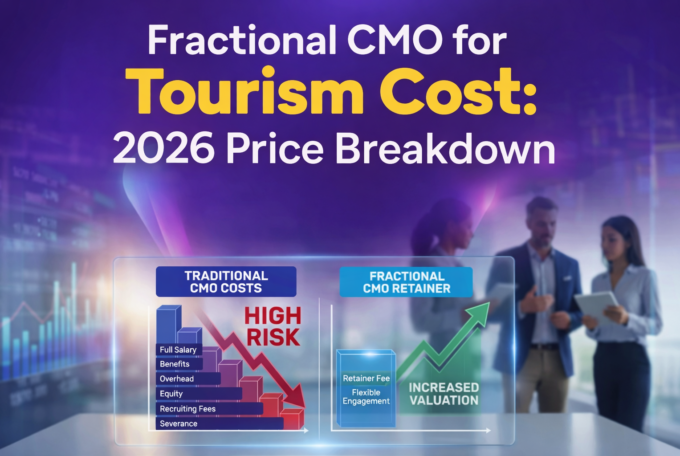
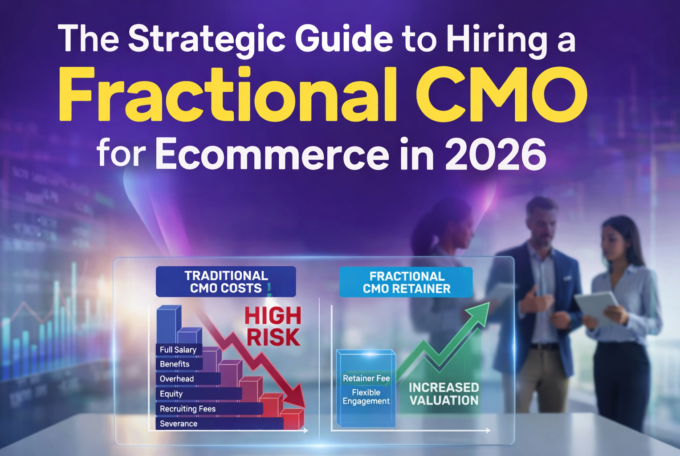
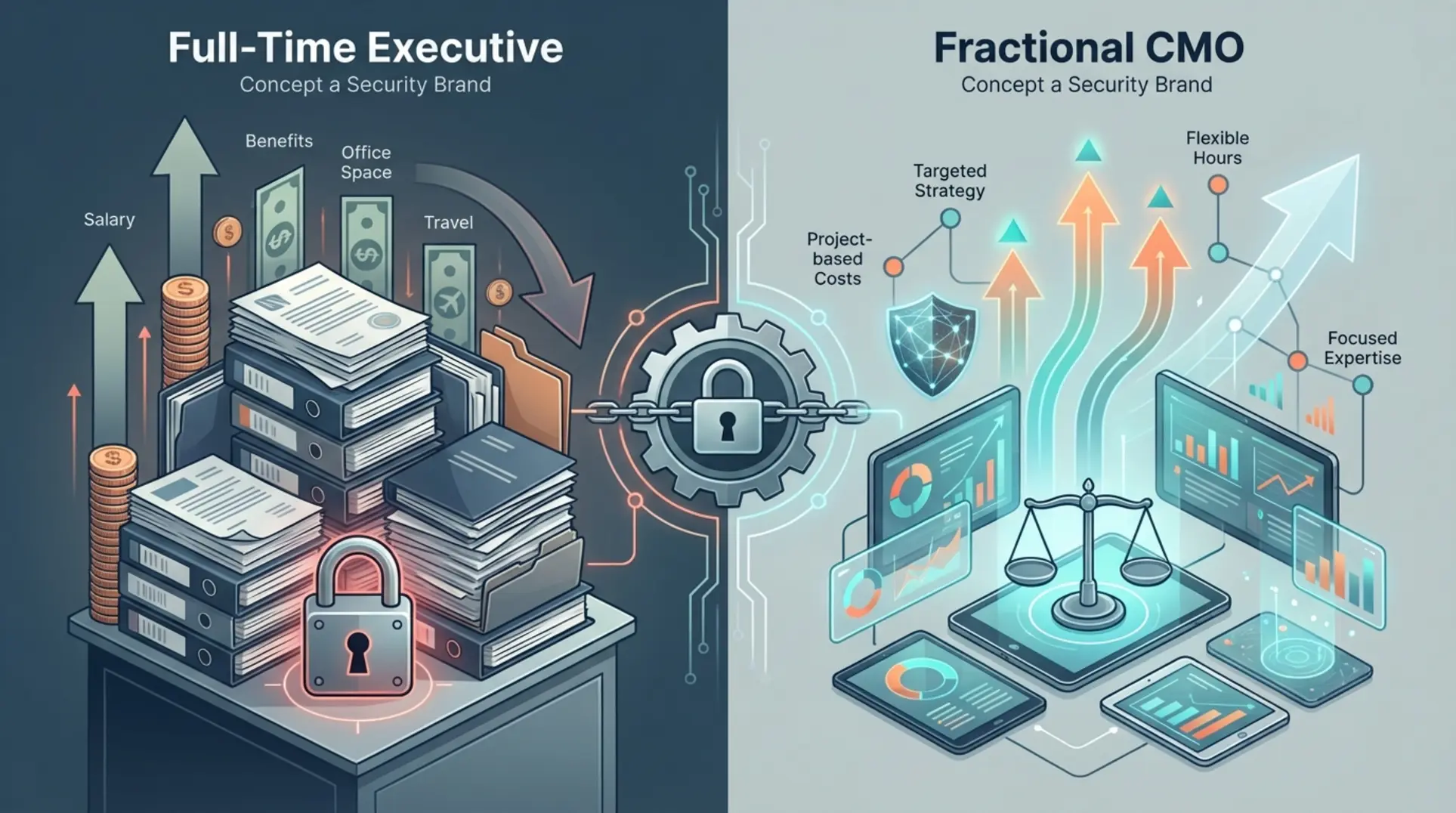
For Series A-C security SaaS companies, retaining a fractional CMO at approximately $15,000 per month typically provides a significantly better return on investment than a full-time executive hire, whose total compensation package in the US often exceeds $300,000 annually. Understanding the fractional cmo cost structure is essential for founders looking to optimize their runway while scaling revenue.
The True Cost of a Full-Time Hire
When evaluating marketing leadership, the base salary is only the starting point. A full-time executive requires bonuses, comprehensive benefits, equity equity grants, and severance risk. According to 2024 market data synthesis, a full-time Chief Marketing Officer (CMO) in the US tech sector typically commands a base salary ranging from $175,000 to $350,000, with performance bonuses often adding another 30% to 100% of the base salary [1]. For an early-stage or scaling security brand, allocating this much capital to a single role can restrict the actual marketing execution budget.
The Fractional CMO Value Proposition
The fractional model shifts the financial dynamic from overhead to execution. By comparing a monthly retainer to the fully loaded cost of a full-time hire, startups can access senior-level strategy and execution oversight without the long-term, full-time financial commitment. You are paying for strategic outcomes, market positioning, and leadership experience, rather than paying for a seat at a desk. This flexibility is highly effective for startups that need to navigate complex go-to-market challenges but must remain agile with their cash flow.
This model is especially effective for lean teams. For a broader breakdown of how smaller companies scale efficiently, see our guide on fractional cmo for small business.
Typical Engagement Scope
A typical fractional CMO engagement for a security brand goes beyond high-level strategy. It usually includes GTM ownership, funnel design, messaging refinement, KPI tracking, and cross-functional alignment with sales and product teams. In many cases, the fractional leader also oversees vendor selection, manages agencies, and builds performance dashboards tied directly to revenue metrics. Understanding this scope helps founders set realistic expectations and ensures the role is positioned as a revenue-driving function rather than a purely advisory one.
Understanding how this role evolves across different company stages is key. We’ve compared this in detail in our guide on fractional cmo for b2b startup, including when to choose each model.
Calculating ROI
The fractional cmo roi is not measured in hours worked, but in business outcomes. ROI is typically framed in terms of accelerated Monthly Recurring Revenue (MRR), an improved LTV:CAC (Lifetime Value to Customer Acquisition Cost) ratio, and the avoidance of costly marketing mis-hires. By bringing in a seasoned leader who understands the nuances of the cybersecurity market, companies can reduce wasted ad spend, shorten the sales cycle, and connect their marketing investment directly to tangible business results.

The 30-60-90 Day Fractional CMO Execution Plan
A successful fractional cmo 30 60 90 day plan provides a tangible, step-by-step roadmap that demonstrates implementation depth. For action-oriented founders, this security brand implementation guide outlines how a fractional leader transitions a company from tactical guesswork to a predictable revenue engine.
Days 1-30: The Security, Data & MarTech Stack Audit
The first month focuses heavily on diagnosis, compliance, and foundation-building. A generic cybersecurity marketing strategy often fails because it ignores the underlying data and security infrastructure.
- Technical Audit: The fractional CMO reviews the current marketing stack for security compliance, ensuring tools align with SOC 2, ISO 27001, and internal data governance policies.
- Data Analysis: A deep dive into historical analytics helps establish baseline metrics. Understanding current CAC, LTV, and pipeline conversion rates is critical before scaling spend.
- Stakeholder Interviews: The CMO aligns with the CEO, sales leadership, and product engineering teams to understand revenue goals, product capabilities, and current market positioning.
- Initial Roadmap: The phase concludes with a findings report and a prioritized 60-day action plan, setting clear expectations for the upcoming execution phase.
Days 31-60: The Go-To-Market (GTM) Engineering Phase
With the foundation set, the focus shifts to strategy development and asset creation. A robust cybersecurity go to market strategy must prioritize technical authority over superficial branding.
- Messaging & Positioning: The value proposition is refined to resonate directly with skeptical CISO personas. The messaging must shift from “feature-led” to “outcome and security-led.”
- Funnel Architecture: The CMO designs a “Trust-Based” funnel. Instead of merely capturing leads through gated checklists, the funnel is engineered to educate and validate the buyer’s highly technical concerns.
- Content Foundation: The team begins developing pillar content, such as deep-dive technical whitepapers, architectural teardowns, and research reports. High-quality cybersecurity content marketing is what ultimately builds defensible authority.
- Secure MarTech Implementation: Marketing tools are implemented or re-configured to meet the compliance standards identified in the first 30 days, ensuring data privacy is maintained across the stack.
Days 61-90: The Scalable MRR Engine & AI Optimization
The final phase of the onboarding plan transitions into execution, optimization, and scaling. This is where cybersecurity lead generation shifts from theory to measurable pipeline.
- Campaign Launch: Initial GTM campaigns are executed based on the newly engineered framework and messaging.
- AI-Powered Optimization: The fractional leader utilizes AI tools to analyze early campaign data, optimize ad spend in real-time, and identify high-performing audience segments that manual analysis might miss.
- Performance Dashboard: A transparent, automated dashboard is implemented, connecting marketing activities directly to MRR, pipeline velocity, and sales metrics.
- Dark Social Engagement: The team initiates strategic, non-promotional engagement in key CISO communities, focusing on peer-to-peer technical contribution rather than direct selling.
If you’re evaluating how strategic leadership translates into measurable outcomes across technical industries, we’ve expanded this framework in our guide to fractional cmo for science companies.
Time to Results (Realistic Expectations)
While the 30-60-90 day plan outlines structured execution, founders should align expectations around timelines for measurable impact. In most security SaaS environments, early signals such as improved conversion rates, stronger positioning, and better lead quality appear within the first 60–90 days. However, meaningful MRR growth and pipeline consistency typically require 3–6 months of sustained execution. This timeline reflects the complexity of selling to technical buyers and the longer sales cycles common in cybersecurity.

Aligning Marketing with MRR & The Rule of 40
Effective security SaaS marketing aligns every activity with Net New Revenue by focusing on two core financial metrics: the LTV:CAC ratio and the Rule of 40. Marketing with MRR goals ensures that the fractional CMO operates as a revenue leader, rather than just a brand manager.
Beyond Leads: The LTV:CAC Obsession
In the cybersecurity sector, lead volume is often a dangerous vanity metric. Generating thousands of unqualified leads from low-tier IT workers does nothing to drive enterprise MRR and only serves to frustrate the sales team. Instead, a successful saas mrr growth strategy obsesses over the LTV:CAC ratio.
A healthy ratio (typically benchmarked around 3:1 or higher) indicates that the company is acquiring customers profitably and retaining them long enough to generate significant lifetime value. A fractional CMO utilizes AI-powered analytics to predict LTV based on early behavioral signals and optimizes CAC across various channels. By focusing on saas ltv cac ratio marketing, the team ensures that budget is allocated only to channels that produce high-intent, technical buyers.
The Rule of 40 as a Marketing North Star
The Rule of 40 is a critical financial framework stating that a healthy SaaS company’s annual revenue growth rate plus its profit margin should equal or exceed 40%. As detailed in a business framework analysis by McKinsey, this metric is widely used by investors to evaluate a company’s balance of growth and profitability [2].
Rule of 40 saas marketing requires a strategic balancing act. Aggressive, inefficient marketing spend might boost the growth rate but will destroy profit margins, lowering the overall score. Conversely, cutting marketing entirely might boost short-term margins but stall growth. A fractional CMO aligns marketing decisions with this North Star metric, ensuring that customer acquisition is efficient enough to support a strong Rule of 40 score, which can positively impact investor perception and valuation during funding rounds.
Benchmarks for Success (What Good Looks Like)
To evaluate performance objectively, security SaaS companies should define clear success benchmarks. Strong fractional CMO engagements often result in a 20–50% improvement in SQL quality, a measurable reduction in CAC, and increased pipeline velocity within the first two quarters. More advanced outcomes include improved win rates from technical buyers and shorter sales cycles due to better pre-sale education. These benchmarks provide a practical framework for assessing ROI beyond surface-level metrics like traffic or impressions.
AI-Driven MarTech & The Compliance-MarTech Gap
A common oversight among generic marketers is recommending powerful AI marketing tools without discussing the security implications of feeding customer data into them. This “Compliance-MarTech Gap” is a critical vulnerability for brands selling to security professionals.
Building the Secure MarTech Stack
The goal of ai driven marketing for saas is not just to use artificial intelligence, but to use it responsibly and securely. Before deploying advanced generative models or predictive analytics, a fractional CMO must conduct a rigorous martech stack security audit. This involves vetting all third-party tools for SOC 2 compliance, ensuring end-to-end data encryption, and reviewing data retention and privacy policies. If a cybersecurity company’s own marketing stack leaks data or violates privacy norms, it instantly destroys the trust they are trying to sell to their clients.
Aligning with US Governance Frameworks
To build trust with US-based enterprise buyers, a security brand’s marketing operations must align with established governance frameworks. To ensure responsible implementation, an effective approach aligns with the principles of the NIST AI Risk Management Framework (AI RMF 1.0), released in January 2023, which provides a structured process to govern, map, measure, and manage AI-related risks [3].
Furthermore, marketing practices must remain transparent. The FTC provides guidelines for online advertising to ensure that marketing practices are fair and transparent, covering areas like disclosures and the prevention of deceptive acts [4]. Adhering to these guidelines demonstrates a commitment to ethical ai marketing automation for saas. The rapid adoption of AI is undeniable—the Stanford HAI 2025 AI Index noted that U.S. private investment in AI reached $109.1 billion in 2024 [6]—but security brands must adopt it with extreme caution.
Practical Application
Practically, this means utilizing privacy-first analytics platforms that do not rely on invasive third-party cookies. It means ensuring that any AI-powered personalization tools process data locally or within secure, compliant cloud environments, and that customer data is never used to train public LLMs without explicit, documented consent.
The “Dark Social” Strategy & The Skepticism Gap
CISOs and senior security engineers rarely make purchasing decisions based on sponsored LinkedIn ads or cold emails. Instead, they vet solutions in private Slack channels, Discord servers, exclusive forums, and peer groups—the “dark social” layer.
The CISO Vetting Ground
Cybersecurity ciso marketing must acknowledge that technical buyers are inherently skeptical. They rely heavily on peer validation. The strategy in these dark social spaces is not to advertise, but to contribute value. This involves sharing deep technical insights, answering complex architectural questions without a sales pitch, and offering genuine expertise. This approach directly counters the “Skepticism Gap” by demonstrating technical authority rather than creative flair.
How a Fractional CMO Executes This
A fractional CMO helps execute this by identifying the key micro-communities where your specific buyers congregate. They then work closely with the founder or internal engineering team to craft highly valuable, non-promotional content. The goal is to engage consistently over time, allowing the brand’s technical leaders to build a reputation as trusted experts within the community.
Building Defensible Trust
Cybersecurity brand trust is fragile and must be actively defended. According to a 2023 industry survey by Cybersecurity Insiders, 50% of IT leaders report that a major challenge in selecting cybersecurity vendors is their lack of full trust in third-party providers to secure their infrastructure [5]. Furthermore, IBM’s 2023 Cost of a Data Breach Report indicates that 48% of consumers reported that a data breach would cause them to stop trusting a company with their personal data [7]. Building trust through authentic, peer-reviewed expertise in dark social channels is often highly effective for overcoming this inherent market skepticism.
Hiring Checklist
Before hiring a fractional CMO for a security brand, founders should evaluate candidates based on a structured checklist. This includes proven experience in cybersecurity or technical SaaS markets, a track record of improving MRR and CAC metrics, familiarity with compliance frameworks like SOC 2 and NIST, and the ability to align marketing with sales processes. Additionally, strong candidates should demonstrate how they integrate AI responsibly into marketing operations without compromising data security or trust.
Frequently Asked Questions
What is a fractional CMO for B2B SaaS?
A fractional CMO for B2B SaaS is a senior-level marketing executive who works with a company on a part-time or “fractional” basis. They provide strategic leadership, manage marketing teams, and align marketing efforts with revenue goals, all without the cost and commitment of a full-time C-suite hire. This model is well-suited for startups and scale-ups needing expert guidance to navigate growth stages effectively.
How does a fractional CMO help security companies strengthen marketing?
A fractional CMO strengthens a security company’s marketing by shifting the focus from generic tactics to building technical authority and trust. They implement secure MarTech stacks, develop content that resonates with skeptical CISO buyers, and create go-to-market strategies that prioritize compliance and data-backed proof over creative flair. This approach helps ensure marketing efforts build credibility and support revenue in a high-trust industry.
What is the difference between a fractional CMO and a marketing agency?
A fractional CMO provides executive leadership and strategy, acting as an integrated part of your leadership team. They are responsible for the overall marketing vision, budget, and team management. In contrast, a marketing agency is an external team hired to execute specific tasks, such as running ad campaigns or managing SEO. A fractional CMO decides *what* to do; an agency *does* what it’s told.
How much does a fractional cmo for security brand cost?
The cost for a fractional marketing leader for a security brand typically ranges from $10,000 to $20,000 per month in the US market. The final price depends on the scope of work, the company’s growth stage, and the level of involvement required. This investment is significantly less than the $300,000+ annual total compensation package for a comparable full-time executive hire.
What does a 30-60-90 day plan for a fractional CMO look like?
A typical 30-60-90 day plan involves three phases. Days 1-30 are for auditing data, security, and the MarTech stack. Days 31-60 focus on engineering the go-to-market strategy, refining messaging, and building foundational content. Days 61-90 are dedicated to executing campaigns, optimizing with AI, and scaling the revenue engine based on performance data.
How to align marketing with MRR goals for security SaaS?
To align marketing with MRR goals, focus on metrics that directly impact revenue, not just lead volume. Prioritize the LTV:CAC (Lifetime Value to Customer Acquisition Cost) ratio to support profitability. Use financial benchmarks like the Rule of 40 to guide spending decisions, and build a transparent performance dashboard that tracks marketing’s contribution to net new revenue and sales pipeline.
What are the common mistakes when hiring a fractional CMO for cybersecurity?
Common mistakes include hiring a generalist SaaS marketer who doesn’t understand the security buyer’s skepticism. Another error is focusing on creative skills over a deep understanding of compliance and data security. Finally, failing to grant the fractional leader enough authority to make strategic decisions can render their role ineffective. It is generally recommended to prioritize vertical-specific expertise and a data-driven mindset.
How can AI-powered marketing drive MRR growth in security?
AI-powered marketing can support MRR growth by enabling highly efficient targeting and data analysis at scale. It can help predict which leads are most likely to convert, optimize ad spend in real-time to lower CAC, and personalize content to build trust with technical audiences. When implemented within a secure framework, AI provides data-backed insights that can help accelerate the sales cycle.
How do you build brand trust for a cybersecurity startup?
Build brand trust by demonstrating technical authority and an unwavering commitment to security in all marketing activities. This includes publishing in-depth, peer-reviewed style content, engaging authentically in expert communities (“dark social”), and running a marketing operation that is itself compliant with standards like SOC 2. Trust is earned through consistent proof, not just marketing promises.
What is the ROI of hiring a fractional marketing leader?
The ROI of a fractional marketing leader is typically measured by accelerated MRR growth, improved capital efficiency, and the avoidance of costly mis-hires. By implementing a structured GTM strategy faster and optimizing the LTV:CAC ratio, a fractional CMO can help shorten the time to predictable revenue. Their strategic guidance often helps prevent wasteful spending on ineffective channels, which can directly support profitability.
Limitations, Alternatives & Professional Guidance
While highly effective for many scaling SaaS companies, the fractional model has limitations. A fractional CMO is not a full-time, in-the-weeds employee. They provide strategic oversight, executive alignment, and team management, but they do not execute day-to-day tactical tasks like writing every blog post or manually adjusting daily ad bids. This model works best for companies that either have an existing junior marketing team in place or have the budget to hire specialized freelancers for execution. Very large, complex enterprise organizations may ultimately require a full-time, dedicated C-suite executive to manage internal cultural alignment.
When comparing a fractional cmo for security brand to other models, founders have a few alternatives. An in-house CMO is best suited for later-stage companies (Series C and beyond) with a large budget and the need for a full-time cultural leader. Conversely, a marketing agency is a good fit for companies that already have a clear, validated strategy and simply need bandwidth for executing specific tasks like SEO or PPC, but lack internal leadership. Project-based consultants are useful for one-off needs, such as a brand messaging overhaul or a localized market research project.
Founders should seek a professional consultation when their revenue growth has stalled despite having a marketing team in place, or when they are preparing for a new funding round and need to demonstrate a scalable, capital-efficient marketing model to investors.
Fractional CMO vs Security Marketing Agency
While both fractional CMOs and marketing agencies support growth, their roles are fundamentally different. A fractional CMO owns strategy, prioritization, and revenue alignment, acting as part of the leadership team. In contrast, a security marketing agency focuses on execution, often without deep integration into business decisions. For cybersecurity companies, this distinction is critical—strategy must be tightly aligned with product capabilities and compliance requirements. The most effective model often combines both, with a fractional CMO directing strategy and an agency executing specialized tasks.
Final Decision Framework
To determine whether a fractional CMO is the right investment, founders should assess three factors: the complexity of their sales cycle, the level of internal execution support, and the urgency of revenue growth. Security SaaS companies with long sales cycles, technical buyers, and limited marketing leadership typically benefit the most from this model. However, without execution capacity or alignment with sales, even the best strategy may fail to translate into revenue.
Conclusion
Navigating the complexities of the US cybersecurity market requires more than just standard B2B SaaS growth hacks; it requires “Trust-Based GTM Engineering.” A fractional cmo for security brand is a strategic investment in building a marketing engine that prioritizes compliance, technical authority, and direct alignment with MRR. By implementing a rigorous 30-60-90 day plan, focusing on financial metrics like LTV:CAC and the Rule of 40, and securely leveraging AI and dark social channels, security founders can effectively engage skeptical, engineering-minded buyers and scale their revenue predictably.
At Algocentric Digital, our fractional marketing leaders are experts in this outcome-based model. We combine deep cybersecurity market knowledge with AI-empowered, data-driven methodologies to build defensible trust and accelerate pipeline velocity. If you’re a US-based security SaaS founder ready to build a marketing engine as rigorous and secure as your product, consider booking a Growth Consultation with Sergiy Solonenko to discuss your specific MRR goals.
References
- llm_scraper Research: 2024 US CMO Salary Benchmarks
- McKinsey & Company: SaaS and the Rule of 40
- National Institute of Standards and Technology (NIST): AI Risk Management Framework
- Federal Trade Commission (FTC): Online Advertising Guidelines
- llm_scraper Research: Cybersecurity Insiders 2023 Survey
- Stanford University Human-Centered AI Institute: 2025 AI Index Report
- llm_scraper Research: IBM Cost of a Data Breach Report 2023

Sergey Solonenko is the founder of Algocentric Digital Consultancy, an active digital strategist and a fractional CMO for many B2B SaaS brands embracing digital transformation. At Algocentric Digital Sergey’s focus is on empowering every B2B SaaS brand who is looking to scale their demand generation program. Sergey’s digital marketing experience over the last 10 years has allowed him to become a digital evangelist focused on improving B2B SaaS demand generation programs and consulting on best practices around account based marketing, sales and marketing team alignment, setting up better lead qualification systems and improving user experience through personalization by aligning martech with key marketing KPIs that ladder up to faster MRR for B2B SaaS brands.