🎯 Quick Answer
When evaluating 2026 budgets, the fractional cmo for tourism cost typically ranges between $5,000 and $15,000 per month, offering a significant saving compared to a full-time executive salary.
• Access strategic leadership without the $250k+ annual cost of a full-time hire. • Leverage AI-operationalization to drive efficiency and reduce customer acquisition costs. • Navigate the 2026 US tourism market with expertise in tech hubs like San Francisco, NYC, and Miami.
Continue reading for a detailed breakdown of pricing models, ROI calculations, and how to choose the right partner for 2026.
The challenge facing high-growth US tourism tech brands is often a financial one: the need for C-suite marketing leadership frequently comes with a prohibitive $250,000+ annual salary, plus benefits and equity. For companies aiming to scale efficiently, the AI-Empowered Fractional CMO has emerged as a modern, capital-efficient solution for 2026. Directly addressing the primary search query, data indicates that the fractional cmo for tourism cost is a fraction of a full-time hire, typically ranging from $5,000 to $15,000 per month depending on the engagement scope.
This guide goes beyond generic price ranges to support your strategic planning. It provides a detailed breakdown of 2026 pricing models, a clear financial comparison against full-time roles, and reveals how to approach ROI calculations specifically for the US tourism tech market. Furthermore, we will explore critical factors that basic overviews often miss, such as the impact of AI operationalization and new FTC regulations on pricing transparency and overall value.
For a broader understanding of how fractional leadership applies across industries, explore our guides on fractional CMO for ecommerce, fractional CMO for sustainability, and other sector-specific strategies.
How to Calculate ROI for a Fractional CMO in Tourism
A simple ROI model:
ROI = (Revenue Growth – Marketing Investment) / Marketing Investment
Example:
- Monthly CMO cost: $8,000
- Revenue increase: $40,000
- ROI = ($40,000 – $8,000) / $8,000 = 4x
For tourism brands, additional ROI indicators include:
- Reduced CAC during peak seasons
- Increased direct bookings vs OTA dependency
- Higher occupancy rates during low-demand periods
ℹ️ Transparency: This article explores the 2026 cost structures for Fractional CMOs based on market data and proprietary research. Some links may connect to our services. All information is verified and reviewed by Sergiy Solonenko. Our goal is to provide accurate, helpful information for your strategic planning.

2026 Pricing Models for Tourism Tech Fractional CMOs
Understanding the fractional cmo for tourism cost starts with the pricing model. Fractional CMO pricing isn’t one-size-fits-all; it is designed for flexibility to meet varying business needs. When evaluating the cmo as a service cost, leaders typically encounter three primary engagement models: Retainer, Hourly, and Performance-based.
Monthly Retainer Model
Cost: $5,000 – $20,000+ per month.
The retainer model is the most common approach, providing a set number of hours or specific deliverables for strategic oversight, team management, and marketing leadership. These fractional cmo rates offer budget predictability while ensuring consistent executive presence. Average marketing retainer fees in the tourism tech sector often hover around $8,000 to $12,000 for mid-stage startups.
This model is typically well-suited for companies needing ongoing strategic guidance and seamless integration with their executive team. For example, a Series A travel tech startup might engage a fractional CMO on a $7,000/month retainer for 20 hours of strategic leadership, helping them navigate market expansion without the overhead of a full-time hire.
Hourly Rate Model
Cost: $200 – $500 per hour.
For businesses requiring highly specialized, short-term consulting, hourly fractional cmo rates provide an agile solution. This model includes strategic consulting on a specific project, challenge, or audit.
It is generally an effective choice for businesses that need expert guidance for a targeted initiative—such as a new product launch, a pricing strategy overhaul, or a market entry plan—without committing to a long-term monthly contract. While flexible, hourly engagements can become expensive if the scope of work expands unexpectedly.
Performance-Based Hybrid Model
Cost: Lower base retainer ($3,000-$7,000/month) + a percentage of revenue growth or other key metric (e.g., 1-5% of MRR growth).
The performance-based hybrid model is increasingly recognized as a transparent approach to fractional cmo pricing. It aligns the fractional CMO’s compensation directly with business outcomes, making it Algocentric Digital’s preferred “Value-Driven” model.
This structure is ideal for companies that want to directly tie their marketing leadership investment to financial results, ensuring a true partnership. Furthermore, this model strongly aligns with the FTC’s Rule on Unfair or Deceptive Fees, effective May 12, 2025, which mandates transparency in pricing. By clearly linking fees to measurable outcomes, businesses can avoid the hidden costs sometimes found in traditional agency structures.
Fractional vs. Full-Time CMO: The $150k+ Savings Analysis
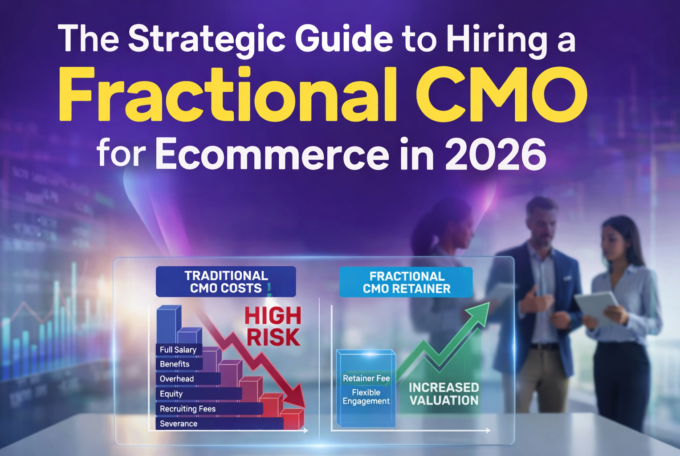
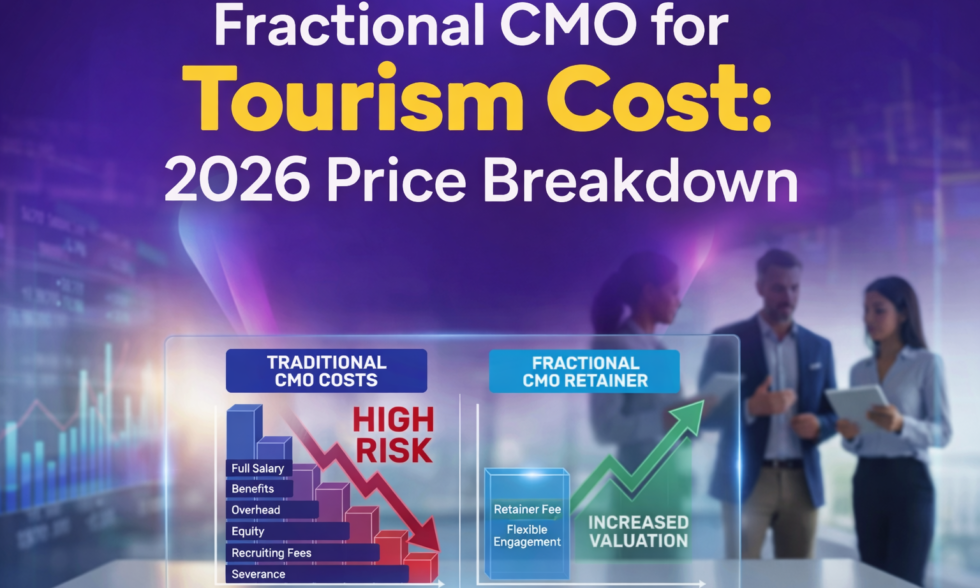
Analyzing fractional cmo vs full-time cmo investments reveals that the cost difference extends far beyond base salary. A full-time CMO’s total compensation in the US includes significant overhead, taxes, and benefits that a fractional engagement naturally avoids.
When evaluating the fractional cmo for tourism cost against a traditional hire, the financial advantages become clear.
| Cost Factor | Full-Time CMO (Annual) | Fractional CMO (Annual) |
|---|---|---|
| Average Base Salary | ~$220,000 | ~$96,000 (at $8k/mo) |
| Bonuses & Equity | ~$50,000+ | $0 |
| Payroll Taxes (15%) | ~$33,000 | $0 |
| Health/Benefits | ~$25,000 | $0 |
| Recruiting & Onboarding | ~$40,000 | $0 |
| Total Annual Cost | ~$368,000+ | ~$96,000 |
This comparison highlights a potential ~74% cost reduction when comparing a fractional cmo salary equivalent to a full-time executive package. Beyond immediate cash savings, the fractional model helps businesses avoid long-term liabilities such as equity dilution and severance packages.
Additionally, it offers the flexibility to scale services up or down as business needs change—an agility that is nearly impossible with a full-time hire. Data from a Bureau of Economic Analysis report shows the digital economy is a rapidly growing component of U.S. GDP. For tourism tech companies, this underscores the need for agile and expert marketing leadership to capture market share efficiently without overextending operational budgets.
Hidden Costs to Consider
While fractional CMO pricing appears straightforward, businesses should consider:
- Internal team alignment time
- Tool stack upgrades (CRM, analytics, AI tools)
- Execution costs (ads, creatives, development)
Understanding these additional costs helps build a more accurate marketing budget.
Fractional CMO vs Tourism Marketing Agency
While agencies focus on execution (ads, SEO, content), a fractional CMO owns the overall growth strategy.
- Agencies = channel execution
- Fractional CMO = revenue ownership
In tourism, where seasonality and demand fluctuation are critical, strategic leadership often has a higher impact than isolated campaign execution.
Who Should NOT Hire a Fractional CMO for Tourism
Not every tourism business is ready for fractional leadership. It may not be the right fit if:
- Your business is pre-revenue or below $500K annually
- You lack sufficient data (traffic, bookings, CAC) to optimize
- You need execution (ads, content) rather than strategy
In these cases, investing in tactical marketing or agencies may provide a better short-term ROI.

Why Leadership (Not Tools) Drives 2026 ROI: The AI Operationalization Gap
A common (and often generic) response to modern marketing challenges is simply: “Use AI tools like ChatGPT for content.” However, this overlooks the critical component of *operational strategy*. In 2026, true ai marketing efficiency comes from a leader who designs AI-native systems, rather than a team that merely uses isolated AI applications.
From Campaign Manager to System Designer
The old paradigm relied on marketers manually managing individual campaigns. The 2026 approach requires a fractional CMO to design a comprehensive system where AI handles demand forecasting, dynamic pricing models for fluctuating tourism seasons, and predictive analytics for visitor flow.
Instead of just running static ads for a ski resort, an AI-empowered CMO builds an ecosystem that uses weather data, flight bookings, and competitor pricing to dynamically adjust ad spend and messaging in real-time. This level of system design can significantly impact the customer acquisition cost tourism brands face, potentially reducing CAC by an estimated 20% by minimizing wasted spend on low-probability conversions.
Bridging Marketing and Operations
Another significant gap is marketing functioning in a silo. In the US tourism sector, marketing demand must directly inform operational capacity—such as hotel occupancy rates or tour availability.
A strategic fractional CMO uses AI to connect marketing data (demand signals) with operational data (inventory). This prevents wasted ad spend on sold-out dates and identifies opportunities to boost demand during low periods. By integrating AI-driven SEO strategies with inventory management, leadership ensures that marketing efforts actively support operational realities, driving true ai marketing efficiency.
Tourism-Specific Use Cases for a Fractional CMO
The application of a fractional CMO varies across tourism business models:
- Hotels & Resorts: Optimize occupancy rates through dynamic pricing, seasonal campaigns, and direct booking strategies
- Travel Platforms (OTAs): Improve acquisition efficiency while balancing paid traffic and SEO-driven bookings
- Tour Operators: Increase off-season demand using targeted campaigns and AI-driven demand forecasting
- Luxury Travel Brands: Focus on high-LTV customer acquisition and personalized marketing journeys
Each segment requires a tailored strategy, which is why industry-specific expertise significantly impacts ROI.
Authority & Data Support
The necessity of strategic leadership over mere tool adoption is supported by recent market data:
- In a 2025 AI Index Report analyzing global trends, Stanford’s Institute for Human-Centered AI reported that U.S. private investment in AI grew to $109.1 billion in 2024, signaling massive adoption but also increasing the pressure on businesses to achieve a return on that investment.
- According to a 2025 U.S. Census Bureau report on technology’s impact, approximately 78% of organizations reported using AI in 2024. This widespread ai adoption in us businesses means that competitive advantage now comes from strategic implementation, not just usage.
- A September 2025 article from the SBA’s Office of Advocacy found that the AI use rate among small businesses rose to 8.8%. While this shows growth, it also highlights a significant gap in strategic AI leadership compared to larger enterprises.
As Sergiy Solonenko notes, “The difference between a company that struggles with AI and one that scales with it is executive leadership. We don’t just deploy tools; we architect systems that align marketing output directly with revenue goals.”
Geographic Advantage: Navigating US Tourism Tech Hubs
While fractional CMO services are typically national or global, rates and the required travel tech marketing strategy can be influenced by the economic conditions and competitive density of major US tech hubs.
San Francisco & Silicon Valley
Companies in this region feature a high concentration of venture-backed travel tech. The intense competition demands more aggressive and sophisticated AI-driven growth strategies. Consequently, pricing and retainers may be 10-20% higher due to the high cost of living and the intense demand for top-tier executive talent.
New York City & Miami
These cities serve as major hubs for international tourism, hospitality tech, and cruise lines. The destination marketing strategy cost here often reflects the need for complex, multi-lingual campaigns and international market positioning. Rates are highly competitive, with a strong emphasis on performance-based models tied directly to bookings, occupancy, and revenue growth.
Austin
As an emerging tech hub, Austin has a growing focus on startups in the experiences and boutique hospitality space. The hospitality marketing consultant cost in this region often features more accessible retainer models, with a strategic focus on establishing product-market fit and driving early-stage growth for newer platforms.
How Long Does It Take to See Results?
Most tourism brands begin seeing measurable improvements within 60 to 120 days. Early wins often include improved campaign efficiency and better data visibility, while significant revenue impact typically occurs within 3–6 months.
Frequently Asked Questions
How much does a fractional CMO cost?
A fractional CMO typically costs between $5,000 and $15,000 per month. While general rates vary, the specific fractional cmo for tourism cost depends on the scope of work, the company’s stage, and the engagement model (e.g., retainer, hourly, or performance-based). This provides access to executive-level marketing strategy for a fraction of a full-time CMO’s $250,000+ total compensation package.
How much should I charge as a fractional CMO?
As a fractional CMO, you should charge between $200 and $500 per hour, or offer monthly retainers from $5,000 to $20,000. Your pricing should reflect your experience, the complexity of the client’s industry (like tourism tech), and the value you provide. Performance-based models, which include a base retainer plus a percentage of growth, are increasingly popular for aligning compensation with client results.
How much does a fractional CEO cost?
A fractional CEO generally costs more than a fractional CMO, with typical monthly retainers ranging from $10,000 to $30,000 or more. The cost depends on the CEO’s experience, the company’s size, and the depth of their responsibilities, which often include operations and finance in addition to strategy. This role serves a similar purpose for executive leadership on demand.
What is the hourly rate for a CMO?
The hourly rate for a fractional CMO typically falls between $200 and $500. Rates at the higher end of this range are common for consultants with deep, niche expertise (e.g., AI in tourism tech) or those working on high-stakes, short-term projects. Most engagements, however, are structured around monthly retainers for better budget predictability.
What is the average rate for a fractional CMO?
The average rate for a fractional CMO is approximately $7,000 to $12,000 per month on a retainer basis. This provides a business with consistent strategic marketing leadership without the full financial commitment of a salaried executive. The final rate can vary based on the required hours, company size, and specific industry demands.
How many hours does a fractional CMO work?
A fractional CMO typically works between 15 to 40 hours per month for a single client. The exact hours are defined in the engagement agreement and depend on the company’s needs. The focus is on high-impact strategic work, such as planning, team leadership, and performance analysis, rather than full-time tactical execution.
When to hire a fractional CMO?
You should hire a fractional CMO when your business needs expert marketing strategy but isn’t ready for a full-time executive hire. This is common for startups post-Series A, businesses entering a new market, or companies that need to scale their marketing efforts efficiently. It’s an effective solution when leadership is the primary need, not just more task execution.
How do you measure the ROI of a fractional CMO?
The ROI of a fractional CMO is measured by tracking key business metrics tied to their strategic initiatives. This includes improvements in Marketing Qualified Leads (MQLs), reduction in Customer Acquisition Cost (CAC), growth in Customer Lifetime Value (LTV), and ultimately, the increase in Monthly Recurring Revenue (MRR). Performance-based contracts can make this ROI calculation direct and transparent.
What is an outsourced CMO?
An outsourced CMO is another term for a fractional CMO—a senior-level marketing executive who works with a business on a part-time, contractual basis. They provide the strategic direction and leadership of an in-house CMO without being a full-time employee. This outsourced cmo service offers businesses flexibility and access to top-tier talent at a lower cost.
What is the difference between a fractional CMO and a marketing agency?
A fractional CMO provides high-level strategic leadership, while a marketing agency provides tactical execution. The fractional CMO acts as your head of marketing to build the strategy and manage the team. Understanding the difference between a fractional CMO and a marketing agency helps clarify that an agency is a team of specialists hired to execute specific tasks like running ads or writing content.
Limitations, Alternatives & Professional Guidance
While the financial benefits of a fractional executive are well-documented, it is important to acknowledge that pricing data is dynamic and can shift with economic conditions in the US market. Furthermore, while industry benchmarks are useful, the true value of a fractional CMO is highly dependent on their specific experience and the unique needs of your business. Studies on fractional executive ROI are still emerging as the model gains popularity. Additionally, a 2025 Pew Research Center study of U.S. adults found that 52% of workers are worried about AI’s role in the workplace. This highlights a key limitation of AI tools alone; effective human leadership is required to manage team integration, morale, and the strategic application of new technology.
Depending on your organizational stage, there are alternative approaches to consider. A traditional marketing agency can be a good choice for companies that already have a solid internal strategy but lack the manpower for execution. Alternatively, up-skilling an internal leader by promoting a high-potential marketing manager and supporting them with specialized consultants can be effective if a strong internal candidate exists. Finally, project-based consultants can work well for targeted, short-term needs like technical SEO or a website migration.
Before making a decision, we recommend that leaders conduct consultations with a few fractional CMOs and agencies. This process helps clarify internal needs, assess cultural chemistry, and ensure the chosen partner truly understands the nuances of the tourism tech niche.
Conclusion
The fractional cmo for tourism cost in 2026 presents a compelling financial and strategic alternative to a traditional executive hire, potentially saving businesses over $150,000 annually. The right choice ultimately depends on selecting the appropriate engagement model—whether that is a predictable retainer, an agile hourly arrangement, or a results-aligned performance-based structure. Above all, the greatest value comes from partnering with a leader who can operationalize AI, rather than just use tools, to successfully navigate the complexities of the US tourism tech market.
If you are planning your growth strategy for 2026, consider how an AI-Empowered Fractional CMO can align your marketing investment directly with revenue growth. Algocentric Digital’s ‘Value-Driven’ model is designed to address these specific strategic gaps with transparent, performance-based partnerships. Book a 2026 Growth Consultation with our team to discuss how we can support your scaling objectives.
References
- 2025 AI Index Report – Stanford University Institute for Human-Centered AI, analyzing global AI investment trends in 2024.
- 2025 U.S. Census Bureau report – United States Census Bureau, detailing AI usage rates among organizations in 2024.
- September 2025 article – U.S. Small Business Administration Office of Advocacy, reporting on AI adoption rates among small businesses.
- FTC’s Rule on Unfair or Deceptive Fees – Federal Trade Commission, outlining pricing transparency regulations effective May 2025.
- Bureau of Economic Analysis data – U.S. Department of Commerce, tracking the growth of the digital economy as a component of U.S. GDP.
- 2025 Pew Research Center study – Pew Research Center, surveying U.S. workers’ views and concerns regarding AI integration in the workplace.

Sergey Solonenko is the founder of Algocentric Digital Consultancy, an active digital strategist and a fractional CMO for many B2B SaaS brands embracing digital transformation. At Algocentric Digital Sergey’s focus is on empowering every B2B SaaS brand who is looking to scale their demand generation program. Sergey’s digital marketing experience over the last 10 years has allowed him to become a digital evangelist focused on improving B2B SaaS demand generation programs and consulting on best practices around account based marketing, sales and marketing team alignment, setting up better lead qualification systems and improving user experience through personalization by aligning martech with key marketing KPIs that ladder up to faster MRR for B2B SaaS brands.