🎯 Key Takeaway
The average fractional cmo for sustainability cost in 2026 for a US-based SaaS company typically ranges from $60,000 to $180,000 annually, depending on the model. This is often significantly more cost-effective than a full-time executive, whose total compensation can exceed $450,000. Key points to consider: • Performance-based models align costs directly with MRR growth. • Specialized expertise in US regulations like the FTC Green Guides is crucial for risk management. • AI-driven execution can help reduce hidden costs and “execution debt.”
Continue reading for a complete 2026 financial breakdown and ROI analysis.
For sustainability-focused SaaS founders, the era of “growth at all costs” is largely over. The new mandate for 2026 is “efficient impact”—scaling monthly recurring revenue (MRR) without the excessive burn rate often associated with a full-time C-suite. This shift raises a critical budget question: what does a fractional cmo for sustainability cost in today’s market? This article moves beyond generic price ranges to provide a data-driven financial breakdown for climate tech marketing and ESG reporting software brands.
We will compare the total cost of ownership of a full-time executive against modern fractional models, including retainers, hourly rates, and performance-based structures. More importantly, we will analyze the hidden costs and regulatory risks specific to the US market that generic AI overviews frequently miss. This guide delivers the benchmarks you need to evaluate the transition to a more agile, ROI-focused leadership model.
For founders evaluating a b2b fractional cmo for saas companies, understanding the real cost structure is only one part of the decision. Strategic alignment, execution capability, and ROI potential all play a critical role in long-term success.
When You Actually Need a Fractional CMO
Most SaaS founders don’t start by asking “how much does a fractional CMO cost?”—they start by asking whether they need one at all. In practice, fractional CMOs are most effective at specific inflection points: post-product-market fit, during stalled MRR growth, or when preparing for fundraising. If your company is generating consistent revenue but lacks a clear go-to-market strategy, channel prioritization, or positioning clarity, a fractional CMO can provide immediate strategic direction without the long hiring cycle of a full-time executive. However, for pre-revenue startups or teams without execution capacity, this model may not deliver immediate ROI without additional support.
ℹ️ Transparency: This article analyzes the financial models of fractional marketing leadership based on current market data and regulatory guidelines. Some links may connect to our services. All information is verified and reviewed by Sergiy Solonenko. Our goal is to provide accurate, actionable information for SaaS founders.
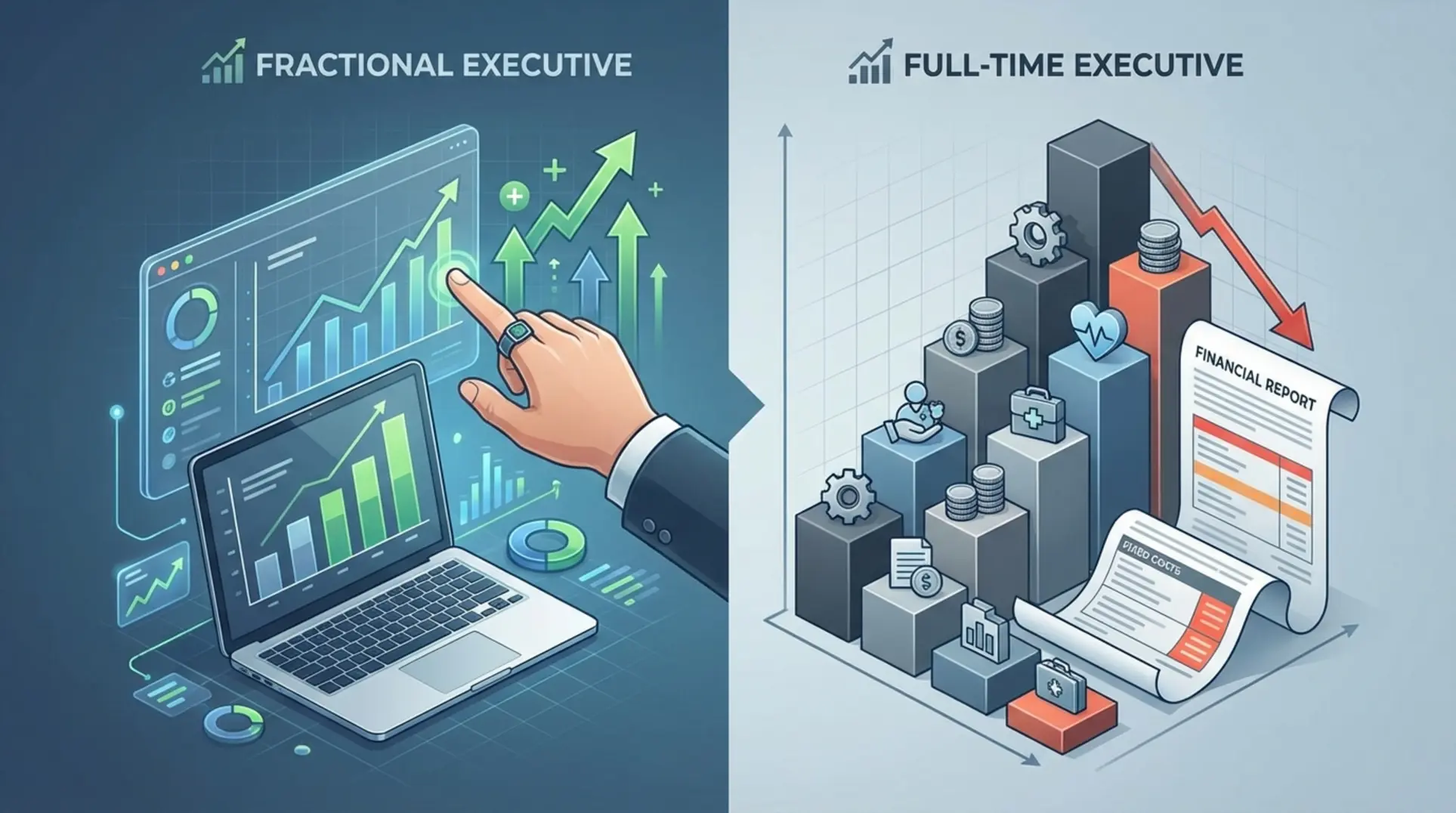
The 2026 Financial Matrix: Fractional vs. Full-Time Executive
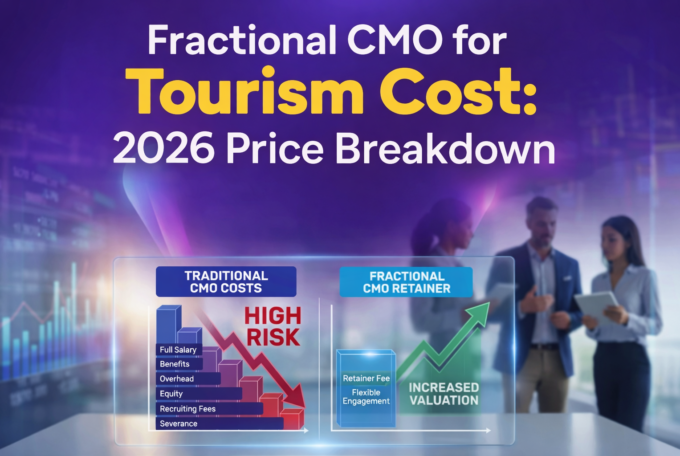
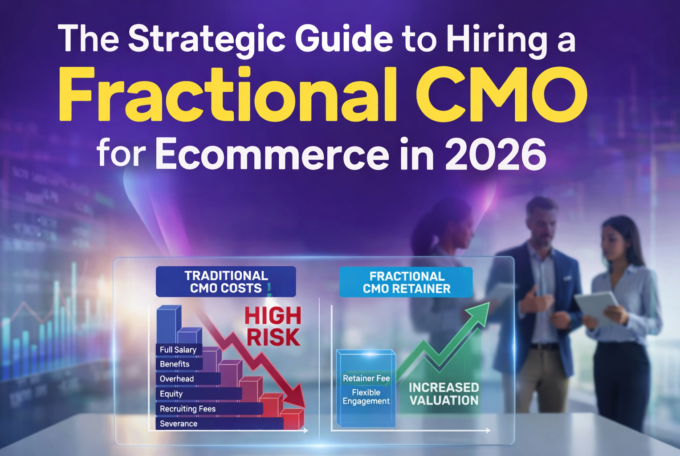
A full-time CMO represents a significant investment. For a Series A-C SaaS company in the US, the total compensation package frequently exceeds $450,000 when accounting for salary, bonuses, equity, and benefits. When founders ask, “how much does a fractional CMO cost?”, they must first understand the baseline expense of traditional leadership. We will break down this cost and compare it directly to the most common fractional CMO pricing models and fractional CMO rates 2026 to establish a clear financial comparison.
The total cost of ownership for a full-time executive extends far beyond base salary. A typical base salary ranges from $200,000 to $300,000 or more. Performance bonuses usually add another 15% to 30% of the base salary ($30,000 to $90,000). Furthermore, equity grants of 1% to 3% of company stock represent a significant long-term financial commitment. Finally, benefits and overhead—such as health insurance, 401k matching, and payroll taxes—typically add roughly 30% to the base salary. Based on a 2026 market data synthesis of Series A-C SaaS companies in US tech hubs, total compensation for a full-time CMO can range from $350,000 to well over $600,000 annually [1].
In contrast, agile and cost-effective fractional models offer a different approach. When comparing a fractional CMO vs full time CMO, the monthly retainer is the most common structure. Fractional CMO retainer fees typically range from $5,000 to $15,000 per month, covering high-level strategy, oversight, and reporting, which translates to an annual cost of $60,000 to $180,000. Alternatively, a fractional CMO hourly rate is often used for project-based or advisory work, with typical rates falling between $250 and $500 per hour, though this is less common for ongoing leadership. Project-based models may also utilize a fixed fee for a specific outcome, such as a comprehensive go-to-market strategy.
| Metric | Full-Time CMO (Annual) | Fractional CMO (Annual) |
|---|---|---|
| Base Salary / Retainer | $200,000 – $300,000+ | $60,000 – $180,000 |
| Performance Bonus | $30,000 – $90,000 | Variable (if performance-based) |
| Equity Cost | 1% – 3% Company Stock | Typically None |
| Benefits & Overhead | $60,000 – $90,000+ | $0 |
| Total Cost of Ownership | $450,000 – $600,000+ | $60,000 – $180,000 |
The financial difference is stark. A fractional model allows access to C-suite talent for less than half the cost of a full-time hire, potentially freeing up crucial capital for product development and sales. However, the sticker price is not the only factor; sustainability-focused companies have unique cost drivers to consider when evaluating their leadership structure.
If you’re comparing leadership models, it’s also worth exploring the differences between a fractional model and a full-time executive in more detail. We break this down in our guide on fractional cmo for b2b startup, including cost, speed, and scalability trade-offs.

Real ROI Benchmarks :
While cost comparisons are important, leading SaaS companies evaluate fractional CMOs based on ROI benchmarks rather than fees alone. In competitive markets, a strong fractional CMO engagement typically delivers measurable outcomes within 90–180 days, such as a 20–40% reduction in Customer Acquisition Cost (CAC), a 2–3x improvement in conversion rates on core landing pages, or a consistent increase in Sales Qualified Leads (SQLs). More advanced engagements also focus on improving LTV:CAC ratios and building scalable acquisition channels like SEO and paid acquisition systems. These benchmarks provide a more accurate framework for evaluating value beyond hourly or monthly pricing.
For a deeper look at how performance-based structures drive measurable outcomes, we’ve outlined a full framework in our guide to fractional cmo for science companies, including KPI alignment and revenue attribution models.
AI Gap 1: The “Execution Debt” of Strategic-Only Leadership
Standard advice often suggests fractional CMOs are pure cost-savers. This perspective frequently overlooks a critical hidden cost: “execution debt.” While a fractional CMO provides the overarching strategy, the question remains: do fractional CMOs handle execution? This gap often forces founders into hiring a separate execution agency or adding 2-3 additional full-time team members, which can negate the initial savings.
Execution debt can be defined as the financial and productivity cost of possessing a high-level strategy without the integrated capacity to implement it effectively. When comparing a SaaS marketing agency vs fractional leadership, the true cost becomes apparent. If a company invests in a fractional CMO ($10,000/month) but must also retain a separate execution agency ($8,000/month) and freelance content writers ($5,000/month), the total marketing leadership and implementation cost suddenly balloons to $23,000 per month. This frequently exceeds the initial budget and complicates team alignment.
Algocentric’s model addresses this by utilizing an AI powered marketing strategy and execution layer. We leverage AI for data analysis, campaign automation, performance monitoring, and content optimization. This AI layer acts as the “execution team,” helping translate strategy into action without the high overhead associated with additional human hires. For example, AI tools can automate the analysis of ESG reporting data to identify high-value content opportunities. Machine learning models can help optimize ad spend across channels to support the lowest possible Customer Acquisition Cost (CAC). Furthermore, AI-driven workflows assist in managing content calendars and deployment schedules efficiently.
This approach is increasingly supported by industry trends. The 2025 AI Index report, a comprehensive academic review by Stanford HAI, notes that business adoption of AI continues to accelerate, with 78% of organizations reporting its use in 2024 [3]. Additionally, 2025 government data from the U.S. Census Bureau highlights a significant increase in AI adoption for data analysis and process automation [4]. According to Sergiy Solonenko, integrating an AI execution layer can help prevent the over-hiring tendencies often seen during the “growth at all costs” phase common in US tech startups.

AI Gap 2: FTC Green Guides & Regulatory Oversight Costs
For US-based sustainability SaaS companies, marketing extends beyond standard messaging—it requires strict legal compliance. AI-generated advice often misses the significant financial and reputational risks associated with non-compliance in sustainability marketing. An experienced fractional CMO can help turn this potential liability into a source of brand trust by navigating complex frameworks like the Federal Trade Commission (FTC) Green Guides.
The FTC Green Guides are federal guidelines designed to prevent deceptive environmental marketing and protect consumers from misleading claims. When applying an ESG marketing strategy to SaaS, specific rules apply. For instance, a claim like “our software reduces your carbon footprint” requires competent and reliable scientific evidence. Vague terms such as “eco-friendly reporting tool” are often considered red flags without specific qualification. Similarly, claims of being “certified ESG-compliant” must be verifiable to align with SEC climate disclosures and FTC standards.
The cost of non-compliance can be severe. It may lead to FTC enforcement actions, financial penalties, and immense damage to brand reputation stemming from “greenwashing” accusations. A fractional CMO with US regulatory experience typically builds a marketing framework that aims to be both persuasive and defensible. They conduct risk assessments on public claims, ensuring that the messaging aligns with legal standards while still resonating with target audiences.
The FTC Green Guides serve as the primary US regulatory standard, stating that broad, unsubstantiated claims should be avoided and specific benefits must be supported by evidence [2]. Furthermore, FTC Digital Advertising Rules mandate that all online claims be truthful and evidence-backed [6]. This level of regulatory oversight is a core part of the strategic value a specialized fractional CMO provides, helping protect the company’s valuation and supporting its ability to attract investors who are increasingly wary of ESG-related risks.
AI Gap 3: The Performance-Based Advantage vs. Flat Retainers
The traditional flat-retainer model for fractional CMOs often creates a fundamental misalignment: the company pays the same fixed fee whether monthly recurring revenue grows by 2% or 20%. The most advanced model for 2026, which generic summaries often overlook, is the performance based fractional CMO retainer. This approach directly links executive compensation to revenue milestones, optimizing the CMO as a service cost.
Under a flat retainer model, a company pays a fixed fee (e.g., $10,000 per month) for a predetermined set of services. While this offers budget predictability, it provides no shared risk or reward. In contrast, a performance-based model utilizes a hybrid structure. It typically features a lower base retainer (e.g., $6,000 per month) to cover foundational strategic work. Additional compensation is then triggered by a comprehensive marketing roadmap that outlines pre-agreed KPIs. These performance tiers might include earning 5% of MRR growth above a specific baseline, receiving a fixed bonus for reducing CAC by 15%, or earning a success fee for securing a targeted number of Sales Qualified Leads (SQLs).
| Metric | Flat Retainer Model | Performance-Based Model |
|---|---|---|
| Base Retainer (Quarterly) | $30,000 | $18,000 |
| Performance Bonus (on $50k MRR Growth) | $0 | $2,500 |
| Total Cost | $30,000 | $20,500 |
| ROI on Marketing Spend | Fixed Cost, Variable ROI | Cost Scales with Success |
This model helps ensure your fractional CMO acts as a true growth partner rather than a static cost center. It aligns financial incentives and helps ensure that the company primarily pays for measurable, improved marketing ROI for SaaS. For founders focused on capital-efficient growth, this structure often provides the most logical alignment of risk and reward.
Common Hiring Mistakes Founders Make
One of the most common mistakes SaaS founders make when hiring a fractional CMO is treating the role as either purely strategic or purely executional. In reality, the most effective fractional leaders operate at the intersection of both. Hiring a strategy-only CMO without execution support creates bottlenecks, while hiring a tactical operator without strategic oversight leads to fragmented growth. Another frequent mistake is prioritizing industry experience over proven growth outcomes. A strong fractional CMO should demonstrate clear case studies tied to MRR growth, CAC reduction, and scalable acquisition systems, rather than relying solely on past company logos or titles.
How to Choose the Right Pricing Model
Choosing the right pricing model depends on your company’s growth stage and risk tolerance. Early-stage SaaS companies with limited budgets often benefit from hybrid or performance-based models, where a lower base retainer reduces upfront risk while aligning incentives with revenue growth. More established companies may prefer flat retainers for predictability, especially when marketing systems are already in place. In high-growth environments, performance-based structures tend to outperform traditional retainers by directly tying marketing leadership to measurable business outcomes, making them increasingly popular among venture-backed SaaS companies in 2026.
Frequently Asked Questions
How much does a fractional CMO for SaaS cost in 2026?
In 2026, a fractional CMO for a SaaS company typically costs between $5,000 and $15,000 per month on a retainer model. The total annual cost ranges from $60,000 to $180,000. Pricing depends on the scope of work, the company’s growth stage, and the pricing model (e.g., flat retainer vs. performance-based). This provides executive-level strategy for a fraction of a full-time CMO’s $450k+ total compensation package.
What is the difference between a fractional CMO and a full-time hire for green tech?
A fractional CMO for green tech provides high-level strategy and oversight on a part-time basis, making them more cost-effective. A full-time hire is a salaried employee responsible for both strategy and daily team management. The key differences are cost, time commitment, and focus. Fractional CMOs offer specialized expertise in areas like FTC compliance and ESG marketing on an as-needed basis, ideal for startups managing cash flow.
How do you structure a performance-based retainer for a fractional CMO?
A performance-based retainer is typically structured with a lower base fee plus variable compensation tied to specific KPIs. For example, a model might include a $6,000 monthly base retainer plus a percentage of MRR growth, a bonus for reducing Customer Acquisition Cost (CAC), or a fee per qualified lead generated. This aligns the CMO’s incentives directly with the company’s financial goals, helping ensure payment is for results.
Do fractional CMOs handle marketing execution for SaaS companies?
Fractional CMOs primarily focus on high-level strategy rather than day-to-day tactical execution. However, modern AI-empowered fractional CMOs often implement AI systems to handle execution tasks like data analysis and campaign automation. If a traditional fractional CMO is hired, SaaS companies typically need an existing internal team or an external agency to implement the strategic roadmap.
Why is FTC Green Guides compliance important for sustainability SaaS?
FTC Green Guides compliance helps prevent deceptive environmental marketing claims, protecting companies from legal penalties and reputational damage. For sustainability SaaS, making unsubstantiated claims about carbon reduction or eco-friendly benefits can lead to “greenwashing” accusations. A fractional CMO with regulatory expertise helps ensure all marketing messaging is legally defensible and supported by scientific evidence.
What is “execution debt” in fractional marketing leadership?
Execution debt is the hidden financial and productivity cost of having a high-level marketing strategy without the team capacity to implement it. This often occurs when a company hires a strategic fractional CMO but lacks the budget for content writers or ad managers. Addressing this debt usually requires additional hiring or leveraging AI-powered execution layers to automate tactical work.
How much does a full-time CMO cost for a Series A-C SaaS startup?
A full-time CMO for a Series A-C SaaS startup typically costs between $450,000 and $600,000+ annually in total compensation. This includes a base salary of $200,000 to $300,000, performance bonuses of 15-30%, equity grants, and benefits. This high cost is why many growing tech companies opt for fractional leadership to preserve capital for product development.
Can a fractional CMO help improve marketing ROI for SaaS?
A fractional CMO can help improve marketing ROI by optimizing customer acquisition costs, refining positioning, and implementing data-driven strategies. By utilizing performance-based models, their compensation is directly tied to revenue growth. This helps ensure that marketing budgets are allocated efficiently toward channels that generate the highest number of Sales Qualified Leads (SQLs).
What is the typical fractional CMO hourly rate in 2026?
The typical fractional CMO hourly rate in 2026 ranges from $250 to $500 or more per hour. Hourly rates are generally used for short-term, project-based consulting or advisory roles rather than ongoing leadership. For long-term strategic oversight, most SaaS companies prefer a monthly retainer model, which provides more predictable budgeting.
How does AI integration reduce fractional CMO costs?
AI integration helps reduce costs by automating tactical execution tasks, minimizing the need to hire large internal marketing teams or external agencies. AI tools can handle data analysis, campaign optimization, and content scheduling. This allows the fractional CMO’s strategy to be implemented efficiently, lowering the overall cost of marketing operations.
Is a fractional CMO a good fit for an early-stage climate tech startup?
A fractional CMO can be highly effective for early-stage climate tech startups needing executive strategy without the full-time price tag. They provide crucial guidance on market positioning, investor pitch development, and regulatory compliance. However, the startup must have some mechanism—either a junior team or AI tools—to execute the strategy.
What should a SaaS founder look for when hiring a fractional CMO?
SaaS founders should look for a fractional CMO with specific industry experience, a track record of MRR growth, and a transparent pricing model. For sustainability SaaS, expertise in ESG marketing and FTC compliance is critical. Founders should also seek leaders who offer performance-based retainers to help ensure alignment with the company’s financial objectives.
Limitations, Alternatives & Professional Guidance
A fractional CMO model is not a universal solution. It is often most effective for companies with an existing marketing team or agency partners who can handle day-to-day execution. For businesses needing hands-on, daily operational management, a full-time marketing manager or director might be a more suitable precursor. Results depend heavily on the alignment between the fractional leader’s strategy and the team’s ability to implement it. Furthermore, integrating an AI risk management framework, such as the voluntary structure provided by NIST, is essential for building trustworthy systems [5].
Alternatives to a fractional CMO include hiring a specialized marketing agency for execution, engaging project-based consultants for specific needs like SEO or PPC, or developing in-house talent. An agency may offer more executional bandwidth, while consultants can provide deep expertise in a single channel. The most effective approach depends on your company’s immediate needs—specifically, whether the primary gap is strategic leadership or tactical implementation.
Before committing to any model, it is crucial to consult with potential partners. Discuss your specific MRR goals, marketing budget, team structure, and growth challenges. A reputable fractional CMO will typically provide a transparent proposal detailing their process, KPIs, and how they plan to integrate with your team to help drive measurable results.
Conclusion
For sustainability SaaS leaders, the path to efficient growth in 2026 requires careful resource allocation. Opting for a fractional model can help reduce leadership costs by over 50% compared to a full-time hire, but the true value extends beyond initial savings. The right partner provides critical oversight on US regulatory compliance, helps mitigate hidden execution costs through AI-powered systems, and aligns their compensation with your success. Ultimately, evaluating the fractional cmo for sustainability cost is an investment in scalable, risk-managed growth.
At Algocentric Digital, we have built our model around this core principle. Our AI-empowered, performance-based fractional CMO service was designed specifically for B2B SaaS founders who demand a measurable return on their marketing investments. If you are ready to align your marketing leadership directly with your revenue goals, consider exploring our approach. Learn more about how we can help you scale your impact and your MRR.
This challenge is especially relevant for companies without mature internal teams. For a deeper breakdown of how execution and strategy should be balanced, see our guide on fractional cmo for small business, where we explore scalable growth frameworks for lean teams.
References
- A 2026 market data synthesis of Series A-C SaaS companies in US tech hubs observed current compensation trends for marketing executives.
- The FTC Green Guides provide federal guidelines for environmental marketing claims in the US, requiring scientific evidence for specific environmental benefits.
- A 2025 AI Index report by Stanford HAI (Human-Centered AI) noted that 78% of surveyed organizations reported integrating AI into core business functions in 2024.
- Recent 2025 government data from the U.S. Census Bureau highlights expanding AI adoption in business, particularly for data analysis and process automation roles.
- The AI risk management framework developed by the National Institute of Standards and Technology (NIST) provides a voluntary structure for organizations to manage AI technology risks.
- The FTC Digital Advertising Rules mandate that all online marketing claims must be truthful, not deceptive, and backed by evidence.

Sergey Solonenko is the founder of Algocentric Digital Consultancy, an active digital strategist and a fractional CMO for many B2B SaaS brands embracing digital transformation. At Algocentric Digital Sergey’s focus is on empowering every B2B SaaS brand who is looking to scale their demand generation program. Sergey’s digital marketing experience over the last 10 years has allowed him to become a digital evangelist focused on improving B2B SaaS demand generation programs and consulting on best practices around account based marketing, sales and marketing team alignment, setting up better lead qualification systems and improving user experience through personalization by aligning martech with key marketing KPIs that ladder up to faster MRR for B2B SaaS brands.