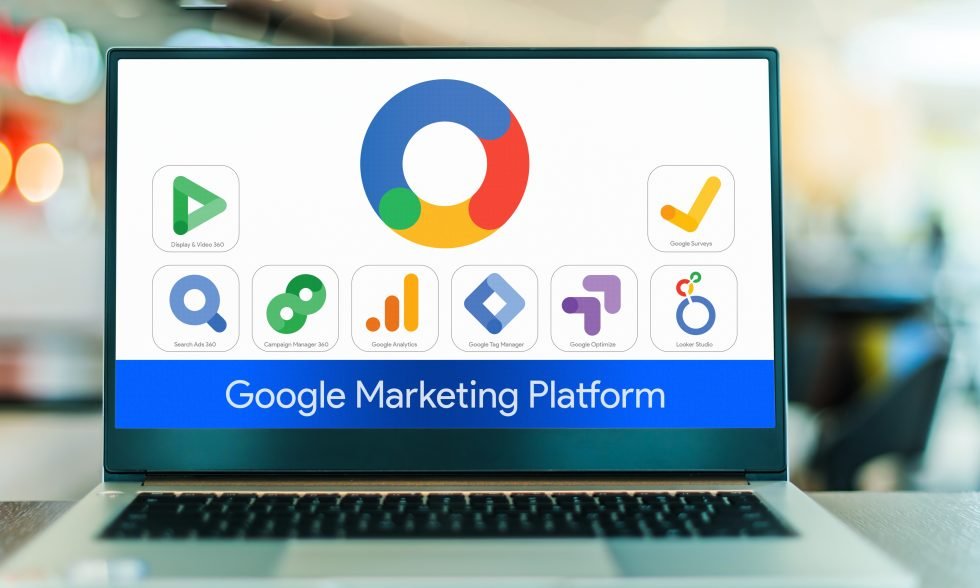
In this article, we’ll discuss the differences between the Google Marketing Platform vs Google Ads. The Google Marketing Platform is an integrated suite of marketing solutions. The platform helps digital marketers plan, execute, and measure campaigns across various channels. It offers intelligence data on online user activity across shopping ads, display advertising, video, search, social, and mobile.
Google Marketing Platform vs Google Ads (Quick Comparison)
| Feature | Google Ads | Google Marketing Platform |
|---|---|---|
| Best for | SMBs | Enterprise |
| Complexity | Low | High |
| Budget | Low–Medium | High |
| Channels | Google only | Cross-channel |
| Tools | All-in-one | Multiple integrated tools |
Who Should Use Google Ads vs Google Marketing Platform?
Use Google Ads if:
- small business
- limited budget
- need fast results
- simple campaigns
Use GMP if:
- enterprise / SaaS scaling
- multi-channel campaigns
- need attribution + data unification
- running programmatic ads
Google Ads vs Google Marketing Platform Pricing
Google Ads:
- pay-per-click
- flexible budget
- no minimum
GMP:
- enterprise pricing
- licensing (GA360, DV360, CM360)
- can cost $50K–$150K+/year
Pros and Cons of Google Ads vs Google Marketing Platform
Google Ads Pros:
- easy to start
- fast setup
- direct ROI
Cons:
- limited cross-channel
- weaker attribution
GMP Pros:
- full funnel visibility
- advanced targeting
- enterprise-level data
Cons:
- expensive
- complex
- requires expertise
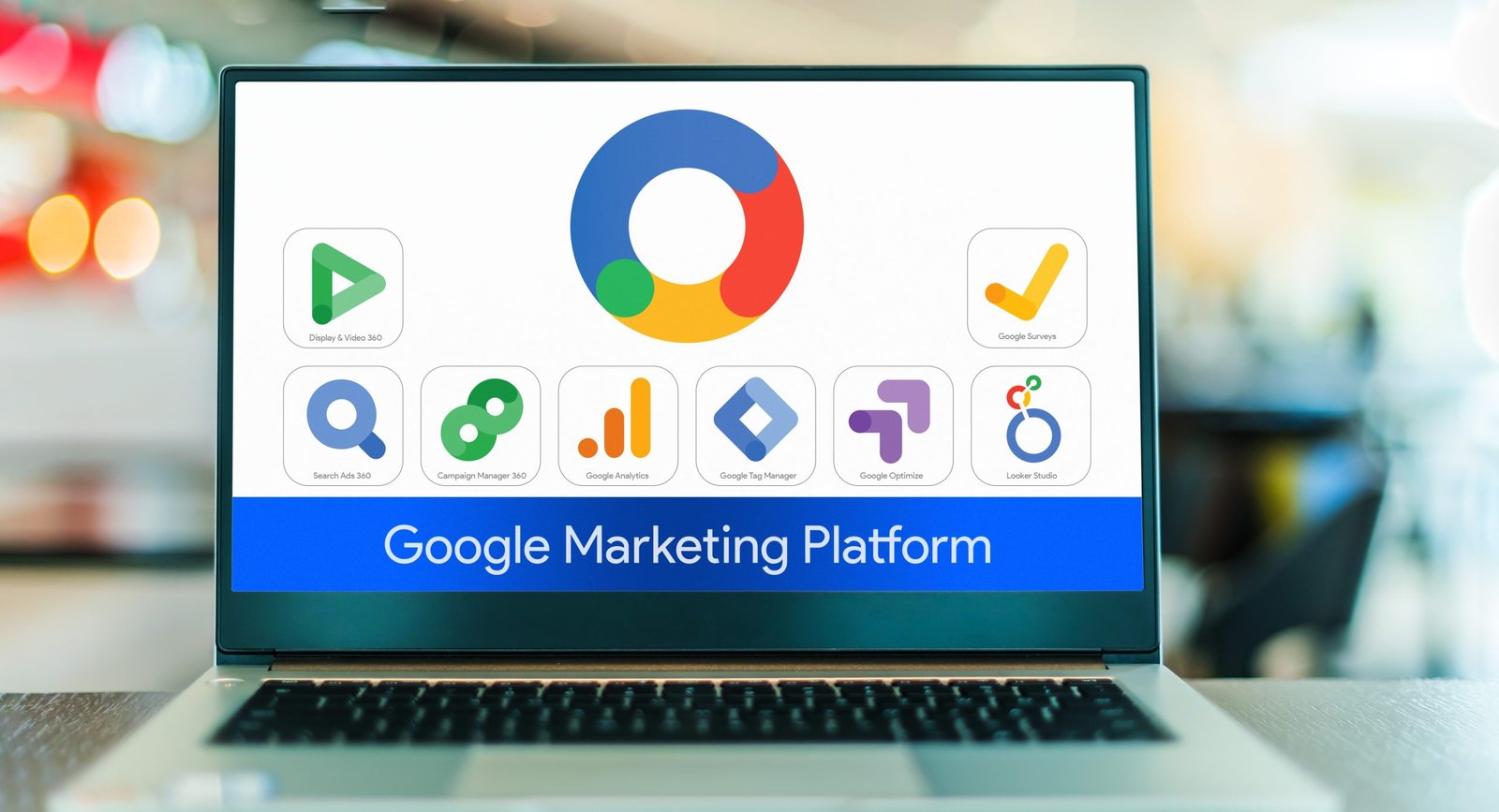
Google Marketing Platform vs Google Ads: What’s the Difference?
Late June 2018 saw the introduction of the Google Marketing Platform for cross-channel marketing. The Google Marketing Platform is a unified entity of DoubleClick advertiser products and the Google Analytics 360 Suite. It also incorporates third-party measurement tools with its own offerings.
Google has announced Search Ads 360 and Display & Video 360 within the Google Marketing Platform. These advertising Google products combine a number of DoubleClick Bid Manager, Campaign Manager, Studio, and Audience Center features.
The major distinction between Google Ads and the Google Marketing Platform is that Google Ads has tracking, display, search, and video ads built into one single platform. While GMP has several distinct platforms that integrate together, GMP offers de-duplicated conversion tracking in CM360.
There is cross-channel advertising in SA360 and programmatic advertising in DV360. Within DV360, you can reach more B2B users and get better data insights on view-through conversions.
The goal of Google Ads is lead generation, understanding conversion rates, and increasing targeted web traffic. On the other hand, the Google Marketing Platform provides a unified set of platforms and analytics products.
GMP allows digital marketers to plan, execute, and measure across all channels. GA4 and CM360 offer more data-driven analytics of your users behavior. GMP also covers channels like display, video, and search.
One standout feature is true cross-channel advertising that you can run through social media. You can truly personalize ads at scale and take in user data from any channel. It also works with Google Optimize and GA4 to provide more defined audience information.
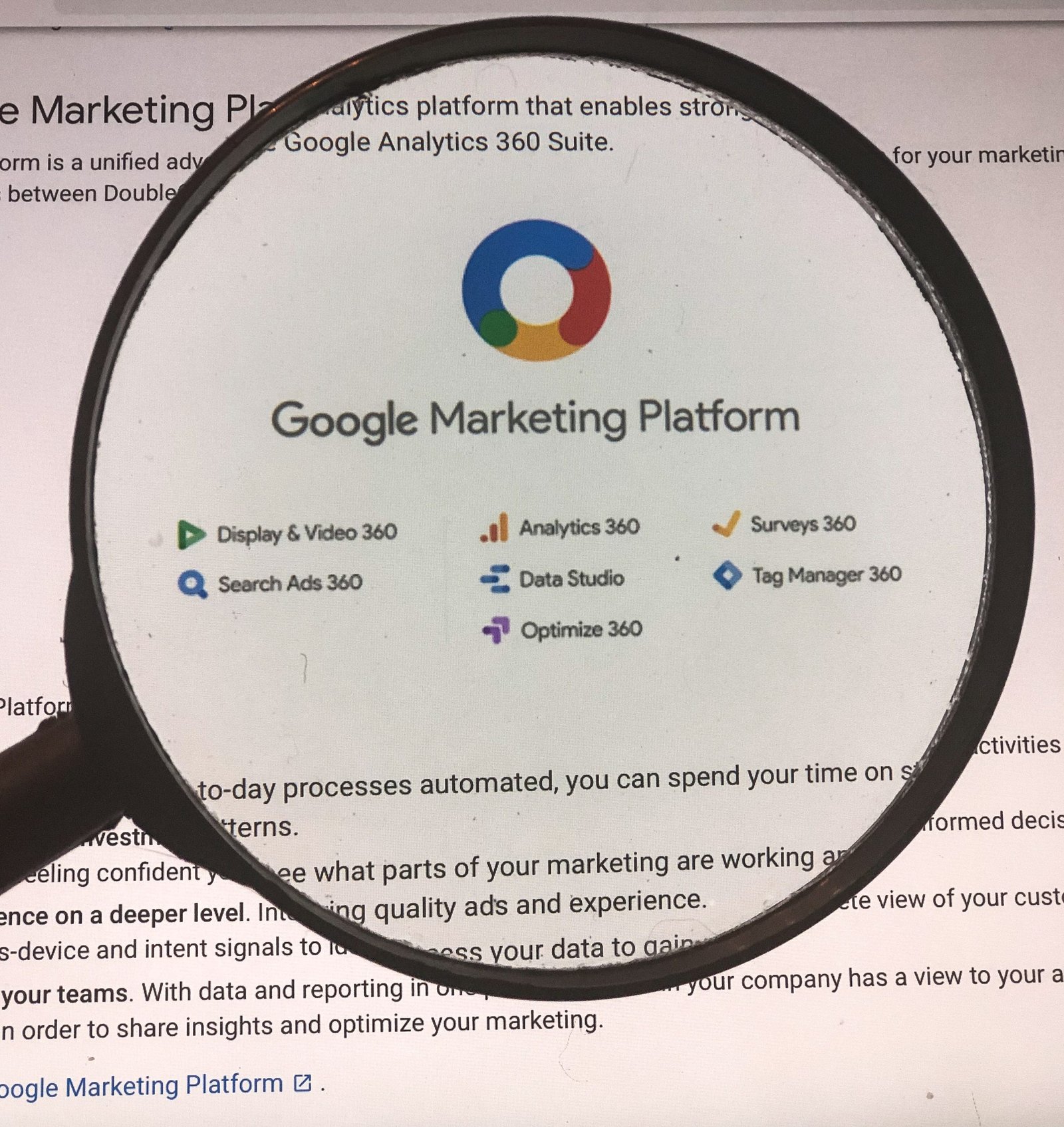
What is part of the Google Marketing Platform?
Such data helps me understand how effective my campaigns were and how I can enhance them. With the Google Marketing Platform, I can also tailor experiences for users at scale.
Google Marketing Platform is a web server-based software system and a next-generation demand-side platform (DSP). The Google Marketing Platform integrates with the Google Analytics 360 Suite to provide a unified place to advertise and optimize campaigns.
Over the years, it has developed to provide more mechanisms to make Google advertising for advertisers smarter and faster. It is basically a much improved version of Google Ads. Google promises to offer advertisers one advertising and analytics platform for enhanced campaign management.
Simply put, the Google Marketing Platform provides PPC agencies and advertisers with a sophisticated platform on which they can oversee integrated campaigns across all channels.
Some of its key platforms include:
Campaign Manager 360
Campaign Manager 360 is Google’s entry into a viable, cross-channel ad management tool that has been designed to operate effortlessly with other Google platforms like Analytics and Search Ads 360. This allows advertisers to gain more sophisticated insights into all digital campaigns. Features are centered around:
- Ad trafficking
- Reporting
- Verification
Benefits and Features of Campaign Manager 360
- Advanced advertising served simply for video and display across the web, apps, TVs and Facebook.
- Centralized cross-channel ad management
- Built-in attribution, reporting and third-party verification
- Simplification of workflows through teams, departments, and channels
- 3rd Party and Server-to-Server Integrations
Display and Video 360
Display & Video 360 (DV360) is a demand-side platform (DSP) within the Google Marketing Platform that allows advertisers to run programmatic display and video campaigns at scale.
Unlike Google Ads, which is limited to Google-owned inventory, DV360 provides access to a much broader range of ad inventory, including third-party exchanges and premium publisher placements.
Key Capabilities of DV360:
- Run programmatic campaigns across display, video, and connected TV
- Access premium inventory beyond the Google Display Network
- Use advanced audience targeting with first-party and third-party data
- Execute private deals and programmatic direct buys
- Optimize campaigns using machine learning and automated bidding
DV360 vs Google Ads (Key Difference)
The main difference is scale and control.
Google Ads is designed for simpler, performance-focused campaigns, while DV360 is built for enterprise-level media buying, offering greater flexibility, reach, and advanced targeting options.
Performance-enhancing automation:
Moving from Google Ads to buying through the DV360 platform is a big upgrade. You can enter business goals and allow the DV360 platform to use machine learning algorithms to optimize your campaigns.
Access to major exchanges in SSP:
Apart from the Google Ad Manager inventory, such as the Youtube TrueView inventory, DV360 accesses all major SSP exchanges, like:
- Rubicon Project,
- AppNexus
- FreeWheel
- PubMatic
- Index Exchange
Via the DV360 platform, you can access a much broader universe of advertising inventory. This helps in adding flexibility, reach, and relevance to your marketing campaign and overall objectives.
Additional audience targeting features in DV360
Perhaps you’re accustomed to Google Ads platform features such as RLSA, (Remarketing Lists for Search Ad), Customer Match lists and various Google affinity, intent, or interest-based audiences.
The lists do exist in DV360, and they come from the same sources. You can also activate your rich behavioral segments directly from Google Analytics 360 into DV360. Just like Google Ads, this allows for a more streamlined workflow. This means you can easily target those key 1st party audience segments in your programmatic advertising.
DV360 will also allow you to target floodlight-pixel-based audiences from your shared CM360 instance. Thus, you can have direct integration with several enterprise-level DMP platforms.
For instance, you can link a BlueKai instance to the DMP and directly to DV360 to use for audience activation.
Campaign-based audiences enable sequential or follow-up messaging to users who have engaged in some way with a prior ad campaign.
The DV360 platform also enables it to have a vast number of data partners who syndicate their audiences in their organization’s stack. Such firms include LiveRamp, Dun & Bradstreet, and Acxiom. In your campaigns, you can target these high-value, highly curated audiences at a low CPM fee.
Search Ads 360
Automate campaign management: Advertisers are able to use Search Ads 360 for campaign management automation. Search Ads 360 allows you to build, research, and execute your paid search campaigns in one place.
You can bring in advanced bid optimization strategies at the account level.
You can roll up your campaigns to product lines or service lines. Furthermore, you can even link various business goals to those different portfolios and then automate your bid management to those different campaign portfolios. Another defining feature of the platform is the social media reporting tool.
Unified insights:
Search Ads 360, being a part of the Google Marketing Platform, shares measurement and reporting capabilities with Google Campaign Manager. Search Ads 360 integrates with various Google Marketing Platform products, enabling you to analyze and report on the performance results that are most important to you.
To start with, its strongest part is deduplicated conversion reporting across media you buy within the Google Marketing Platform stack. It’s a great feature to have for multi-touch attribution because it saves you from the risk of double-counting conversions. It also allows you to see, side by side with programmatic buys, video advertising, and rich media initiatives, how your paid search contributes towards overall success.
Partner integrations:
The Search Ads 360 platform is integrated with partners like Adobe and Visual IQ. It also integrates natively with other Google products of the Google Marketing Platform, such as GA360 and the rest of the GMP ad tech stack.
Looker (formerly Google Data Studio)
Google Data Studio is perhaps my favorite. An intuitive, visual reporting tool that lets you quickly build clear dashboards and reports from your marketing You can create powerful data visualizations that tell the story behind your marketing performance. Using Google Data Studio’s drag-and-drop interface and tailored templates, it’s seamless.
Furthermore, it integrates with Google Marketing Platform products. The list includes, but is not limited to, CM360, SA360, DV360, and GA4360. Integration allows the easy transfer of data from all your digital campaigns to a single platform. From there, you can then benchmark performance across channels and make better choices about how to fine-tune your campaigns for maximum impact.
GA4
I am a staunch supporter of Google Analytics 4 (GA4).
It is a very powerful analytics platform that enables me to better understand my customer behavior and engagement on all of my digital channels. Its interface is easy to maneuver around, and I can therefore rapidly analyse data from my website, app and other marketing channels for invaluable insights regarding my customers’ interactions with the brand.
Additionally, it integrates with other Google Marketing Platform products such as Search Ads 360 and Campaign Manager for measuring the campaign impact across channels, which can help me realize the return on investment.
It also provides me with a better way of determining the right platform to maximize impact. “I also value GA4’s predictive insights tab, which applies existing data to define trends and spot chances of demand among our clients.” I would urge anyone who is interested in elevating their digital marketing endeavors to use Google Analytics 4.
What are the benefits of using the Google Marketing Platform?
Google Marketing Platform is an integrated ad-technology platform that marketers use to create, manage, and grow their Google Ads for SaaS. It not only combines numerous stand-alone tools into a single hub, but it also provides marketers with better data and analytics that they can use to refine their messaging.
For instance, Adidas exploits Google Marketing Platform’s advanced audience insights to ensure all departments’ say the right thing’ to the right customer at the right time. Find out how they did it in this short Google Marketing Platform video case study.
Novartis is another brand operating with the Google Marketing Platform, which helps it reduce its 130 websites into one manageable entity so that every organization department gets relevant metrics and improves all-around customer experience conversion.
In a nutshell, by using the Google Marketing Platform, which helps manage different digital marketing strategies simultaneously across different channels such as email and online advertisements, for instance, it becomes possible to obtain a deeper insight into specific data for each department via a single unified dashboard.
This enables me to determine how the optimization is impacting performance and profitability and enables me to allocate resources accordingly. Thus, any company interested in improving its digital marketing management performance can rely on the Google Marketing Platform.
Google Marketing Platform is really useful for me as it helps me do away with the clutter that comes with working with products such as Search Ads 360 and Campaign Manager. Using such powerful tools, I am able to compare the effectiveness of my campaigns in all channels quickly, so I understand where I stand. In addition, granular data in the Google Ads data hub reveals customer trends and activity. It also enables me to make more strategic decisions and improve my campaigns.
In sum, the Google Marketing Platform offers an array of solutions aimed at simplifying digital marketing campaigns through various media. It is a great tool that offers a clear interface, powerful integrations, and advanced analytics.
Can You Use Google Ads and Google Marketing Platform Together?
Yes, you can use both together, and it’s often the most effective setup.
Google Ads is your execution layer, used to run campaigns and drive traffic, leads, and conversions. The Google Marketing Platform (GMP) is your data and orchestration layer, helping you manage cross-channel campaigns, unify data, and improve attribution.
When combined, GMP enhances Google Ads by:
- Providing cross-channel attribution
- Improving audience targeting
- Enabling programmatic advertising
- Giving a unified performance view
In short, Google Ads drives performance, while GMP helps you scale and optimize across all channels.
When Should You Move Beyond Google Ads?
Google Ads works well for many businesses, but it may not be enough as you scale.
You should consider the Google Marketing Platform if:
- You run campaigns across multiple channels and need unified data
- You struggle to track performance and attribution across platforms
- You want more advanced targeting and analytics
- You spend too much time managing campaigns manually
In short, Google Marketing Platform helps you centralize data, improve decision-making, and scale your marketing with more advanced insights and automation.


Sergiy Solonenko is the founder of Algocentric Digital Consultancy, a seasoned digital strategist, and a fractional CMO for B2B SaaS brands undergoing digital transformation. With over a decade of experience, he specializes in scaling demand-generation programs, optimizing account-based marketing, and aligning sales and marketing teams. Sergiy helps B2B SaaS companies enhance lead qualification, improve user experience through personalization, and leverage Martech to accelerate MRR growth.