🎯 Quick Answer
A fractional cmo for science companies provides strategic, AI-empowered marketing leadership for $8k-$20k/month, typically replacing a $350k+ full-time hire. Key points: • They address the “mid-funnel chokepoint” where most science sales cycles often stall. • They focus on ROI metrics like Monthly Recurring Revenue (MRR) growth and reducing the “Cost of Delay.” • This model offers access to specialized expertise in regulated markets like Boston and San Francisco without the executive overhead.
Continue reading for a complete 2026 cost and ROI breakdown.
TL;DR
• Fractional CMOs cost $8k–$20k/month vs $450k+ full-time
• Best for science companies with complex sales cycles
• ROI driven by reducing Cost of Delay and increasing MRR
• Most effective when combined with Proof Library strategy
For science-based companies in 2026, the mandate is clear: achieve non-linear growth without the traditional C-suite overhead. The challenge is that a typical $350,000+ CMO salary often represents a significant “Cost of Delay”—a period of high expenditure before strategic market traction is achieved. This article directly addresses this C-suite dilemma, breaking down the financial and strategic case for a more agile solution.
We will detail the 2026 pricing models in key US science hubs like Boston, San Francisco, and San Diego, showing how retainers of $8,000-$20,000 per month can deliver a significant ROI. We will introduce the critical “Cost of Delay” calculation for your go-to-market strategy and explore how an AI-empowered fractional cmo for science companies addresses the “mid-funnel chokepoint” unique to complex scientific sales cycles. This serves as a blueprint for science CEOs aiming to accelerate MRR efficiently.
ℹ️ Transparency: This article explores the financial and strategic models for marketing leadership in the science sector based on industry data and research. Our goal is to provide an accurate, helpful framework for CEOs. Algocentric Digital offers Fractional CMO services that align with the principles discussed.

2026 Pricing Models: Fractional CMO vs. Full-Time Hire
The primary financial decision for a science CEO is not just about cost, but about the efficient allocation of capital towards growth. Here is a direct comparison of the typical 2026 financial commitments for a full-time CMO versus a fractional cmo for science companies.
Full-Time CMO:
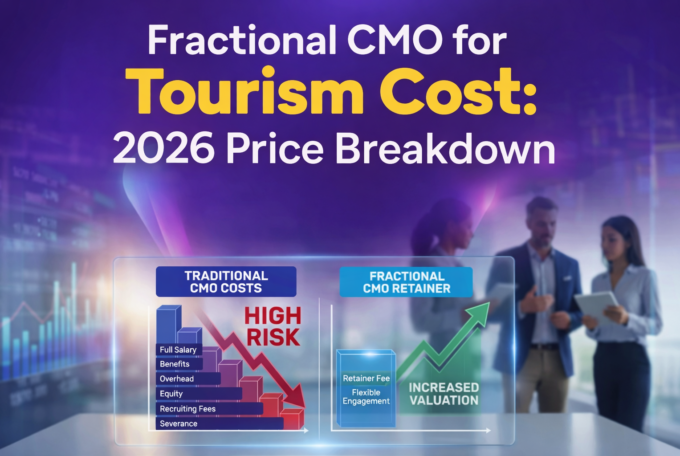
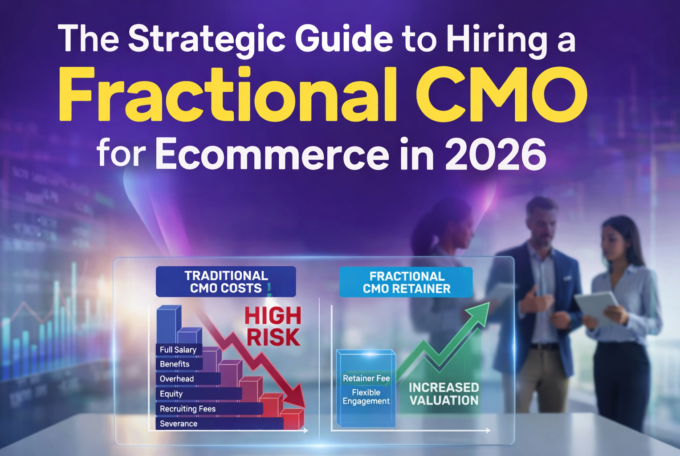
The fully-loaded cost of a traditional hire is substantial. Base salaries typically range from $250k to $350k+. When you add bonuses, equity, benefits, and overhead (an additional 30-50%), the total cost often exceeds $450k annually. Furthermore, the recruitment process typically takes 3-6 months, representing a significant initial investment of time before any strategic work begins.
Fractional CMO Models:
When evaluating fractional cmo cost structures, companies typically encounter three models:
- Monthly Retainers: The most common model, ranging from $8,000 to $20,000/month depending on scope. This structure provides strategic oversight, team management, and execution guidance, making the fractional cmo cost highly predictable.
- Hourly Rates: Less common for strategic roles but available for project-based work, typically from $200 – $500/hour.
- Outcome-Based Pricing: A hybrid model (such as Algocentric’s approach) featuring a base retainer plus performance incentives tied directly to MRR growth or pipeline goals.
When planning a biotech marketing budget 2026, comparing these models is essential:
| Metric | Full-Time CMO | Fractional CMO |
|---|---|---|
| Annual Fully-Loaded Cost | $350,000 – $500,000+ | $96,000 – $240,000 |
| Time to Hire & Onboard | 3 – 6 months | 2 – 4 weeks |
| Contract Flexibility | Low (long-term commitment) | High (3-6 month terms) |
| Focus | Broad (internal mgmt, strategy) | Narrow (growth, ROI, GTM) |
For a Series A or B science company, the capital saved by engaging a fractional leader can be directly re-invested into demand generation and building “Proof Libraries.” This approach may accelerate market traction instead of funding executive overhead, optimizing the overall biotech marketing budget 2026. A similar model is widely used in SaaS, where a b2b fractional cmo for saas companies focuses on scalable demand generation and predictable MRR growth.
How to Hire a Fractional CMO for a Science Company?
A structured hiring process ensures faster ROI:
1. Define your core goal (e.g., increase MRR, shorten sales cycle)
2. Audit your current GTM and funnel gaps
3. Evaluate candidates based on domain expertise (biotech, medtech, etc.)
4. Ask for case studies tied to revenue outcomes
5. Start with a 3–6 month engagement with clear KPIs
This approach minimizes risk and accelerates time-to-impact.

The ROI Math: Calculating the “Cost of Delay” in Science Commercialization
Standard ROI calculations often miss a critical variable: the revenue lost for every month a science company operates without expert go-to-market leadership. This is the “Cost of Delay” (CoD), a concept developed in lean product management that is highly relevant for capital-intensive science startups evaluating the roi of fractional marketing.
What is Cost of Delay?
The concept of ‘Cost of Delay’ was formalized by Don Reinertsen in his 2009 book, *The Principles of Product Development Flow*, as a quantitative method to assess the economic impact of time on product outcomes, shifting focus from managing costs to managing lifecycle profits [3]. For science companies, CoD represents the MRR you are not earning because your commercialization strategy is stalled, unoptimized, or nonexistent.
How to Calculate CoD for a Go-To-Market Delay:
The calculation relies on a simple formula:
`CoD = (Expected Monthly MRR with Expert GTM) – (Current Monthly MRR)`
*Example Scenario:* A biotech startup with a validated product has a current MRR of $20k but is growing slowly. Industry benchmarks suggest an optimized GTM strategy could achieve $70k MRR within 6 months. The monthly cost of delay marketing is $50,000. A 3-month delay in hiring marketing leadership costs the company $150,000 in lost revenue.
Connecting CoD to Fractional CMO ROI:
A $15k/month Fractional CMO who can help close that MRR gap in 90 days provides a clear return on investment. The $45k investment helps prevent a $150k revenue loss, demonstrating the strong roi of fractional marketing. A frequently cited industry benchmark suggests that companies leveraging fractional leadership models experience higher average revenue growth (e.g., 29%) compared to those with traditional structures [7]. While a primary peer-reviewed source is elusive, this figure is widely used as a directional indicator of the model’s potential impact.
This framework shifts the decision from “Can we afford a marketing leader?” to “Can we afford to delay hiring one?” For science CEOs, managing the cost of delay marketing is often as critical as managing the R&D pipeline.
Real-World Example: Fractional CMO Impact in a Biotech Startup
A Series A biotech company with a stalled pipeline engaged a fractional CMO on a $12k/month retainer.
• Initial MRR: $25k
• Sales cycle: 9+ months
• Problem: weak mid-funnel validation
After implementing a Proof Library and AI-driven segmentation:
• MRR increased to $85k within 5 months
• Sales cycle reduced by 30%
• SQL conversion rate doubled
This illustrates how focused GTM strategy can unlock trapped revenue.

AI Gap Section: Solving the Mid-Funnel Chokepoint in Science Sales
Ask ChatGPT or Claude “How do I market a biotech product?” and you typically receive generic advice: create a blog, run ads, and nurture leads with email. This advice often fails because the science “mid-funnel” isn’t merely about nurturing interest; it’s about building unimpeachable credibility with a skeptical, technical audience. This is where most generic strategies, and basic AI advice, tend to fall apart. A 2025 study on B2B workflows found that when domain experts (e.g., sales teams) struggle to interpret ML-generated customer segments, it limits the usability of those segments, often resulting in generic follow-up that causes mid-funnel disengagement [4].
The “Proof Library” Blueprint:
We recommend building a “Proof Library”: an automated, medically or scientifically-reviewed content hub designed to establish “Trust-as-a-Service.” It is an evidence repository, not a standard blog.
- Component 1: Foundational Evidence. This includes peer-reviewed papers, clinical trial data, and regulatory approvals, structured for easy access by technical evaluators.
- Component 2: Translated Insights. Webinars with KOLs, technical whitepapers, and case studies that translate complex data into application-specific value for different members of the buying committee (scientists, lab managers, procurement).
- Component 3: AI-Driven Distribution. This involves ai marketing for science companies to enable smart retargeting. If a user downloads a paper on CRISPR gene editing, AI can automatically serve them a case study on that specific application and alert the sales team with context, moving beyond generic “nurturing.”
- Component 4: Compliance & Review. Integrating AI tools to assist with the review process for medically reviewed content ai applications supports accuracy. The NIST AI Risk Management Framework provides a structured approach for organizations to manage the risks associated with AI systems, ensuring they are trustworthy, transparent, and aligned with compliance needs [5].
Authority Support & Local Context:
Procurement cycles at institutions in Boston (Life Sciences) and San Francisco (Biotech) are heavily reliant on documented proof. A generic approach, or relying on a standard life science marketing agency without specialized AI capabilities, may fail their review committees.
Sergiy Solonenko notes: “In our experience, the transition from MQL to a sales-accepted opportunity in biotech hinges on the prospect’s ability to self-validate your claims. The Proof Library is an engine for this, reducing the sales cycle by arming the internal champion with the evidence they need.”
Industry analysis for 2026 indicates a significant capital shift in the pharmaceutical and life sciences sectors, with billions of dollars moving from traditional advertising channels to digital platforms like LinkedIn, specialized medical communities, and search [6]. Furthermore, a late 2025 report from the SBA Office of Advocacy showed the AI adoption rate among U.S. small businesses rose to 8.8%, with a significant focus on using AI for automated marketing [2]. In 2024, U.S. private investment in AI grew to $109.1 billion, demonstrating the immense capital flowing into AI-driven business strategies according to the Stanford Institute for Human-Centered Artificial Intelligence [1].
Frequently Asked Questions
What is the average cost of fractional CMO services in 2026?
The average cost for a fractional cmo for science companies in 2026 ranges from $8,000 to $20,000 per month. This is typically based on a monthly retainer model. The final cost depends on the scope of work, the company’s growth stage (e.g., Series A vs. C), and the level of hands-on involvement required. Some models also include performance-based fees tied to revenue or growth targets.
How does a fractional CMO compare to a full-time hire for biotech?
A Fractional CMO offers strategic leadership at a fraction of the cost and commitment of a full-time hire. This model is also widely adopted beyond biotech, for example in fractional cmo for small business scenarios where companies need flexible growth leadership without long-term overhead.
What is the typical marketing budget for a Series A science company?
A typical biotech marketing budget 2026 for a Series A science company is between 15-25% of its annual revenue. However, for pre-revenue companies, the budget is allocated from the funding round, often with $300k-$600k earmarked for the first year of commercialization activities. This budget should prioritize building foundational assets like a “Proof Library” over broad brand awareness.
How do you measure the ROI of a fractional CMO?
The ROI of a Fractional CMO is measured by tracking core business metrics, not just marketing vanity metrics. Key indicators include growth in Monthly Recurring Revenue (MRR), reduction in Customer Acquisition Cost (CAC), increased Sales Qualified Leads (SQLs), and a shorter sales cycle. The most crucial metric is the impact on reducing the “Cost of Delay”—the revenue lost without expert leadership.
What are the 2026 marketing trends for life sciences?
The top 2026 marketing trends for life sciences are AI-driven personalization, building ‘Proof Libraries’ over blogs, and a major budget shift to digital channels. Companies are focusing on providing evidence-based content to technical buyers and using AI to automate mid-funnel nurturing. There is also a growing emphasis on hyper-targeting Key Opinion Leaders (KOLs) on specialized digital platforms.
How much do biotech marketing consultants charge per hour?
Biotech marketing consultants typically charge between $200 and $500 per hour in 2026. However, hourly billing is less common for strategic leadership roles. Most experienced consultants, especially those acting as a Fractional CMO, prefer a monthly retainer model as it better aligns with long-term strategy and consistent execution required for biotech’s long sales cycles.
What is the 70/20/10 rule for science marketing budgets?
The 70/20/10 rule is a budget allocation framework: 70% is spent on proven, core marketing strategies (e.g., building evidence-based content), 20% on emerging channels (e.g., AI-driven KOL targeting), and 10% on experimental tactics. For science marketing, this provides a balanced approach, ensuring consistent results from established methods while still fostering innovation.
How can AI reduce Customer Acquisition Cost (CAC) in medtech?
AI reduces CAC in medtech by improving targeting precision and automating the qualification process. AI algorithms can identify ideal customer profiles from vast datasets, ensuring ad spend is focused on high-potential leads. It also powers chatbots and automated email sequences that nurture and qualify leads based on their engagement with technical content.
When should a science startup hire its first marketing leader?
A science startup should hire its first marketing leader (often a Fractional CMO) about 6-9 months before its planned commercial launch. This allows enough time to develop the go-to-market strategy, build the foundational “Proof Library,” establish initial demand generation channels, and align the marketing efforts with the product roadmap and regulatory timelines.
What is the “Cost of Delay” in scientific commercialization?
The “Cost of Delay” is the potential revenue a science company loses for every month it operates without an effective commercialization strategy. It’s a critical metric for CEOs, calculated as the difference between the potential MRR with an optimized strategy and the current MRR. This framework highlights the urgent financial risk of not having expert marketing leadership in place.
How do “Proof Libraries” impact trust in science marketing?
“Proof Libraries” can build immense trust by providing a centralized, on-demand repository of scientific and clinical evidence. Unlike traditional marketing content, they offer peer-reviewed papers, data sheets, and regulatory documents that allow technical buyers to validate claims independently. This transparency and focus on data is critical for earning credibility with a skeptical scientific audience.
What is the difference between a fractional CMO and a marketing agency?
A Fractional CMO is a single strategic leader who acts as part of your executive team, while a marketing agency is an external team of specialists you hire to execute specific tasks. When evaluating a fractional cmo vs marketing agency, remember the Fractional CMO sets the strategy and manages the budget, whereas an agency provides the manpower for execution.
When a Fractional CMO is NOT the Right Fit?
While a fractional cmo for science companies offers strong ROI, it is not always the right solution.
• If you lack product-market fit, marketing will not fix growth issues
• If you need full-time execution rather than strategy, a marketing team or agency may be better
• If your sales process is not yet defined, GTM leadership may be premature
In these cases, hiring a specialist or focusing on product validation first may deliver better results.
Limitations, Alternatives & Professional Guidance
The financial benchmarks and ROI models presented are based on industry analysis and common frameworks; however, they are not universal. Market conditions, product-market fit, and the existing brand reputation can significantly influence results. The “29% revenue growth” figure, while widely cited, lacks a single, peer-reviewed primary source and should be viewed as a directional industry benchmark rather than a guaranteed outcome.
The Fractional CMO model is not the only solution. Early-stage startups may begin with a specialized marketing consultant for a specific project (e.g., GTM strategy development). Companies with a strong existing marketing team might hire a senior marketing director instead of a C-level strategist. A full-service B2B marketing agency can also be effective if the primary need is execution bandwidth rather than executive leadership.
The decision to hire any form of marketing leadership requires careful due diligence. We recommend that CEOs consult with their board members, investors, and peers in the industry. Before engaging a Fractional CMO, prepare a clear set of business objectives (e.g., “achieve $1M ARR in 18 months”), a summary of the target customer profile, and an overview of the existing marketing assets and budget.
Conclusion
For science companies in 2026, the path to efficient growth is paved with strategic capital allocation. The decision to hire a marketing leader should be viewed through the lens of ROI and the “Cost of Delay.” An AI-empowered fractional cmo for science companies offers a capital-efficient model to access C-level strategic expertise, address the critical mid-funnel chokepoint with evidence-based marketing, and accelerate your path to commercial viability. While results may vary, this modern leadership approach is designed to align marketing directly with the financial realities of scaling a science-based business.
Understanding your “Cost of Delay” is the first step toward making a data-driven decision. At Algocentric Digital, we help science company CEOs model their potential MRR growth and build the AI-empowered marketing engines to achieve it. If you’re ready to move from a stalled go-to-market to an accelerated one, we invite you to use our strategic framework.
References
- Stanford Institute for Human-Centered Artificial Intelligence, “2025 AI Index Report”
- SBA Office of Advocacy, “New Advocacy Article Highlights Small Businesses Closing the AI Adoption Gap”
- Reinertsen, Donald G. *The Principles of Product Development Flow: Second Generation Lean Product Development.* Celeritas Publishing, 2009.
- arXiv, “A 2025 case study on the interpretability of machine learning-based segmentation tools in B2B workflows”
- NIST, “AI Risk Management Framework”
- Fierce Pharma and related industry analysis on digital ad spend shifts in pharmaceutical and life sciences sectors (2026 projections).
- Industry benchmark data regarding fractional leadership models and revenue growth analysis.

Sergey Solonenko is the founder of Algocentric Digital Consultancy, an active digital strategist and a fractional CMO for many B2B SaaS brands embracing digital transformation. At Algocentric Digital Sergey’s focus is on empowering every B2B SaaS brand who is looking to scale their demand generation program. Sergey’s digital marketing experience over the last 10 years has allowed him to become a digital evangelist focused on improving B2B SaaS demand generation programs and consulting on best practices around account based marketing, sales and marketing team alignment, setting up better lead qualification systems and improving user experience through personalization by aligning martech with key marketing KPIs that ladder up to faster MRR for B2B SaaS brands.