Account based marketing is a strategy used in B2B marketing to increase profits. The approach emphasizes delivering experiences to prospects and treating leads, as distinct markets.
ABM offers a range of advantages, such as enhanced collaboration among teams and increased revenues for users. In this piece we delve into the world of B2B marketing tactics.
Lets explore the process and ways to excel at it.
Understanding Account Based Marketing
ABM concentrates resources on a group of leads within a market. It entails creating account based marketing campaign to engage with each prospect effectively.
ABM personalizes messages based on the characteristics and needs of these prospects.
Unlike lead generation methods ABM doesn’t cast a net but focuses on treating prospects as individual entities.
B2B marketers target decision makers within an account each holding authority in finalizing sales deals.
To succeed in ABM companies must study the connections within each business thoroughly.
By establishing relationships, with these stakeholders and nurturing trust over time agencies can deliver tailored messages. Utilize channels that resonate with the decision making team.
Each high value account is considered a market entity that demands attention. This approach requires B2B marketers to segment their efforts into areas.
They develop a profile, for each customer, followed by B2B experts using services and tools tailored to these specific strategies.
This sets ABM apart from approaches that employ tactics across undefined markets.
The typical ABM process involves:
- Identifying accounts through data analysis and evaluating their requirements.
- Defining the customer profile for focusing on and segmenting your ABM initiative.
- Interacting with the identified accounts through platforms with personalized content.
- Supporting business endeavors through communication channels.
- Evaluating the outcomes of the ABM campaign. Adjusting the strategy for each account.
Advantages of ABM

Transitioning to ABM provides benefits that support your sales and marketing teams ultimately leading to success and increased market penetration. Key advantages include:
- Enhanced Customer Experience
ABM enables your messages to resonate with decision makers by delivering campaigns that address their business needs, challenges thereby enhancing their overall experience.
- Improved Sales and Marketing Collaboration
ABM fosters alignment between teams and promotes a collaborative approach, from selecting target accounts to creating campaigns encouraging departments to work together for improved outcomes.
- Quicker Sales
Because of its tailored nature Account Based Marketing (ABM) delivers outcomes in comparison, to traditional marketing campaign. This strategy helps in raising awareness and guiding customers through the companys sales cycle.
- Improved Upselling
Establishing a relationship makes it simpler to upsell and cross sell products or services. ABM enhances customer retention rates. Maximizes the value gained from each client.
To optimize the B2B approach businesses make use of an account based marketing template to streamline the process.
This simplifies organizing campaign elements allowing for the creation of customer profiles and custom ABM content for outcomes.
With a structured template companies ensure that their marketing and sales teams work together effectively to develop account based marketing campaign.
Lets delve into how ABM templates support our ABM strategy.
Exploring the Strategic Approach
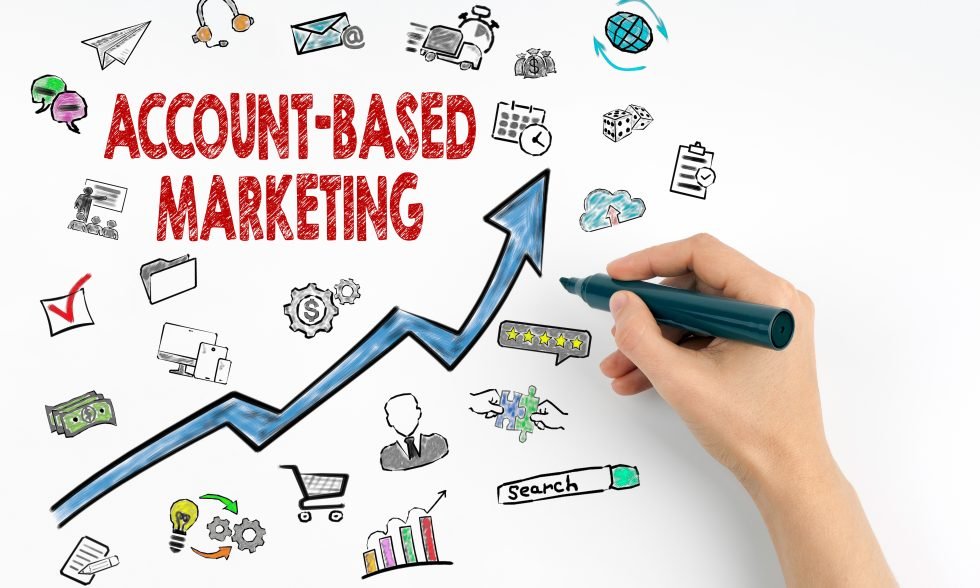
This tactic demands a method and significant fine tuning. The B2B method stands apart from marketing techniques as it requires attention for each lead.
ABM relies on business intelligence. Prioritizes quality over quantity by focusing on high value accounts that align, with the customer profile previously defined.
This meticulous mindset prompts analysis of the business entity.
To effectively evaluate their business model, industry landscape, competitive challenges and decision making processes is crucial.
Incorporating insights, into your marketing strategy helps in crafting long term plans and personalized campaigns to cater to the needs and values of the target accounts.
An Account Based Marketing (ABM) approach emphasizes tailored tactics, relevance and engagement to establish connections with prospects.
Advantages of Strategic ABM
The significance of a strategic ABM lies in factors:
- Complexity of B2B Sales Process
The B2B sales cycle involves multiple stakeholders with diverse concerns and levels of influence within their organizations.
Customized strategies enable marketers to navigate this complexity and drive conversion rates.
- Effective Resource Management
Strategic resource allocation in ABM ensures that teams focus their efforts on leads optimizing both marketing and sale outcomes.
- Customer Centric Focus
A strategic approach fosters positive engagements with accounts leading to improved response rates and conversions, by steering clear of generic mass messaging.
- Cultivating Long Term Relationships
Strategic ABM transcends short term transactions by fostering enduring partnerships.
It sets the groundwork, for building connections fostering trust, loyalty and positioning the seller as a valued partner.
- Leveraging Data for Making Informed Choices
A thought out ABM strategy relies on data metrics to steer the organizations decisions. Marketers assess progress over time to achieve results.
A thriving ABM approach emphasizes establishing enduring relationships. It transforms leads into collaborators and aids in customer retention.
Key Elements of an ABM Plan
An ABM plan comprises key elements that work together seamlessly.
Here’s a breakdown of these elements:
- Identifying the Target Audience
Concentrating on prospects serves as the cornerstone of ABM.
We utilize data to scrutinize and select users with revenue potential and strategic importance.
- Thorough Investigation
Understand the dynamics of your target audience encompassing industry trends, business hurdles and internal factors.
Utilize this knowledge to shape your content and interactions. Data plays a role in constructing sale funnels.
- Tailored Engagement
Deliver personalized messages and refined content strategies tailored to resonate with leads and boost the companys relevance among decision makers.
- Omnichannel Engagement
Engage with leads across platforms, like websites, emails, events and social media.Connect with them through their communication platform.
- Collaboration Between Sales and Marketing Teams
Ensure cooperation, between departments to maintain messaging and simplify the engagement process.
- Exceptional Content Creation
Produce tailored ABM content that addresses the needs and obstacles faced by each decision maker. Employ a content marketing strategy to drive increased conversions.
- Tracking Key Performance Indicators
Monitor, evaluate and adapt campaign performance using metrics. Achieve return on investment (ROI). Refine operational processes.
- Utilization of Advanced Tools
Leverage software tools for customer relationship management, account intelligence and content development.
Implement a technology stack that streamlines operations and automates tasks.
By incorporating these elements a B2B marketer enhances their approach transforming marketing practices into an Account Based Marketing (ABM) platform.
Integrating all aspects ensures personalized messages reach individuals at the moment leading to heightened engagement and conversion rates.
Establishing an Ideal Customer Profile (ICP)

Defining an Ideal Customer Profile (ICP) is an aspect of account based marketing strategy. It serves as a blueprint for identifying the ideal customer fit for collaboration.
Developing an ICP enables your team to focus marketing effort on prospects effectively.
Within ABM initiative, the ideal prospect profile steers the process of demand generation by encompassing more, than demographic information.
The process involves information, about a companys characteristics, traits, mission and vision.
Creating a profile requires collaboration across departments like sales, marketing and customer service.
How to Develop an Ideal Customer Profile
To establish an Ideal Customer Profile (ICP) thorough research is crucial. Utilize account intelligence from sources and cross reference it.
Here’s how you can carry out the process:
- Review Existing Data
Start by analyzing your customer base to identify traits among your customers.
Look at trends, company size, industry type, revenue levels and geographical distribution. Evaluate the challenges they seek to solve with your product.
- Consult the Sales Team for Insights
Your sales team interacts with leads and current customers regularly. Their firsthand insights on which leads convert are essential for shaping an profile.
- Consider Qualitative Factors
Gather company details like size and industry sector. Gain understanding of elements such as company culture, technology adoption rate and risk tolerance.
- Conduct Market Research
Determine where your product stands in the market landscape. Study industry. Define the positioning strategy, for your product offering.
- Establishing a Customer Profile
Utilize the information gathered to develop a profile that highlights the characteristics of your leads.
Include specifics, like industry, company size, annual revenue, number of employees challenges faced and business goals.
- Invite Feedback for Enhancement
Present the Ideal Customer Profile (ICP) to teams, for feedback. Use their input to refine and improve your customer profile.
- Validate the Customer Profile Through Customer Interaction
Test the ICP with a subset of your target audience. Take note of any deviations. Adjust accordingly.
- Continuous Improvement
An ICP is not set in stone. Update it based on market changes, product enhancements and user insights.
Creating an ICP empowers Account Based Marketing (ABM) teams to devise strategies.
It enables them to engage with leads and influential decision makers effectively. This approach boosts return on investment (ROI). Encourages business growth.
Creating a List of Target Accounts

Developing a Target Account List, known as TAL plays a role, in Account Based Marketing (ABM). It involves selecting users who show interest in your business offerings and have the potential to drive revenue.
By establishing a TAL you focus your sales and marketing effort on building relationships with users thus optimizing your time and resources.
Consider implementing an approach when creating your TAL by segmenting leads based on factors like revenue potential and conversion likelihood.
This allows for engagement strategies tailored to the value each tier brings to your business.
The composition of the TAL is dynamic. It evolves with changing market conditions.
Priorities among clients may shift, necessitating updates to ensure alignment with ABM goals and company strategies.
Criteria for Selecting Key Accounts
Choosing prospects, for the TAL involves analysis of data. Key factors to consider include:
- Ensuring that users match the traits outlined in the Ideal Customer Profile (ICP) and evaluating their long term revenue generation.
- Assessing the influence of a companys leadership, in the market and its ability to generate referrals or enhance its authority is crucial.
- Identifying clients that’re key to your business and its long term goals is essential.
- Figuring out the way to approach a lead based on existing relationships available communication channels and local proximity is important.
- Examining the level of competition within a client and understanding their solutions is valuable.
By using these criteria companies compile a list that forms the basis of their Account Based Marketing strategy.
This approach supports targeted efforts. Enables sales teams to improve efficiency across all levels.
Making Content for Potential Customer
Creating content for prospects is where personalization shines in ABM compared to B2B practices.
Tailoring content to address the challenges and goals of each user is key.
Customized content plays a role in shaping strategies as personalized messages resonate with leads encouraging interaction.
Tailoring content to meet each prospects preferences ensures they receive the message effectively capturing attention and eliciting a response.
Customized content helps establish connections and enriches user experiences by providing information, about prospects.
To effectively tailor content, for high value accounts it is crucial to analyze data points such as interactions, feedback and preferences.
This allows us to gain insights into the prospects identity and priorities. With this understanding in hand teams can then craft personalized content in formats like emails and case studies.
Incorporating content into Account Based Marketing (ABM) strategies demonstrates a commitment to moving beyond communication.
This approach not shapes your company. Also enables you to fine tune your tactics for key buyers.
By delivering custom content you signal your intent to establish a connection with leads by paying attention to details and showcasing your dedication.
Strategies for Developing Tailored Content
The process of developing personalized content for key accounts involves a series of steps. Here are some effective strategies to optimize this process:
- Leverage Insights
Utilize data, CRM insights and interaction history to understand user preferences and behaviors.
- Align Content with the Buyers Journey
Identify where each contact stands in their purchasing journey and customize content to guide them through the process seamlessly.
- Harness Client Intelligencs
Gather information, about customers business objectives and industry trends. Analyze their competitors to develop solutions that address their challenges effectively.
- Engage Decision Makers
Connect with decision makers and influencers in the specific account. Gather perspectives and tailor content based on the information provided.
- Personalize
Adapt content to reflect details, regional nuances and local business practices. Incorporate their viewpoints into every message.
- Enhance Through Feedback
Utilize visual representations to illustrate the impact of the content over time. Armed with this data your marketing team can develop top notch personalized campaigns.
Including content, in your ABM strategy showcases a dedication to building relationships. These posts bolster the success of your high priority accounts.
Implementing Marketing Campaigns

When rolling out campaigns within the realm of ABM precision and customized strategies are crucial.
Following the ABM framework the goal is to craft and execute campaigns finely tuned to resonate with each specific account’s characteristics and needs.
Key Elements of ABM Campaigns
A ABM campaign comprises elements. By employing these strategies you engage with prospects.
Each element forms the core of a campaign capturing attention and delivering business outcomes.
- Clear Goal Establishment
Defining measurable and attainable goals is fundamental, for project success.
The main goals include generating leads, engaging with clients and increasing revenue from clients.
- Extensive Research
Conduct research, on the target users industry landscape, business structure, competitors and challenges.
Utilize this information to shape the campaigns messaging and content strategy. Use data to establish a connection with users.
- Personalized Communication
Craft messages that cater to the needs and desires of each client.
Your communications should reflect your understanding of the users business objectives and obstacles.
- Diverse Communication Channels
Integrate channels, from email and social media to direct mail and personalized landing pages. This approach allows the campaign to engage with clients through touchpoints.
- Collaboration Between Sales and Marketing
Account Based Marketing (ABM) blurs the lines between sales and marketing team. It ensures that the sales team is ready to follow up on marketing efforts.
Using sales process tools and maintaining communication can help marketing alignment of both teams
- Evaluation and Analysis
By utilizing data and key performance indicators (KPIs) we monitor metrics such, as account engagement, deal progression speed and conversion rates.
These metrics hold significance individually as when analyzed alongside other KPIs.
ABM campaigns benefit from both campaign data well as overarching campaign data.
Coordinating Sales and Marketing Teams
The essence of Account Based Marketing (ABM) involves combining sales and marketing tactics to concentrate on accounts.
To maximize the benefits of ABM, a thoughtful strategy is essential. It’s crucial to develop a roadmap that directs both teams.
Assign responsibilities and duties to each team. Establish platforms, for monitoring engagements and sharing documents.
Tips for Enhancing Collaboration Between Sales and Marketing Teams
Developing a partnership between sales and marketing requires actions. Here are some ways to foster teamwork between these two departments;
- Joint Planning Sessions
Kick off with meetings where teams work together to shape the ABM strategy and establish goals.
These sessions clarify the responsibilities and decision making authority of each team for every account.
Meetings play a role in exchanging reports sharing insights and refining operational approaches between each B2B marketer and sales rep.
- Shared Performance Metrics and Analysis
Introduce a set of metrics and ABM marketing tool for both departments. Empower them to make data driven decisions.
The teams need to identify which strategies yield performance over time.
- Regular Communication Avenues
Facilitate team connections through meetings. Shared digital platforms. It’s essential for them to engage in dialogue to effectively manage tasks.
Share updates from meetings with managers and stakeholders.
- Uniform Messaging
Develop messaging that aligns across ABM marketing materials and sales initiatives.
It’s vital for each sales rep to be well versed in the narratives put forth by the product marketing department.
- Sales Enablement
Equip the sales team with resources like CRM platforms.
Provide staff, with marketing materials to assist them in conveying product marketing messages.
- Using Feedback Channels
Setting up communication channels, for feedback is crucial.
Sales teams should communicate their insights to marketers to improve strategies based on customer interactions.
- Implementing Training ABM Program
Educating team members about the roles and challenges of their colleagues in departments helps foster understanding and collaboration.
- Celebrate as ABM Team
It’s important to celebrate achievements, as a team. Recognizing successes as a result of combined marketing and sales efforts boosts morale and motivates everyone.
By following these approaches ABM agencies can enhance the effectiveness of each campaign.
Teamwork fuels company growth. It creates a positive work environment and streamlines operations.
Monitoring Return on Investment (ROI)
One of the challenges lies in assessing the effectiveness of your strategies. This is where ROI comes into play.
ROI serves as a Key Performance Indicator (KPI) that gauges the profitability resulting from investments in marketing initiatives aimed at targeted account.
It acts as a yardstick for success offering insights into how different conversational marketing elements perform.
This metric indicates whether we are generating profits for both our clients and our business.
Key Metrics to Evaluate ABM Success
By keeping track of metrics you can enhance your understanding of ABM processes:
- Engagement Metrics
This KPI assesses how potential leads interact with your marketing materials, including website visits, downloads and social media engagements.
- Conversion Rate from Opportunities to Purchase
This measure evaluates how marketing qualified accounts transition into customers. It helps us understand what prompts an user to become a customer.
- Account Engagement Score
An indicator that signifies the level of engagement for each client. It assists in identifying individuals who need attention and those on the verge of becoming customers.
- Pipeline Value
Represents the value of sales opportunities, within the pipeline.This measure is crucial, for evaluating the effectiveness of our process.
- Contract Value (ACV)
It shows how much revenue is generated per customer. We’re not necessarily bound to using a contract.
ACV goes up with Account Based Marketing (ABM) efforts because this strategy helps attract and nurture leads of value.
- Customer Lifetime Value (CLV)
On average ABM campaigns result in CLV. This approach aids in retaining customers over time.
- Influence on Deal Size
It assesses whether ABM impacts the size of deals.
This metric compares your campaign deals to the deals closed without ABM tactics.
- Customer Retention Rates
The ability to keep customers engaged.
High retention rates demonstrate the outcomes for each targeted account.
- Client Satisfaction Scores (CSAT)
While not an used measure CSAT shows how successful ABM is, at meeting customer expectations in a manner.
For B2B companies implementing tracking is crucial as it transforms their strategy into a process.
With Key Performance Indicators (KPIs) there’s no need to speculate about campaign outcomes. Predicting movements and team contributions becomes effortless.
Using Account Based Email Marketing

Account based email marketing is a strategy that involves collaboration, between marketing and sales teams to deliver content.
We utilize this approach to engage with selected high value prospects.
The process includes crafting emails for decision makers and influencers addressing their business needs, interests and behavioral data.
To execute an account based email marketing initiative successfully B2B marketers should adhere to the steps:
- Identify and Segment Your Target Accounts
Begin by leveraging your Ideal Customer Profile (ICP) to compile a list of target accounts that align with your criteria. Consider factors like company size, industry and growth potential.
- Research Key Decision Makers
Within this target account, identify the decision makers and members of the purchasing committee.
Focus on individuals who wield influence in the buying process.
- Personalize Your Content
Develop tailored content that speaks to the challenges, pain points and objectives of each organization.
Provide content customized for their industry sector and role to enhance engagement.
- Coordinate with Sales Teams
Collaborate with sales teams to ensure that email marketing campaigns complement sales strategies effectively.
Facilitate a transition from marketing generated leads, to sales interactions.
- Use Marketing Automation
Utilize marketing automation tools, like email marketing software to schedule and customize your messages efficiently.
Each marketing tool also provides insights to track the effectiveness of your campaigns.
- Introduce A/B Testing
Implement A/B testing on elements of your email campaigns, such as lines, content and CTAs.
Identify what resonates best with your target audience and make enhancements.
By following these steps diligently inbound marketing can significantly impact the enhancement of your ABM strategy.
Best Practices for Integrating Account Based Email Marketing
To ensure success in your endeavors consider the following best practices:
- Personalize the email content marketing based on the recipients business requirements and role within the organization than just using their first name.
- Keep emails concise and clear while offering a benefit and including a call to action.
- Prioritize quality over quantity in email communication by delivering timely content.
- Use technology such as email marketing tools and CRM systems to streamline campaigns while maintaining an approach, for account based marketing initiatives.
- Stay in collaboration, with your sales team to ensure communication on campaign timing and content to stay in sync.
- Keep an eye, on campaign performance through metrics. Be prepared to adapt your strategy based on the data collected.
By utilizing our account based marketing template professionals harness the power of account based email marketing strategies.
They employ these tactics to craft messages that connect with each customer guiding them along their buying process.


Sergiy Solonenko is the founder of Algocentric Digital Consultancy, a seasoned digital strategist, and a fractional CMO for B2B SaaS brands undergoing digital transformation. With over a decade of experience, he specializes in scaling demand-generation programs, optimizing account-based marketing, and aligning sales and marketing teams. Sergiy helps B2B SaaS companies enhance lead qualification, improve user experience through personalization, and leverage Martech to accelerate MRR growth.