🎯 Quick Answer
For B2B SaaS companies, a b2b fractional cmo for saas companies provides C-suite marketing leadership at a fraction of the cost of a full-time $400k+ executive hire.
• Standard Models: Most fractional CMOs charge between $5,000-$15,000 per month on retainer or $200-$500 per hour. • The 2026 Shift: Leading SaaS companies are now adopting outcome-based pricing, linking fees directly to performance metrics like MRR growth. • Key Advantage: This model helps eliminate the risk of high executive salaries and focuses directly on generating a measurable return on investment.
Continue reading for a detailed cost breakdown, a full ROI comparison, and a guide to the performance-based model.
What Does a Fractional CMO Actually Do for SaaS Companies?
A B2B SaaS fractional CMO is responsible for designing and executing the company’s entire go-to-market strategy. Unlike marketing consultants who focus on isolated projects, a fractional CMO operates at the executive level, aligning marketing initiatives with revenue growth, product positioning, and long-term company strategy.
Typical responsibilities include defining the SaaS growth strategy, building a scalable demand generation engine, managing marketing teams or agencies, optimizing customer acquisition cost (CAC), and establishing clear performance metrics such as MRR growth, LTV:CAC ratios, and marketing-attributed pipeline.
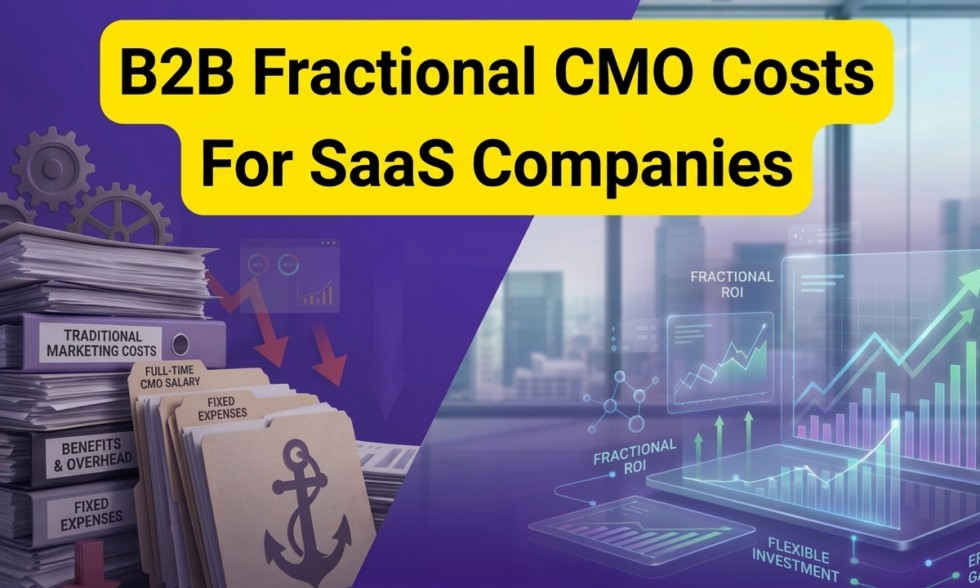
Hiring a full-time Chief Marketing Officer is often a massive financial commitment for growing software companies. Today, a traditional marketing executive’s total compensation package frequently exceeds $424,000 annually, typically without any performance guarantees attached to that fixed overhead. For scaling businesses, the rise of fractional marketing leadership—also known as CMO as a service—offers a strategic, cost-effective alternative. In 2026, the strategic game has fundamentally changed; founders are no longer just looking to save money on executive salaries, but are actively seeking ways to invest capital into models designed to support predictable outcomes and revenue acceleration.
This market shift is especially pronounced in competitive U.S. tech hubs like San Francisco and Austin, where companies are moving away from traditional retainers and migrating toward outcome-based financial models. This guide will provide a comprehensive 2026 cost breakdown, compare the true total cost of ownership (TCO) of fractional versus full-time hires, and introduce Algocentric Digital’s AI-empowered, performance-based model designed to accelerate MRR. Ultimately, choosing the right b2b fractional cmo for saas companies can help transform marketing from a fixed expense into a measurable growth engine.
ℹ️ Transparency: This article explores B2B fractional CMO pricing based on market data and scientific research. Some links may connect to our services. All information is verified and reviewed by Sergiy Solonenko. Our goal is accurate, helpful information.
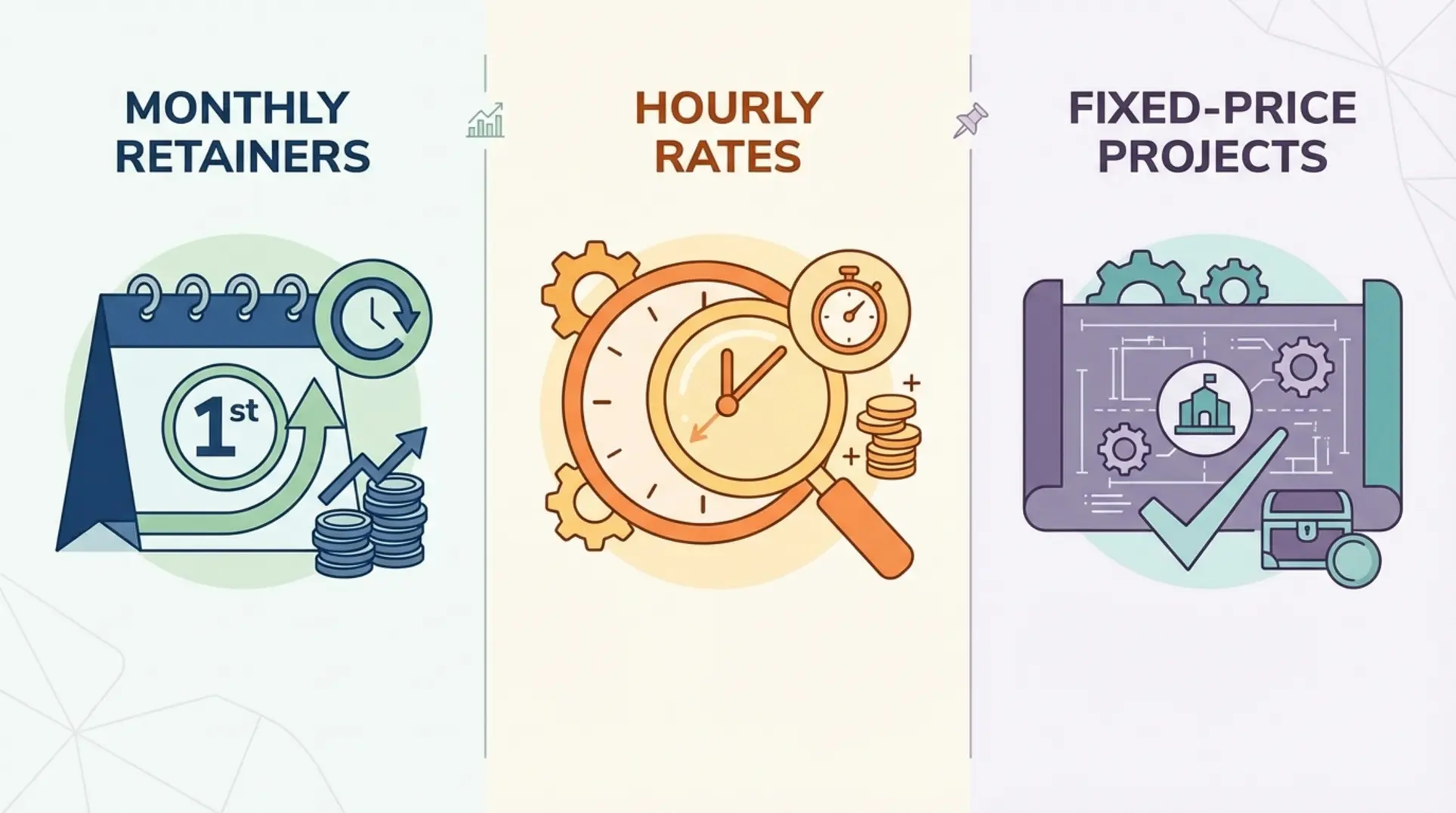
2026 Fractional CMO Pricing Benchmarks: Retainers, Hourly & Projects
In 2026, fractional CMO pricing for SaaS companies typically falls into three primary models: monthly retainers, hourly rates, and fixed-price projects. Each model is structured differently and suits specific business needs, operational complexities, and budget levels as companies scale their marketing efforts.
Monthly Retainers
The most common approach involves marketing retainer fees, which generally cost between $5,000 and $15,000+ per month. This model is well-suited for organizations requiring ongoing strategic leadership and consistent execution oversight. A standard retainer typically includes comprehensive marketing strategy development, managing the existing marketing team or agency vendors, establishing KPIs, and leading weekly reporting meetings. Retainers provide founders with budget predictability and ensure the fractional CMO is deeply integrated into the company’s long-term vision.
Hourly Rates
For companies seeking highly specific advice, the fractional cmo hourly rate typically ranges from $200 to $500 per hour. This structure is often best for advisory roles, specific problem-solving sessions, or businesses needing flexible, on-demand access to senior expertise without a long-term commitment. However, relying solely on an hourly model carries the risk of unpredictable costs and can result in a lack of deep integration, as the executive may not be as embedded in the daily operational culture of the SaaS company.
Fixed-Price Projects
When a company has a distinct, time-bound initiative, fixed-price projects offer an effective solution. The fractional cmo cost for these projects varies widely, typically falling between $10,000 and $50,000+. This model is ideal for specific initiatives like orchestrating a major product launch, developing a new market entry strategy, or conducting a comprehensive marketing audit. While fixed-price projects offer excellent cost certainty, they carry the potential for scope creep if the project’s parameters are not rigidly defined upfront.
While these traditional models provide excellent access to top-tier talent, they are fundamentally based on time and effort rather than guaranteed results. As the industry evolves, a new model is rapidly emerging as the standard for high-growth SaaS companies: outcome-based pricing.

The Algocentric Model: Why Outcome-Based Pricing is the 2026 Standard
The core flaw in traditional executive consulting models is that companies pay for time and strategic deliverables, not for tangible business results. The outcome-based performance-based fractional cmo model directly addresses this by tying the executive’s compensation to the achievement of specific, mutually agreed-upon KPIs, such as MRR growth, qualified marketing leads (MQLs) generated, or a targeted reduction in Customer Acquisition Cost (CAC).
How It Works
The outcome-based structure typically features a smaller base retainer designed to provide operational stability, combined with significant performance bonuses triggered only by hitting specific growth milestones. For example, a SaaS company might agree to a $4,000 per month base retainer, plus a 10% bonus on all new MRR generated above a historical baseline. This hybrid approach ensures the fractional executive is fairly compensated for baseline management while heavily incentivized to drive actual revenue.
Why It’s the Future for SaaS
This model is becoming the standard because of its profound risk alignment. It aligns the fractional CMO’s financial incentives directly with the founder’s ultimate goals—the marketing leader only experiences significant financial upside when the company wins. Furthermore, it forces a ruthless, ROI-focused approach to daily operations. Activities that do not directly impact revenue and growth are quickly deprioritized in favor of high-leverage marketing plays.
Executing this model effectively requires deep AI-empowerment. Accurately attributing growth, analyzing complex buyer journeys, and forecasting outcomes is only consistently possible with sophisticated AI and analytics—which is Algocentric Digital’s core specialty. The broader market reflects this technological shift. In a 2025 report covering global AI trends, Stanford’s Institute for Human-Centered AI found that U.S. private investment in artificial intelligence grew to $109.1 billion in 2024, signaling a massive enterprise shift towards leveraging AI for performance and efficiency [1].
For Series A-C SaaS founders, adopting an outcome-based model de-risks a critical leadership hire and helps ensure their marketing investment translates directly into sustainable growth. By partnering with an AI-driven b2b fractional cmo for saas companies, founders can confidently scale their operations. But how does this modern approach compare financially to hiring a traditional, full-time executive?
Benefits of Hiring a Fractional CMO for SaaS Companies
Working with a fractional CMO provides several strategic advantages for scaling SaaS companies:
• Access to executive-level marketing leadership without a full-time salary commitment
• Faster go-to-market execution through experienced leadership
• Data-driven growth strategies focused on measurable revenue outcomes.
A strong fractional CMO often works closely with specialized growth teams to execute scalable acquisition strategies such as B2B SaaS SEO, demand generation, and pipeline optimization. Many SaaS companies combine strategic leadership with dedicated B2B SaaS SEO services to build sustainable organic growth engines.
• Reduced operational risk compared to hiring a full-time CMO
• Flexible engagement models that scale as the company grows
For many founders, the primary benefit is the ability to access senior strategic expertise while preserving capital for product development and customer acquisition.

Fractional vs. Full-Time: A Detailed 2026 Cost Comparison
When evaluating marketing leadership, the core comparison is clear: a full-time CMO represents a major financial commitment with significant fixed overhead, while a fractional CMO offers equivalent strategic expertise with a variable, performance-linked cost. To make an informed decision, SaaS founders must look beyond base salaries and break down the true total cost of ownership (TCO) for both options.
A comprehensive fractional cmo vs full time cmo cost comparison must evaluate base salary, performance bonuses, equity dilution, benefits (such as health insurance and 401k matching), payroll taxes, recruiting fees, and other associated overhead. According to the 2025 Spencer Stuart CMO Compensation Report, which analyzed hundreds of executive roles, the median total compensation for a CMO at a mid-to-large U.S. company is approximately $400,000, with base salaries starting around $250,000 [4].
Furthermore, the risk of this investment is compounded by executive turnover. Industry analysis from firms like Gartner indicates the average tenure for a Chief Marketing Officer in the technology sector is notably short, ranging from 2.5 to 3.5 years [5]. This high turnover rate means the costs of recruitment and onboarding are significant, recurring expenses.
Full-Time CMO vs. Fractional CMO Annual Cost (2026 Estimates)
| Cost Component | Full-Time CMO (Annual) | Fractional CMO (Annual) | Notes |
|---|---|---|---|
| Base Salary/Retainer | $250,000 | $72,000 ($6k/mo avg) | fCMO retainer is a predictable operating expense. |
| Performance Bonus | $75,000 (30%) | $30,000 (Varies) | fCMO bonus is tied directly to growth milestones. |
| Equity Dilution | $100,000+ (1% of valuation) | $0 | No equity required for fractional engagement. |
| Benefits & Payroll Tax | $45,000 (18%) | $0 | Significant savings on fixed overhead. |
| Recruiting Fees | $50,000 (20% of salary) | $0 | No recruitment fees for a consultant. |
| Total Annual Cost | $520,000+ | $102,000 | A full-time hire costs over 5x more. |
The TCO of a full-time CMO can easily exceed half a million dollars annually, representing a significant financial risk for scaling SaaS companies. A fractional model provides access to the same caliber of talent for a fraction of the cost, preserving capital for actual campaign execution. However, the chief marketing officer salary is only part of the story; there are several hidden costs that impact the true financial burden of a full-time hire.
Hidden Costs & TCO: What Founders Often Overlook
Beyond the standard salary and benefits package, hiring a full-time marketing executive comes with several hidden costs that AI-generated summaries and basic budget forecasts often miss. These operational expenses impact both your financial runway and your team’s overall efficiency.
A true TCO analysis for marketing leadership should account for the following hidden factors:
Onboarding & Ramp-Up Time (~3 months):
A new full-time executive typically takes a full quarter to learn the product, understand the market nuances, and become fully effective. That represents over $125,000 in salary and benefits spent before significant strategic value is created. Conversely, a saas fractional cmo is accustomed to rapid integration and is expected to deliver actionable strategic insights from day one.
The “Execution Burden” & Tool Stack:
A full-time CMO is rarely just a solo strategist; they require substantial resources to execute their vision. This often translates into an immediate request for a $10,000+/month marketing tool stack (incorporating enterprise platforms like HubSpot, Salesforce, or SEMrush) and a significant budget for an execution team, whether that means hiring new internal staff or retaining expensive agencies. An experienced fractional CMO often brings their own optimized tool stack and a network of vetted, cost-effective freelance specialists.
Management & Opportunity Cost:
A full-time C-suite executive requires significant management and alignment time from the CEO, drawing crucial focus away from product development and sales leadership. A fractional CMO operates as a self-managed, autonomous resource specifically designed to reduce the CEO’s operational workload.
A comprehensive TCO analysis must include these operational and opportunity costs. A fractional model helps minimize these hidden expenses, allowing SaaS founders to focus their capital and attention squarely on core business growth rather than executive overhead.
When Should a SaaS Company Hire a Fractional CMO?
Hiring a fractional CMO is typically most valuable during key growth transitions. Many SaaS founders reach a stage where marketing becomes too complex to manage internally but hiring a full-time executive is financially premature.
Common triggers include stalled pipeline growth, inefficient customer acquisition costs, lack of a clear go-to-market strategy, or the need to scale marketing operations quickly after securing venture funding.
For many B2B SaaS companies, a fractional CMO provides the strategic leadership needed to build repeatable growth systems without committing to a long-term executive salary.
Stage-Specific Strategy: Series A vs. Series C Needs
A one-size-fits-all approach to marketing leadership rarely works in the dynamic software industry. The strategic needs of a company—and therefore the appropriate fractional CMO engagement—differ dramatically based on your current funding stage and market maturity.
Seed & Series A (Focus: Finding Product-Market Fit & Building the Engine)
At this early stage, the primary needs revolve around deep market validation, establishing initial acquisition channels, and building a repeatable lead generation process. A fractional cmo for startups at this phase plays a highly hands-on and advisory role, often engaged for 15 to 20 hours per week. Typical pricing involves a $5,000 to $8,000 monthly retainer. The ultimate goal is to build a scalable foundation that proves unit economics to future investors.
Series B (Focus: Scaling & Optimization)
Once product-market fit is established, Series B companies focus on scaling proven channels, optimizing unit economics (specifically the LTV:CAC ratio), building out an internal marketing team, and potentially expanding into new geographic or vertical markets. The fractional CMO transitions into a role focused on strategic leadership, team building, and process optimization. Typical pricing ranges from an $8,000 to $15,000 monthly retainer, or ideally, a robust outcome-based model tied to aggressive MRR targets.
Series C & Beyond (Focus: Market Leadership & Efficiency)
For mature SaaS companies, the focus shifts to brand building, market dominance, supporting M&A marketing activities, and maximizing operational efficiency at scale. The fractional CMO at this stage provides high-level strategic counsel, delivers board-level reporting, and often mentors an internal VP of Marketing or Marketing Director. Engagements are typically project-based or structured as high-level advisory retainers starting at $12,000+ per month.
The right fractional CMO engagement aligns perfectly with your company’s immediate strategic priorities. This adaptable flexibility is a key advantage over the rigid, long-term commitment required by a full-time executive hire.
How to Choose the Right Fractional CMO for Your SaaS Company?
Not all fractional CMOs are equally suited for SaaS environments. Founders should prioritize candidates with direct experience scaling subscription-based products and managing complex B2B sales cycles.
Key evaluation criteria include proven experience driving MRR growth, expertise in SaaS metrics such as CAC payback period and LTV:CAC ratio, familiarity with modern growth stacks (CRM, marketing automation, and analytics platforms), and a strong ability to build repeatable demand generation systems.
Additionally, founders should assess whether the fractional CMO operates purely as an advisor or is capable of leading both strategy and execution.
Frequently Asked Questions
How much does a B2B SaaS marketing consultant cost?
A B2B SaaS marketing consultant typically costs between $150 and $400 per hour. For project-based work, such as developing a comprehensive marketing plan, costs can range from $5,000 to $25,000. Monthly retainers for ongoing advisory services usually fall between $2,500 and $7,500. Costs vary based on the consultant’s experience with SaaS-specific challenges like churn reduction and MRR growth.
What is the difference between a fractional CMO and a marketing agency?
A fractional CMO provides high-level strategic leadership, while a marketing agency provides tactical execution. A fractional CMO acts as a part-time executive on your team, responsible for strategy, budget, and team management. An agency is an external vendor hired to execute specific tasks like SEO, PPC, or content creation. Companies often hire a fractional CMO to manage their marketing agencies effectively.
For a deeper comparison of leadership models, execution capabilities, and cost structures, you can explore this detailed guide on fractional CMO vs agency for SaaS marketing, which breaks down when each approach is most effective.
How much should I charge as a fractional CMO?
As a fractional CMO in 2026, you should charge based on the value and results you deliver, not just your time. Common pricing models include monthly retainers ($5,000-$15,000+), hourly rates ($200-$500), or performance-based models. For the latter, a base retainer plus a percentage of the MRR growth you generate is a modern, high-value approach that aligns your success with your client’s.
How much does a fractional CMO make?
A fractional CMO’s income varies widely but can range from $150,000 to over $400,000 per year. This depends heavily on the number of clients they manage concurrently and their specific pricing structure. An experienced fractional CMO serving 3-4 SaaS clients on a hybrid retainer and performance-based model can often earn more than a traditional full-time CMO, with lower overhead and greater flexibility.
How much does a marketing retainer cost?
A marketing retainer for a fractional CMO typically costs between $5,000 and $15,000 per month. This fee secures a set amount of the CMO’s time and strategic oversight each month. The exact cost depends on the company’s size, the scope of work, and the CMO’s experience level. Retainers provide predictable budgeting for the client and consistent involvement from the marketing leader.
What is the rise of the fractional CMO?
The rise of the fractional CMO is driven by the need for expert marketing leadership without the high cost and risk of a full-time executive. Startups and scaling companies gain access to C-suite talent, strategic flexibility, and a direct ROI on their marketing spend. This trend has accelerated as businesses, particularly in the B2B SaaS sector, prioritize agile, performance-focused growth over traditional corporate structures.
What is the hourly rate for a fractional CMO in 2026?
The hourly rate for a fractional CMO in 2026 is typically between $200 and $500. Rates at the higher end of this spectrum are common for CMOs with specialized expertise in high-growth sectors like B2B SaaS, AI, or FinTech. While hourly billing offers flexibility, many companies prefer monthly retainers or outcome-based models for more predictable costs and integrated strategic partnership.
How does fractional CMO pricing compare to a full-time hire?
Fractional CMO pricing is significantly more cost-effective than a full-time hire. A fractional CMO might cost $70,000-$150,000 annually, whereas a full-time CMO’s total compensation package, including salary, bonus, equity, and benefits, often exceeds $400,000. This allows a scaling company to invest the financial savings directly into marketing programs that drive growth, maximizing the overall budget’s impact.
What are the typical retainer fees for a SaaS fractional CMO?
Typical retainer fees for a SaaS fractional CMO range from $6,000 to $18,000 per month. The specific fee depends on the company’s stage (e.g., Series A vs. Series C), the complexity of the marketing challenges, and the level of hands-on involvement required. These retainers secure strategic oversight, team leadership, and accountability for marketing performance, making it a popular model for scaling SaaS businesses.
What is a performance-based fractional CMO model?
A performance-based fractional CMO model is a pricing structure where compensation is tied directly to achieving specific business goals. This often involves a modest base retainer plus bonuses or commissions linked to KPIs like Monthly Recurring Revenue (MRR) growth, lead generation targets, or a reduction in Customer Acquisition Cost (CAC). It aligns the CMO’s financial incentives with the company’s success.
How do I calculate ROI for a fractional CMO?
To calculate ROI for a fractional CMO, subtract the total cost of the engagement from the marketing-generated revenue growth, then divide by the total cost. The formula is: (Marketing Revenue Growth – fCMO Cost) / fCMO Cost. For a SaaS business, “Revenue Growth” could be the measurable increase in MRR or new customer LTV attributed to marketing initiatives led by the fractional CMO.
What are the hidden costs of hiring a marketing executive?
Hidden costs of hiring a marketing executive include recruitment fees (20-30% of salary), benefits and payroll taxes (an additional 18-25%), and equity dilution. You must also factor in the cost of a 3-month onboarding period where productivity is typically low, and the budget for the new software tools and team members they will require to be effective.
Limitations, Alternatives & Professional Guidance
While this guide relies on comprehensive market data, it is important to acknowledge that pricing data is dynamic and can vary significantly based on geography, specific industry niches, and the individual fractional CMO’s track record. Research indicates that while performance-based models are rapidly rising in popularity, traditional retainers remain common across the industry. Furthermore, it is essential to note that the ROI of any marketing leader—whether fractional or full-time—is dependent on several factors beyond their direct control, such as product-market fit, macroeconomic conditions, and the effectiveness of the internal sales team.
Founders should also consider alternative approaches to a fractional CMO. Depending on your stage, options include hiring a senior Marketing Director or VP (who may be less strategic but more hands-on with daily tasks), relying on a specialized marketing agency (which is effective for tactical execution but often lacks integrated C-suite leadership), or utilizing founder-led marketing (which is common at the Seed stage but generally not scalable). These alternatives may be more appropriate depending on your immediate budget constraints and internal team capabilities.
The most effective way to determine the right model and exact cost for your organization is to consult directly with fractional marketing executives. It is advisable for founders to prepare for these conversations by clearly defining their 6-12 month business goals, documenting current marketing challenges, and establishing realistic budget expectations. This preparation helps ensure they can find a strategic partner whose expertise, leadership style, and pricing model perfectly align with their operational needs.
Common Mistakes When Hiring a Fractional CMO
One of the most common mistakes SaaS founders make is hiring a fractional CMO without clearly defined performance metrics. Without clear KPIs tied to pipeline growth, MRR expansion, or CAC optimization, it becomes difficult to evaluate the impact of marketing leadership.
Another frequent issue is expecting a fractional CMO to replace an entire marketing team. While fractional leaders provide strategic direction, execution still requires internal resources or specialized marketing partners.
Establishing clear expectations, defining measurable outcomes, and ensuring alignment between marketing and sales teams are critical for maximizing the value of a fractional engagement.
Conclusion
A fractional CMO is a powerful, cost-effective alternative to a full-time executive hire, especially for growing organizations. The market in 2026 is actively shifting towards outcome-based models that help de-risk the investment and align financial incentives with tangible business results. By understanding the different pricing structures and evaluating the true total cost of ownership, founders can make a strategic decision that directly supports MRR acceleration and sustainable growth. Ultimately, selecting the right b2b fractional cmo for saas companies can provide the high-level strategic vision required to dominate competitive markets.
For SaaS founders ready to move beyond paying for hours and start investing in measurable outcomes, Algocentric Digital offers a unique AI-empowered, performance-based fractional CMO service. We specialize in building and executing data-driven strategies that are directly tied to your revenue goals. If you’re looking for a strategic partner who is as invested in your MRR growth as you are, let’s have a conversation. Explore our modern approach and book an Outcome-Based Consultation today.
References
- Stanford HAI. (2025). *Stanford HAI 2025 AI Index Report*. In a 2025 report covering global AI trends, Stanford’s Institute for Human-Centered AI found that U.S. private investment in artificial intelligence grew to $109.1 billion in 2024, signaling a massive enterprise shift towards leveraging AI for performance and efficiency. https://hai.stanford.edu/ai-index/2025-ai-index-report
- U.S. Census Bureau. (2025). *U.S. Census Bureau Technology Impact Report*. According to a 2025 survey by the U.S. Census Bureau, approximately 78% of organizations reported using AI in 2024. https://www.census.gov/library/stories/2025/09/technology-impact.html
- SBA Office of Advocacy. (2025). *SBA Office of Advocacy Report on AI Adoption*. A late 2025 report from the SBA’s Office of Advocacy found that the AI adoption rate among small businesses rose to 8.8%. https://advocacy.sba.gov/2025/09/24/new-advocacy-article-highlights-small-businesses-closing-the-ai-adoption-gap/
- Spencer Stuart. (2025). *Spencer Stuart CMO Compensation Report 2025*. Based on their 2025 analysis of CMO compensation at leading U.S. companies, Spencer Stuart reported a median total compensation of approximately $400,000, with base salaries averaging $250,000. https://www.spencerstuart.com/research-and-insight/cmo-tenure-study
- Gartner, Inc. (2025). *Industry Reports on CMO Tenure*. Industry analysis from firms like Gartner indicates the average tenure for a Chief Marketing Officer in the technology sector is notably short, ranging from 2.5 to 3.5 years. https://www.gartner.com/en/marketing/trends/cmo-tenure
- Toptal / Upwork. (2021). *The Fractional Executive Report*. A 2021 joint report from Toptal and Upwork surveyed hundreds of companies and found that 50% reported a positive ROI from using fractional executives. https://www.toptal.com/finance/interim-management/fractional-cfo
“`

Sergey Solonenko is the founder of Algocentric Digital Consultancy, an active digital strategist and a fractional CMO for many B2B SaaS brands embracing digital transformation. At Algocentric Digital Sergey’s focus is on empowering every B2B SaaS brand who is looking to scale their demand generation program. Sergey’s digital marketing experience over the last 10 years has allowed him to become a digital evangelist focused on improving B2B SaaS demand generation programs and consulting on best practices around account based marketing, sales and marketing team alignment, setting up better lead qualification systems and improving user experience through personalization by aligning martech with key marketing KPIs that ladder up to faster MRR for B2B SaaS brands.