🎯 Quick Answer
U.S. Series A SaaS founders determining when to hire a fractional cmo should look for revenue plateaus around $2M ARR, rising customer acquisition costs, or situations where the founder becomes a marketing bottleneck.
- Strategic Triggers: Key signals include the transition from founder-led sales, post-funding pressure to scale, and the need for a strategic marketing roadmap.
- Cost-Effective Leadership: Access C-level expertise and an AI-driven growth model at a fraction of a full-time executive’s $300k+ salary.
- System-Led Growth: A fractional CMO builds a scalable marketing engine, mentors your team, and aligns marketing spend with MRR goals.
Continue reading for a detailed roadmap to navigate these growth challenges.
Introduction
Your Series A funding is a clock, not a cushion. For many U.S. SaaS founders, the journey from $1M to $10M in annual recurring revenue (ARR) is a “death valley” where founder-led sales tactics often stop working. Growth stagnates, and the pressure to deliver for investors mounts. How do you build a scalable marketing engine before the clock runs out?
This guide provides a strategic roadmap for knowing when to hire a fractional cmo. We’ll break down the specific revenue triggers, operational pain points, and financial signals that indicate it’s time for expert marketing leadership. We will explore how this agile model helps you navigate the “burn rate paradox” and implement an AI-powered system for sustainable MRR growth.
👤 Written by: Algocentric Digital Content Team
Reviewed by: Sergiy Solonenko, Founder & Fractional CMO with 15+ years scaling MarTech SaaS brands
Last updated: 29 January 2026
ℹ️ Transparency: This article explores the strategic decision of hiring a fractional CMO based on market data and extensive experience with Series A SaaS companies. Some links may connect to our services. All information is verified and reviewed by SaaS growth expert Sergiy Solonenko. Our goal is to provide an accurate, helpful framework for U.S. founders.
The 4 Critical Triggers: When to Hire a Fractional CMO
Moving beyond gut feelings, there are four distinct operational and financial triggers that signal the need for fractional marketing leadership. Recognizing when to hire a fractional cmo early can be the difference between stagnation and scalable growth.
Trigger 1: The Founder Bottleneck (Complexity vs. Capacity)
The transition from “founder-led sales” to a marketing-led organization is a precarious phase. Initially, a founder’s passion and network drive revenue. However, as the business scales, marketing complexity increases. When a founder spends more time approving ad copy or managing social media contractors than focusing on product vision and investor relations, they become a bottleneck. This operational drag often slows down decision-making and indicates a need for delegated strategic leadership.
Trigger 2: The $2M ARR Revenue Plateau
The $2M ARR mark is a common inflection point for U.S. SaaS companies. At this stage, the initial addressable market (often tapped through personal networks and outbound sales) is frequently exhausted. To scale beyond this plateau toward $10M ARR, a more sophisticated, multi-channel strategy is required. This typically involves inbound marketing, content strategy, and automated nurturing—systems that require architectural expertise to build.
Trigger 3: Rising CAC & Stagnant LTV
Inefficient marketing spend is a silent killer of runway. If your Customer Acquisition Cost (CAC) is rising without a corresponding increase in Life-Time Value (LTV), it suggests that your current channels are saturated or your targeting is drifting. A fractional CMO focuses on refining the Ideal Customer Profile (ICP) and optimizing the funnel metrics. They analyze the unit economics to ensure that every marketing dollar contributes to efficient growth rather than just empty calorie metrics like “leads” or “traffic.”
Trigger 4: Post-Series A Scaling Pressure
After securing Series A funding, the board and investors expect a clear, predictable plan for MRR growth. The “move fast and break things” approach of the seed stage is often replaced by a need for “predictable revenue.” A fractional CMO provides the strategic roadmap and execution framework to meet these expectations, translating high-level business goals into actionable marketing campaigns that yield measurable results.
If these triggers describe your current reality, it’s not a sign of failure but a natural stage of growth. The next step is understanding how a fractional CMO compares to other options like a full-time hire or an agency.
Fractional CMO vs. Full-Time CMO vs. Agency: A U.S. SaaS Cost Analysis
Choosing the right marketing leadership model is a critical financial and strategic decision. Let’s break down the three primary options for a U.S.-based Series A SaaS company to understand the trade-offs between cost, agility, and strategic depth.
Full-Time CMO
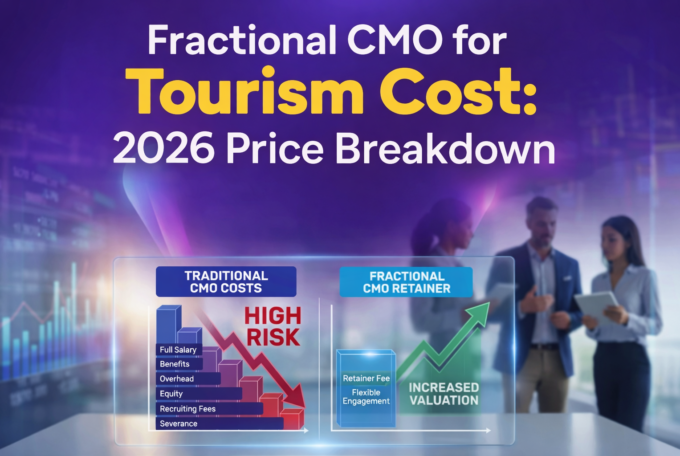
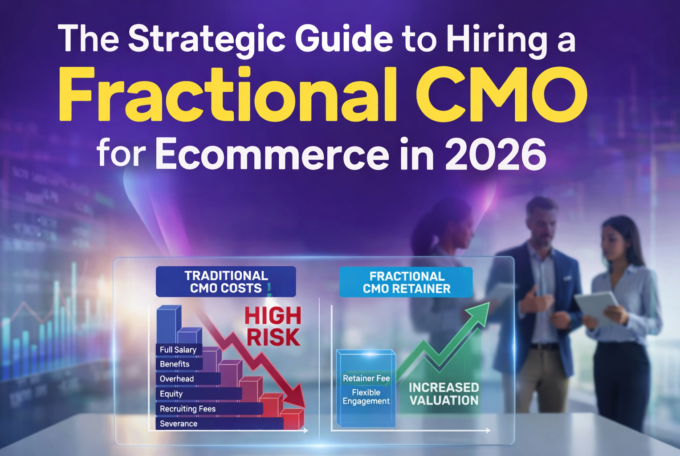
For a Series A startup, a full-time CMO represents a significant fixed cost. In the U.S. market, a seasoned CMO package often includes a base salary of $250k-$300k+, along with substantial equity, benefits, and bonuses. While this provides a dedicated resource, the total cost of ownership can be too high for a company trying to manage its burn rate. Additionally, a Series A company may not yet have the infrastructure or budget to fully utilize a full-time executive’s capacity, leading to resource misalignment.
Marketing Agency
Marketing agencies are powerful tactical executors. They excel at specific deliverables, such as running PPC campaigns, writing SEO content, or managing social media. However, agencies typically operate as external vendors rather than internal leaders. They often lack the deep, integrated strategic ownership required to align product, sales, and customer success. While great for bandwidth, relying solely on an agency can leave a founder without a strategic partner to guide the overall direction. For a deeper comparison of a fractional CMO vs. an agency, you can review our detailed analysis.
Fractional CMO
The fractional model offers a hybrid solution, providing C-level strategy, team building, and board-level reporting without the full-time financial burden. A saas fractional cmo typically works on a retainer basis, embedding themselves into the leadership team to build an internal “marketing machine” rather than creating long-term dependency.
This model is particularly effective for mentorship. While AI adoption is growing, the human element remains crucial. A 2025 study by the Pew Research Center found that 52% of workers feel worried about AI’s role in the workplace, emphasizing the need for leaders who can mentor teams through technological transitions. A fractional CMO bridges this gap, implementing “AI-Empowered” workflows while upskilling the internal team.
For Series A SaaS companies, the Fractional CMO model offers the optimal balance of strategic leadership, financial efficiency, and operational agility required to navigate the post-funding growth phase.
The Series A Roadmap: From Founder-Led to System-Led Growth
A high-impact Fractional CMO doesn’t just offer advice; they implement a proven system for growth. Here is the typical three-step roadmap for transforming a founder-led sales motion into a scalable, data-driven marketing engine.
Step 1: Audit the Go-to-Market (GTM) Engine
The first 30 days are typically dedicated to diagnosis. This involves a deep dive into the current tech stack, marketing channels, sales data, and team capabilities. The goal is to identify the “leaky buckets” in the funnel and the highest-leverage opportunities for growth. By analyzing CAC/LTV metrics and historical performance, the fractional CMO creates a baseline for improvement and prioritizes actions that will impact revenue most quickly.
Step 2: Implement the AI-Powered Demand Gen Stack
Based on the audit, the next phase is building the machine. This includes selecting and integrating the right MarTech, setting up analytics and reporting dashboards, and launching initial campaigns to test messaging and channels.
Adopting AI is no longer optional for competitive SaaS companies. In its 2025 report, Stanford’s Institute for Human-Centered AI noted that private investment in AI within the United States grew to $109.1 billion in 2024, signaling a massive market shift towards AI-centric operations. Furthermore, according to 2024 data from the U.S. Census Bureau, approximately 78% of organizations now report using artificial intelligence, highlighting its transition from a niche technology to a standard business tool. A fractional CMO integrates these tools to automate demand generation and personalize outreach at scale. You can explore our AI-powered marketing playbooks to see how these systems are structured.
Step 3: Align Sales & Marketing for MRR Growth
The final step is creating a seamless feedback loop between sales and marketing. This involves establishing shared KPIs (like marketing-sourced MRR), creating service-level agreements (SLAs), and using data to continuously optimize the entire revenue funnel.
This alignment is a key competitive differentiator. A late 2025 report from the SBA’s Office of Advocacy found that the AI adoption rate for small businesses has risen to 8.8%, with many leveraging AI to close the competitive gap with larger firms, particularly in areas like automated marketing. By implementing these systems, a fractional CMO ensures that marketing efforts are directly tied to business outcomes, de-risking the founder’s growth plan and providing clear, defensible metrics for investor reporting.
AI Gap: The Burn Rate Paradox & Efficient Growth in the U.S. Market
Ask a chatbot how to manage your marketing budget, and it will likely tell you to “lower CAC” and “improve ROI.” While true, this advice is dangerously generic for a Series A founder. The real challenge is the “Burn Rate Paradox”: you must spend to grow, but every dollar spent shortens your runway. How do you scale aggressively while proving capital efficiency to U.S. investors?
Beyond Lowering CAC: The PMF Feedback Loop
At the Series A stage, CAC is often a *discovery cost*. We use AI not just to find cheaper clicks, but to analyze customer data from early cohorts to refine Product-Market Fit (PMF). This means spending smarter on the right channels to attract ideal customers, even if the initial CAC is higher. A fractional CMO uses this data to pivot strategy quickly, ensuring that budget is allocated to channels that bring in high-retention customers rather than just high volumes of leads.
Value-Driven Marketing vs. Volume-Driven
The old model of “more leads at all costs” is being replaced by a framework for identifying “pockets of profit.” Machine learning models can analyze sales data to identify the customer segments with the highest LTV and lowest churn. This allows for a hyper-targeted allocation of the marketing budget, focusing resources on the 20% of the market that yields 80% of the revenue. This shift from volume to value is critical for maintaining the “Efficient Growth” metrics (like the Rule of 40) that U.S. VCs prioritize.
The Role of Governance
Using AI to drive decisions requires strict governance to maintain investor trust. To ensure AI is used responsibly, leading organizations adhere to frameworks like the NIST AI Risk Management Framework (AI RMF 1.0), which provides a structured process to govern, map, measure, and manage AI-related risks. By adopting these standards, a fractional CMO assures the board that data-driven decisions are made responsibly and ethically.
Expert Perspective:
“Investors no longer fund ‘growth at any cost.’ They fund ‘efficient growth.’ Our model uses AI to prove that every marketing dollar is an investment in predictable, profitable MRR, directly aligning the marketing P&L with the founder’s next funding round.” — Sergiy Solonenko
Frequently Asked Questions
What is a fractional CMO for B2B SaaS?
A fractional CMO for B2B SaaS is a senior-level marketing executive who provides strategic leadership on a part-time or “fractional” basis. Instead of a full-time hire, a startup gets access to top-tier expertise in areas like go-to-market strategy, team building, and demand generation for a fixed monthly retainer. This model is ideal for Series A companies needing expert guidance without the cost of a full-time executive salary.
How much does a B2B SaaS marketing consultant cost?
The cost for a B2B SaaS marketing consultant, such as a fractional CMO, typically ranges from $5,000 to $15,000 per month in the U.S. Pricing depends on the scope of work, the consultant’s experience, and the company’s growth stage. Unlike hourly consultants, fractional CMOs often work on a fixed retainer, providing a predictable cost for strategic leadership and program management.
When should a company hire a Fractional CMO?
A company should hire a Fractional CMO when it experiences specific growth pains, typically around $1M-$10M ARR. Key triggers include the founder becoming a marketing bottleneck, revenue growth stagnating, customer acquisition costs rising, or after a funding round (like Series A) when there is pressure to scale marketing operations systematically and report on progress to a board. Recognizing when to hire a fractional cmo is key to avoiding stalled growth.
What is the difference between a fractional CMO and a marketing agency?
A fractional CMO is a strategic leader, while a marketing agency is a tactical executor. A fractional CMO joins your leadership team to build the marketing strategy, mentor your team, and own the results. An agency, in contrast, is an external vendor hired to execute specific tasks like SEO or running ad campaigns. The fractional CMO often manages agencies to ensure their work aligns with business goals.
How does AI-powered marketing drive MRR growth?
AI-powered marketing drives MRR growth by using data to improve targeting, personalization, and efficiency. Machine learning algorithms can analyze customer data to identify the most profitable segments, automate personalized communication at scale, and optimize ad spend for conversions, not just clicks. This data-driven approach leads to a lower customer acquisition cost and a higher lifetime value, directly boosting MRR.
What are the signs you need a fractional CMO?
Key signs you need a fractional CMO include a plateau in revenue growth, a lack of a clear marketing strategy, and an overworked founder handling all marketing. Other signals are an inability to measure marketing ROI, a junior marketing team that needs leadership and mentorship, and increasing pressure from investors to create a predictable pipeline for sales.
Fractional CMO vs Full-time CMO: Which is better for Series A?
For most Series A startups, a Fractional CMO is better due to cost-efficiency and flexibility. A full-time CMO can cost over $300,000 annually in the U.S., which is a significant burn rate commitment. A fractional CMO provides the same level of strategic expertise at a fraction of the cost, allowing the company to invest more capital into growth programs while benefiting from executive leadership.
How to hire a fractional CMO for a SaaS startup?
To hire a fractional CMO, first define your specific goals (e.g., scale MRR, build a team). Look for candidates with proven experience in your niche (B2B SaaS) and growth stage (Series A). Evaluate their track record, ask for case studies, and ensure they have a systematic approach or framework. Finally, choose a partner who focuses on business outcomes, not just marketing activities.
What is the typical monthly retainer for a fractional CMO?
In the United States, the typical monthly retainer for a high-quality fractional CMO ranges from $5,000 to $15,000. The final cost depends on factors like the company’s size, the complexity of its marketing needs, and the level of involvement required. This retainer model provides predictable marketing leadership costs, which is crucial for managing burn rate at a startup.
What services does a fractional CMO provide?
A fractional CMO provides strategic marketing leadership services. This includes developing the overall marketing strategy, building and mentoring the marketing team, managing the marketing budget, overseeing demand generation campaigns, establishing key performance indicators (KPIs), and reporting on progress to the CEO and board of directors. They own the marketing function from strategy to results.
How does a fractional CMO help with Series A funding?
A fractional CMO helps with Series A funding by building a credible and data-backed growth story for investors. They establish a professional marketing function, create a scalable go-to-market plan, and implement analytics to demonstrate a clear path to future MRR growth. This level of strategic preparation and operational maturity significantly increases investor confidence during due diligence.
What is the ROI of a fractional CMO for SaaS?
The ROI of a fractional CMO is measured by their impact on key SaaS metrics like MRR growth, Customer Lifetime Value (LTV), and Customer Acquisition Cost (CAC). A successful engagement should lead to accelerated revenue, improved capital efficiency (lower CAC to LTV ratio), and the creation of a scalable marketing system that continues to deliver value long-term.
Limitations, Alternatives & Professional Guidance
While the fractional model is increasingly popular, formal academic research on its direct ROI compared to other models is still emerging. The data presented here is based on industry benchmarks, market analysis, and extensive experience with SaaS companies. The effectiveness of any leadership model is highly dependent on a company’s specific stage, product-market fit, and internal culture.
A fractional CMO is not the only solution. Early-stage startups (<$1M ARR) may benefit more from a hands-on marketing manager or a specialized agency focused on a single channel. Larger companies (>$20M ARR) with established teams may require the dedicated focus of a full-time CMO. It is essential to align the leadership model with your current stage of growth.
This guide provides a strategic framework, but every business is unique. Before making a decision, we recommend discussing your specific situation with an experienced advisor. A professional consultation can help you audit your current marketing efforts, clarify your growth goals, and determine the most appropriate and cost-effective leadership structure for your next phase.
Conclusion
Deciding when to hire a fractional cmo is a pivotal moment for any Series A SaaS founder. By recognizing the key triggers—the founder bottleneck, the $2M ARR plateau, and rising CAC—you can transition from a reactive, founder-led motion to a proactive, system-led growth engine. This strategic move provides the expert leadership needed to scale MRR efficiently while managing burn rate, ultimately setting the stage for your next round of funding.
Building this engine requires more than just a plan; it requires a partner with proven experience in AI-driven SaaS growth. If you’re ready to implement a strategic roadmap that aligns marketing with measurable business outcomes, consider Algocentric Digital. Our outcome-based Fractional CMO service is designed for U.S. founders ready to accelerate their growth.
Book an MRR Acceleration Audit with Algocentric Digital
References

Sergiy Solonenko is the founder of Algocentric Digital Consultancy, a seasoned digital strategist, and a fractional CMO for B2B SaaS brands undergoing digital transformation. With over a decade of experience, he specializes in scaling demand-generation programs, optimizing account-based marketing, and aligning sales and marketing teams. Sergiy helps B2B SaaS companies enhance lead qualification, improve user experience through personalization, and leverage Martech to accelerate MRR growth.