Imagine closing a deal without follow-ups? You pitch, persuade and they pay, sounds like a dream, right? if you’re fearing it can’t be true, keep reading. This is just one of the many reasons why SaaS companies are increasingly turning to ABM or Account Based Marketing.
We want you to be ahead of your competition and right in front of your customers, so we’ve compiled all relevant information about ABM for SaaS companies to help you grow your business with ease.
Buckle up!
Quality vs. Quantity
What do you think B2B lead generation is all about? Quality or quantity?
When you think about all the potential customers you want to reach out to your business, you might feel that quantity is what all these successful SaaS companies aim for. However, that can’t be further from the truth. Here is why!
As much as it’s a common fantasy for all business owners (you included as well!) to have leads pouring into your pipeline, it’s not realistic. Not only that, you will waste a lot of time, money, and resources if you want to target everyone who could potentially be your customers one day.
What you want instead is to target only customers who already have a certain level of interest in your business or the product you are selling. Reaching out to a person who is not in charge of making the decision is another error that happens when you aim for quality.
Why reach out to 50 people in one company if you could go directly to the key decision-maker and explain to them why they need your product or service? An administrative assistant will have less idea and understanding of your product than someone who can actually benefit from it. That is why quality wins quantity every time, especially in account-based marketing!
What is Account Based Marketing?
Account-based marketing (ABM) is a strategic approach focused on high-value accounts. Instead of focusing on the quantity of leads, this approach helps your business to focus on quality of leads. That is quite simple to understand, but execution is not as clear, right? That is why you’ll need to learn the depths of ABM first to be able to know who the decision maker is, how to reach out to them, and how to close.
In terms of ABM strategies, there are a range of them available to you to increase your engagement and conversion rates. Top SaaS companies are creating a personalizing buying experience that leads to better customer acquisition, rapport building, and finally, business growth.
When talking about how ABM for SaaS looks like, think about all the ways your business can cater to those high-value accounts, approaching them if they’re the only ones you want to sell to. After all, personalization in the SaaS world is what will get your product sold. If you manage to show your potential clients how they, not other companies in the SaaS industry, can benefit from implementing your SaaS product, trust us: they will buy from you!
When you are targeting a certain account, it also means you are aware of their preferences, pain points, and objectives for the future. You know how to explain how your product can solve these challenges for them and make their lives easier. Who wouldn’t want that?
Key Benefits of Account Based Marketing
Did you know that 77% of businesses saw a 10% greater ROI by implementing ABM strategies? In a Salesforce research, 92% said they wanted to implement ABM, while only 19% felt they had the knowledge and necessary tools for a successful ABM strategy.
There’s no doubt about it: ABM is the future of marketing, especially for SaaS businesses. Due to its flexibility and personalization, ABM can fit businesses of all sizes.
If you’re still not convinced about implementing the ABM marketing approach in your company, read the main benefits all businesses outline as soon as they start applying ABM for SaaS.
5 Key Benefits of ABM
Personalization and customization are just two aspects of why we love ABM and think everyone should apply this approach in their overall marketing strategy. Not only will you notice better marketing results with it, but your sales numbers will grow as well!
1. Personalized Marketing
Personalization is everywhere, from the reels you get recommended on your social media feed to the barista that makes your coffee. According to Mckinsey & Company, 71% of customers expect personalized communication and solutions from brands, and 76% get frustrated when this doesn’t happen.
This approach shows your prospects that you understand their problems and can provide a solution. Although you have a target audience with specific characteristics, who said they all have the same pain points? One business might seek your SaaS product to become more transparent, while others may need to figure out how a software can replace a human in certain administrative tasks.
Assuming they all have the same challenges shows your customers you don’t know them. Would you buy from someone who completely misunderstood your request? Exactly.
Think of ABM as a strategy you can use to analyze, get more insights, and create more and more relevant content around it. After all, there is proof that personalizing works: A study from CEB saw a 40% increase in the willingness to purchase from the suppliers that answered their pain points than those who didn’t.
2. Building and Nurturing Relationships
In ABM, you should always strive to establish and maintain relationships with the key accounts you’re targeting. These relationships will allow you to build trust between you and your customers, once these relationships are built, the customers are nurtured.
Continuing the ABM can help you collect better insights about your high target accounts, help you make predictions about their future problems, and make you perceive like a subject matter expert in the market.
3. Increased Return on Investment
Thanks to the technology, companies can now track and understand what is working and what isn’t, according to Alltera Group, 97% of marketers achieved higher ROI with ABM than any other marketing approach.
As a result, 91% of companies using ABM have reported an increase in their average deal size, with 25% reporting an increase of 50%. In addition, 60% of companies report at least a 10% increase in revenue in the first year of the new ABM program.
4. Speedy Decision Making
Traditionally the decision-making process can take a long time to convert, but ABM has an advantage that speeds up the process. Since there is no possibility of checking with the higher authority to complete the transactions.
5. Improved Customer Retention
Everyone likes to be the ‘Man of the hour’, imagine a room full or marketing and sales reps making you feel like YOU MATTER.
This, by default, increases the chances of them sticking around for longer than increasing your company’s customer retention cycle.
How Do You Begin Account Based Marketing for SaaS?
ABM is one of the popularly used strategies, with 7 out of 10 companies already using it, here is how you can get started. The points mentioned below go one after another so that you are well-equipped with the things you have to do.
1. Building Your Ideal Customer Profiles (ICPs)
The ideal customer profile, in simple terms, is a company or customer that can benefit from your product/service.
Your ideal customers cannot be identified as people who check 2/3 boxes of your idea, since ABM is all about specificity, you have to dive deep to reap the benefits.
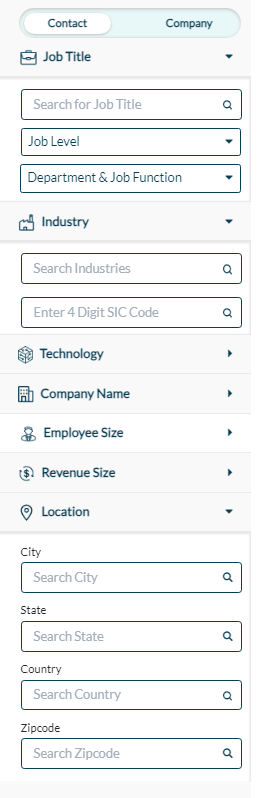
Some of the criteria to identify your ICPs are – Industry, Job title, job level, location, employee size, and revenue size.
2. Contact the Right People
ABM is all about connecting with the right people at the right time and avoiding gatekeepers as much as possible.
A company can have 3 to 5 ideal customer profiles, once you identify the one that gives you higher ROI, the rest of the customer journey becomes a cakewalk.
3. Build a Comprehensive List of Accounts
Make sure you store all the information about the people you have contacted, whether that’s in an Excel sheet or a software piece your team uses to manage all these processes. Make sure your team adds as many details as they can. What possible pain points are they noticing? Is there any information that has been shared that should be written down?
4. Create Relevant Content
Your content should either entertain or educate your prospects, sharing updates from your industry or useful tips that can make your prospects’ lives easier. Although your content always aims to engage the reader to sign up or download that great eBook you’ve just published, don’t oversell! There is nothing worse than pretending to provide helpful information just to trick the reader into buying!
Your content plan should be a mix of education and entertainment.
Having trouble in planning content? Here is a free content planner for you and your team.
Fill in the blanks and it’s all yours Download here.
Account Based Marketing Tactics
If you have made it so far, you know ABM is all about treating your ideal customer and dedicating yourself to solving their unique problems. When it comes to solving these problems, you will want to follow certain steps that make it easier for you to convert potential customers.
1. Offer Problem-Solving Content
These are some of the actionable ways you can get accustomed to the ABM, while you identify their pain point you start getting a sense of what might be their problem and what could help them solve it. Conduct interactive demo sessions, with a promise of value, you can do these in the form of webinars, eBooks, templates and more.
2. Multi-Channel Approach
Multichannel or omnichannel marketing means communicating the same personalized message through various mediums. Offer solutions through content and publishing on social media platforms or any mode of marketing you are using to get the attention of your prospects.
The channels can be online and offline. You can run a digital ad on platforms where your prospects are more active, and the same Ad can be showcased on the billboard.
3. Collaboration between Sales and Marketing Teams
By collaborating your sales and marketing team to work on the same strategy can result in deeper understanding about the prospects in both the aspects, while sales and marketing have different goals, one brings the money, the another brings people, the collaboration can end up in a smooth transition of bringing and closing new customers.
4. Embrace Free Trials
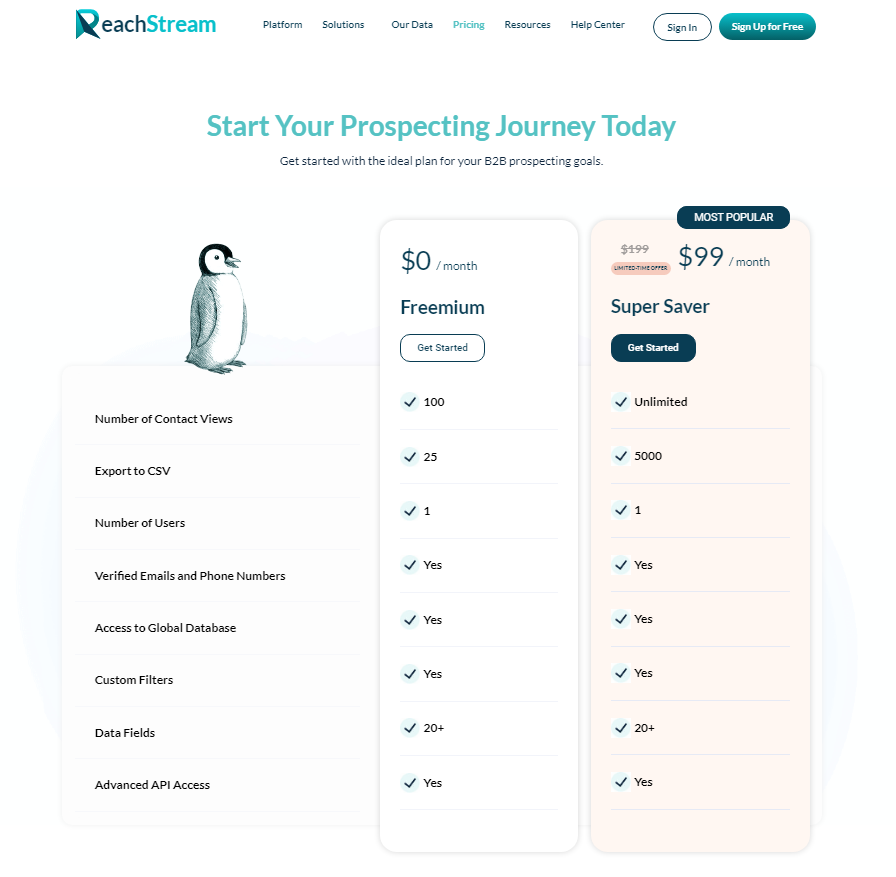
Everyone offers something for free, if you see some of the popular SaaS applications like ReachStream, offer a freemium plan to their users to make them sign up and understand how the application works.
This can not only be a part of your product but many other things like eBooks, templates and more.
Think about what might add value or decrease the workload of your prospect.
5. Web Personalization
It is out of the question to not have an up-and-running website in this day and age. The website is your sales rep that makes you money while you’re asleep, build landing pages for each persona/profile so that the website is talking to them! Use lingos you think your ICPs are using, list their pain points and offer solutions.
Which Businesses Can Benefit From Account Based Marketing?
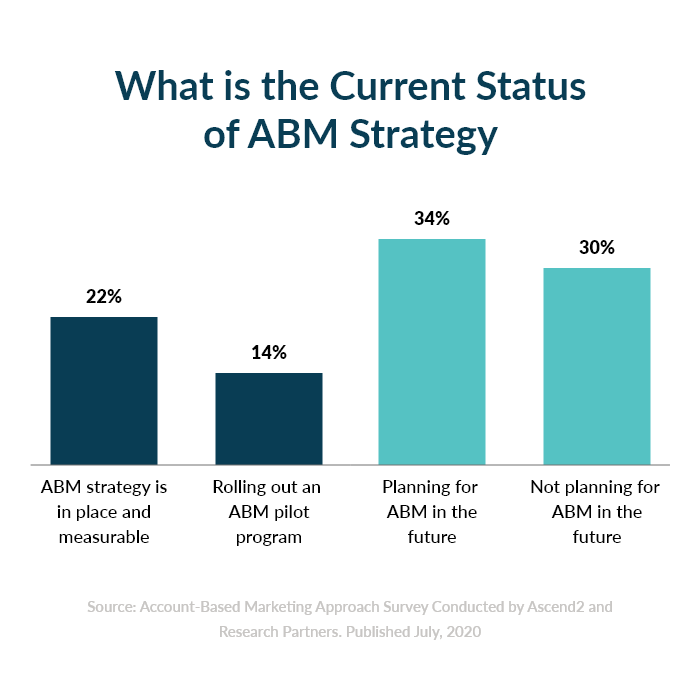
While ABM was primarily used by enterprise-level organizations that have significant resources to run this approach. Thanks to the advancements made in technology, companies of all sizes can carry out this strategic approach.
- Companies targeting B2B clients – If your business is B2B and B2C (like Adobe), keep ABM for the former.
- Popular companies with solid brand and reputation – It can be hard for new companies to apply ABM (this can be carried out using 3rd party application mentioned in the end)
- Have a sales team/ not satisfied with their current sales and marketing teams – You cannot apply ABM without them /if you are not satisfied with the existing approaches.
- Have the budget to afford the ABM tools – An ABM platform can cost you $800 per month for starters in addition, you will also need a data provider, which can cost you around ($55 – $550/mo) and an ABM ad platform which is anywhere around $1000 excluding the ad spend.
How Third-Party Data Provider Helps with Account Based Marketing
If you have made it so far, you know the main intention behind this approach is to focus on high-value accounts, here is how a third-party data provider like ReachStream can help you connect with the decision-makers from the targeted industry.
ReachStream is a global B2B contact and company data that gives you access to over 22 million contact and company data with 20+ contact, technographic, and demographic insights covering 400+ Industries and 150+ countries.
The data is opt-in and is AI + human-verified to maintain 95% data accuracy and 85% email deliverability.
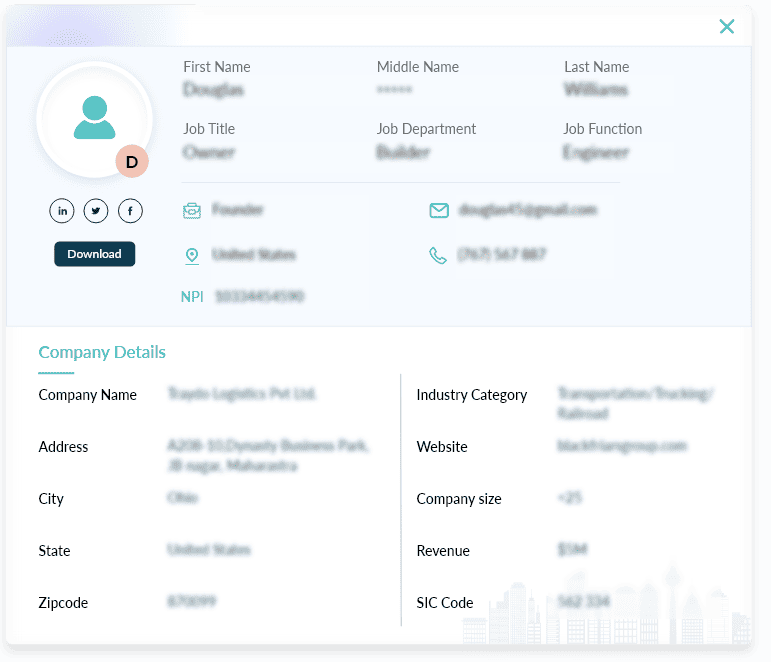
Follow these steps to build your cold contact list.
- Sign up to ReachStream to create a freemium account with access to all ReachStream features, including advanced API access .
2. Use the filters on the left side to select your ideal customer criteria.
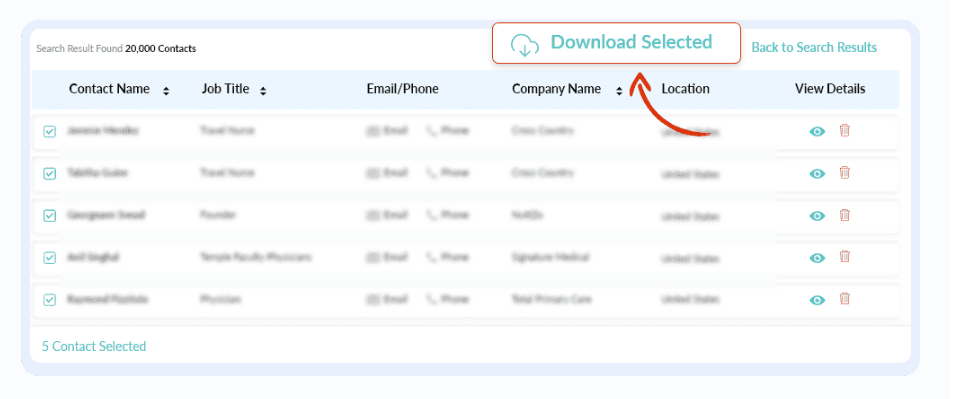
3. Select contacts from the list, which can be reviewed in View Selected Contacts.
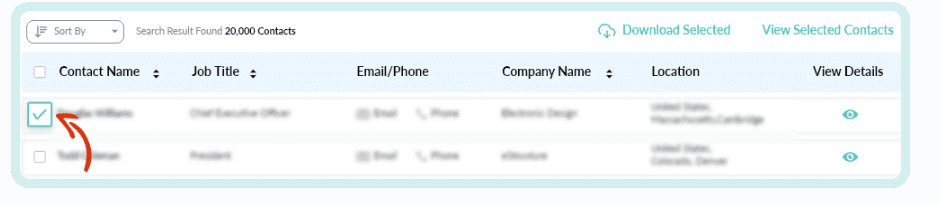
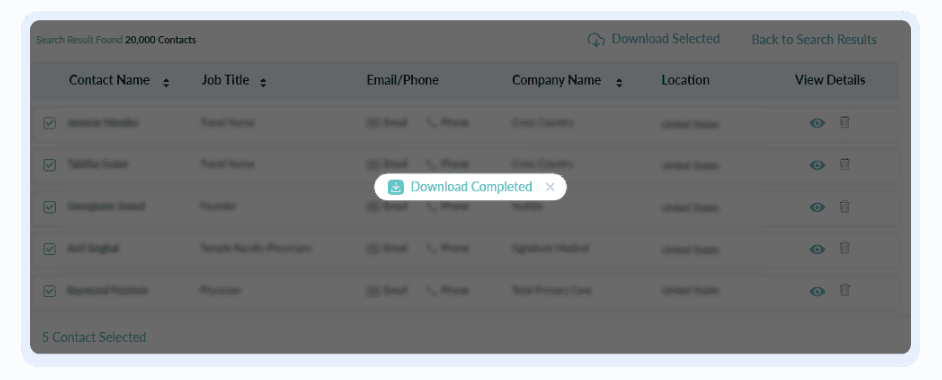
4. If you want to export this data in XLS format, just click on Download All.
Final Thoughts
Account-based marketing is a powerful strategy for SaaS companies that allows them to increase customer acquisition and revenue. By focusing on key accounts, you can maximize ROI and deliver tailored content. Utilize tactics mentioned in the blog and you will notice why your competitors are already making the most of ABM!


Sergiy Solonenko is the founder of Algocentric Digital Consultancy, a seasoned digital strategist, and a fractional CMO for B2B SaaS brands undergoing digital transformation. With over a decade of experience, he specializes in scaling demand-generation programs, optimizing account-based marketing, and aligning sales and marketing teams. Sergiy helps B2B SaaS companies enhance lead qualification, improve user experience through personalization, and leverage Martech to accelerate MRR growth.